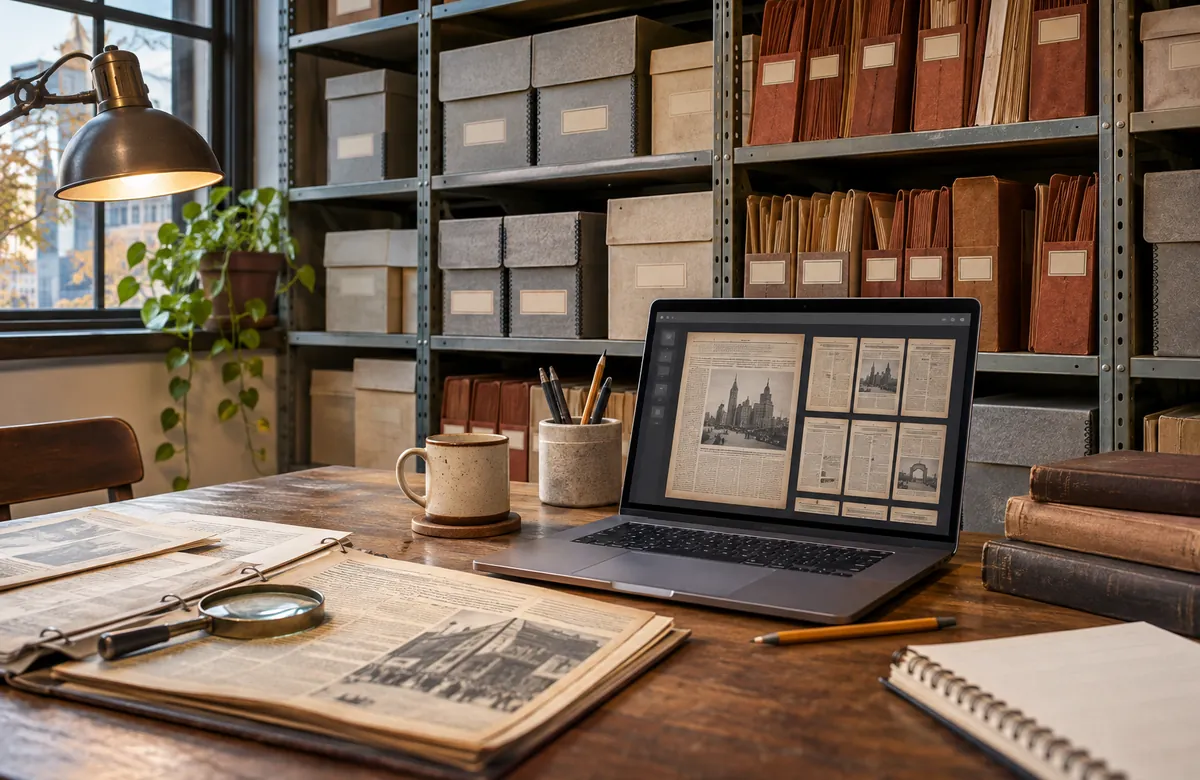
The reader who looks up a newspaper published a century ago may find a bound volume or a film copy in a library. The reader looking for an article published ten years ago may receive an error page. The apparent contradiction is a consequence of how the two publications were distributed and preserved. The printed edition existed in many physical copies, some deliberately retained by institutions. A news article published directly on a website may have depended upon one set of server files, software and contractual arrangements. Acquiring a new publishing system can disturb all three at once.
The risk affects city reporting especially sharply. A contemporary article about a public meeting can identify the decisions considered, the people who spoke and the objections raised. Years later, the same piece may help a resident understand why a street was altered or a building closed. It becomes a record of an intermediate stage that is otherwise difficult to reconstruct. If the address disappears and the publication has retained no usable copy, reproducing the information may require interviews and document research that have already been done once.
Preservation begins with the article
Every published story needs an identity independent of the layout in which the reader first encounters it. The publication can accomplish this by retaining its stable address, title, original publication date, credited author and text. The material necessary to reproduce a complete article may include the original images, their descriptions, captions, credit lines and data used for charts. Some of this information changes while the piece is being edited. The published version should be distinguishable from preparatory notes and unused drafts.
Retaining HTML alone may be insufficient for an intricate interactive article. An embedded graphic might rely on a file served from a separate address or an application that no longer functions. A map can lose its geographic labels when a provider changes. If the underlying data and a written account of its important findings are stored alongside the published article, someone can reconstruct its purpose after the original presentation fails. The visual form remains worth preserving, but the information within it deserves its own durable record.
A news organization should also distinguish the original date from the date of a substantive revision. A person researching whether a public decision had been announced before another event needs to know when the information first became available. Automatically altering the date of every older article after a design change destroys that context. A correction can have its own dated note explaining what changed, while the original publication date stays in place.
The hazard of a new address
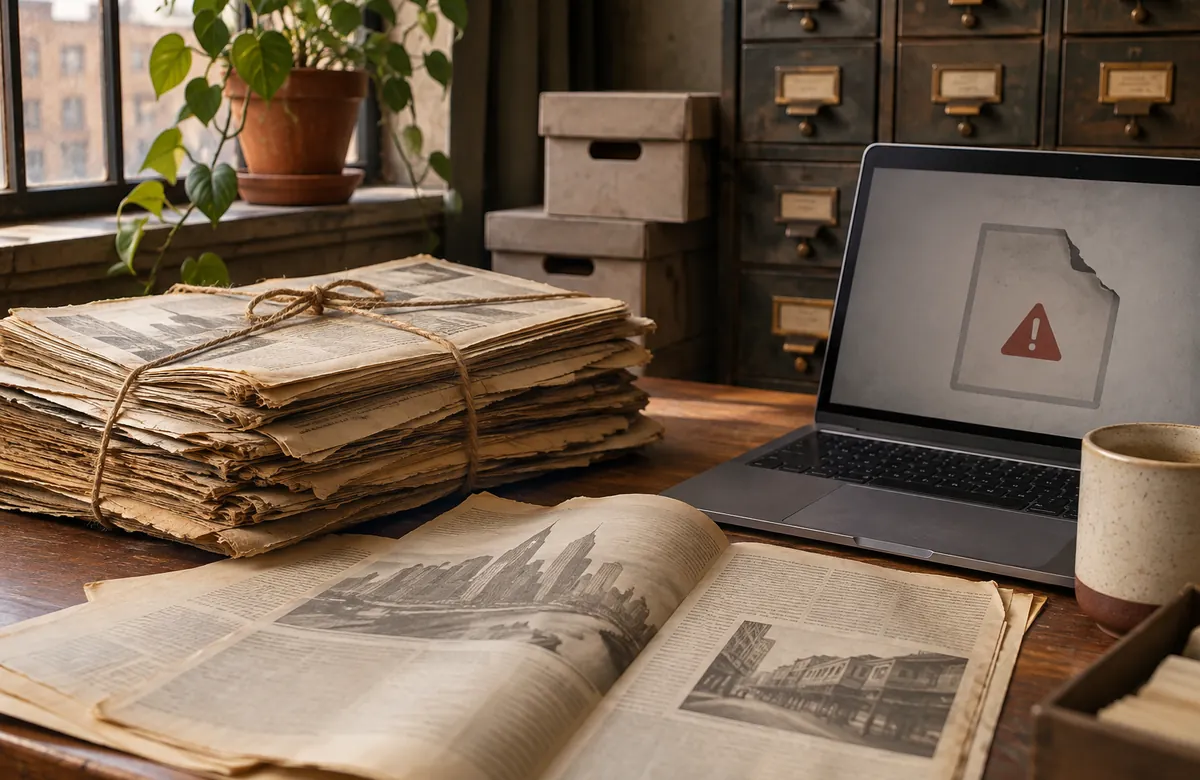
A page address is part of the publication's record. It appears in references, bookmarks, older news stories and documents outside the publisher's control. When a website moves to a new publishing system, many of those references can remain entirely useful if the old addresses continue to resolve to the corresponding article. Failing to maintain that relationship makes the archive frustrating precisely for the people who have reason to consult it.
Editors and developers can prepare for a migration by making an inventory of existing pages. Record each address along with the corresponding article, then determine where the material will reside on the new site. A permanent redirect can carry someone from an old address to its replacement. The redirect must identify the particular destination; sending all obsolete addresses to the new home page leaves a visitor who followed a citation with little idea where to look next.
After the change, test a sample of actual old references. Examine citations in earlier articles and book reviews. Check whether paths with unusual punctuation still reach their intended pages. An inventory built only from the most recent articles may omit years of less visible work. The publisher should locate archived category pages and other records that describe earlier material too. A transfer is complete when the appropriate pages can be retrieved, not simply when the new home page appears in a browser.
What an external archive can and cannot rescue
The Internet Archive's Wayback Machine allows people to explore captured versions of websites at earlier dates. Its records are a valuable resource when a page has been altered or removed. A person may be able to view a former page design, an old directory or an article that is no longer offered by its original publisher. The service's documentation also explains limits: not every page has been saved, and some elements within a captured page may not have been collected successfully.
The distinction matters when interpreting an archived copy. A recorded capture date tells the researcher when that version of the page was collected, not necessarily when its contents were originally published. The visible article date may supply separate evidence. A missing image in a capture does not prove that the original article lacked an image. A surviving home page does not demonstrate that every article mentioned on it was preserved. A responsible editor describes what the archive actually establishes rather than building a complete publication history around incomplete evidence.
External capture services should supplement a publisher's own preservation, not replace it. A newsroom can save a particularly important page through a service's available capture feature, but it also needs its source files and a means of restoring them. A backup that has never been retrieved offers uncertain protection. Periodically reconstructing a small selection of older articles from a backup reveals whether it contains the necessary text, images and other assets.
Historical integrity includes corrections and omissions
Old journalism contains errors. Some were caught immediately; others appear only after additional information is discovered. A publisher confronted with one should examine the same questions it asks about a current article: what is wrong, what evidence supports a correction and how will the change be explained to readers? Merely changing an old story without recording a substantial correction can complicate later research and leave people uncertain about the publication's history.
Some articles raise more complicated questions, such as outdated identifying details or material that the publisher no longer has permission to reproduce. Preservation does not require making every stored item available to everyone forever. It requires an intelligible account of the editorial decisions governing access. When an important removal is justified, the address may be able to display an explanation rather than vanishing with no trace. Legal and ethical circumstances differ; the newsroom should document its reasoning in an appropriate internal record.
The same care applies when a new organization occupies an address previously associated with a publication. The new site should not claim authorship of material it did not produce or assign original-looking dates to contemporary writing. An archival project can identify material it has permission to reproduce and describe its provenance. A new publication can also report on the period covered by its predecessor without presenting itself as a restored copy of that predecessor's work. Those are distinct editorial endeavors. Maintaining that distinction protects the record.
Make the past navigable
A collection of files can survive while remaining almost impossible to use. The publication's archive benefits from descriptive titles, searchable text and chronological indexes. A visitor researching a neighborhood may want to discover material from a certain year, regardless of which section originally carried it. A person following a continuing public controversy needs paths between earlier and later articles. An archive that groups work only by the most recent edition cannot fully serve either purpose.
Newsrooms cannot foresee every future research question. They can preserve the basic evidence that will help someone ask it. The details stored today may eventually prove essential to a reader with no connection to the circumstances of publication. Durable addresses, verifiable dates and usable copies of the underlying material are ordinary technical provisions. Their consequence is substantial: a city retains another account of what its residents saw, considered and decided during a particular moment.