The first sound an editor chooses for a documentary can decide what a listener understands about the place where the story unfolds. Traffic passing above an underpass establishes something different from music heard through the wall of a rehearsal room. A reporter may return from a location with hours of conversation, yet discover that there is no recording of anything happening. Interviews are an important part of documentary audio, but they cannot perform all its work. Sound can establish the movement of people through a room, mark the passage of time, and reveal an interaction that would otherwise require explanation. Building a story around recorded sound requires the producer to think about those possibilities during reporting, rather than wait until the computer is full of files.
Identify the event at the center of the story
A story about a closed neighborhood cinema can easily become a collection of fond memories. Those memories may be compelling, but the producer needs a question that connects them. Perhaps the building is about to change hands, or volunteers are sorting its stored materials before renovations begin. If permission and circumstances allow, a visit while that work is under way gives the story an event with a beginning and an end. The reporter can hear boxes being moved, identify what somebody is looking for, and learn why certain objects matter to the people handling them. An interview afterward can establish the longer history. The recorded scene and the interview accomplish different things. This approach is also useful for stories that have little obvious action, because ordinary work often contains its own sequence of decisions.
Record a whole action
In the field, it is tempting to record only a machine's loudest moment or a person's most interesting remark. An editor may need the quieter sound that precedes it and the sound that follows. Let the recorder run through a complete action when doing so is appropriate and agreed. If an interview takes place in a public setting, capture enough sound to establish that setting without collecting unnecessary private conversations. Make a note describing what is audible, what is visible but silent, and who is present. Remember that a recording of an elevator opening does not prove which floor the elevator reached. Sound conveys convincing impressions, but the rest of the reporting must establish facts that microphones alone cannot identify. A producer should know precisely what each recorded moment can and cannot support.
When reporting in a place with a distinctive sound, record a relatively steady section separate from the main conversation. This recording can establish the location on its own or provide continuity around legitimate edits to material from that same scene. A studio corridor, an empty hall, and a hall full of people all sound different. Do not use a recording from a crowded event underneath conversation recorded when the room was empty to suggest the interview took place during the event. Small editorial choices have factual consequences. Keep recordings from different locations easy to distinguish by labeling them promptly. Record the time and date in the notes and, if appropriate, briefly identify each location on the recording itself. It is difficult to reconstruct those details weeks later when a dozen audio files sound much alike.
Give each scene a job
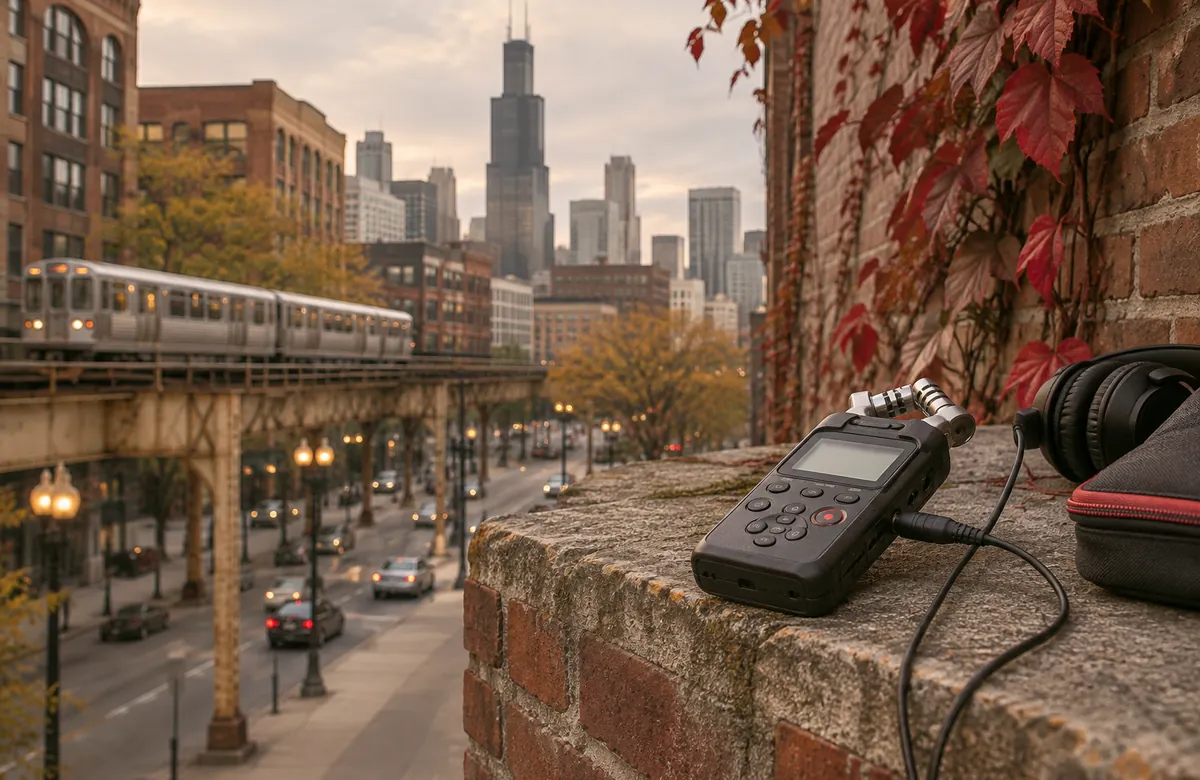
Listen to the field recordings before writing a script. Make a rough inventory that identifies where a new action starts, where a person explains something clearly, and where an event comes to a meaningful stop. Keep separate notes of moments that are merely pleasant to hear. A train passing a platform may establish geography, but it cannot tell you whether a change in service affected nearby businesses. Place that sound only where the story benefits from establishing the physical environment. A good scene changes the listener's understanding in some way. A rehearsal can reveal how a director works with a performer; a public meeting can show which issue attracts questions. If the scene contributes only duration or atmosphere, shorten it or consider leaving it out. The listener deserves to know why time is being spent there.
Treat narration as a bridge
Recorded speech often contains references to things the listener cannot see. A participant may say that something goes over there, while pointing to a wall. The narrator can provide the missing location without repeating the rest of what the person says. Narration can also introduce a speaker and establish the date of an event, distinguish a past decision from a current proposal, or explain why a change matters. It need not comment on the worth of every recorded statement. If a speaker has just described carrying instruments down a winding staircase, merely repeating that description makes the story feel mechanical. Provide enough context for the audience to interpret the sound, and trust listeners to draw straightforward conclusions from what they hear. Factual narration should be supported by notes and documents, even when it occupies only a few seconds of an episode.
Arrange the account without inventing a sequence
A documentary does not have to reproduce events in the order in which the producer recorded them. An interview made at the end of a project may be an effective way to explain its beginning. That choice should not imply that the interview happened years earlier. Let the audience know when the story moves between periods or locations. Brief transitions can prevent confusion without flattening every movement of the narrative into a date announcement. Particular care is required when joining archival recordings to present-day material. Verify who made each recording, where and when it was made, and the conditions under which it may be used. A dramatic sound found in an archive is not evidence of an event described by a different source. Consider whether a simpler passage of narration would serve the factual account better.
Work with emotion without manufacturing it
Music has a powerful effect on the way a person interprets an otherwise ordinary recording. A slow melody can make a practical account of a decision sound sad, even if the speaker has not expressed sadness. A repeated low note can suggest that an official explanation conceals a problem. Producers need to consider why they are using music at each point. It can mark the structure of a long episode, establish a consistent identity, or make a transition easier to follow. It should not replace evidence or assign a motive to somebody. For a passage in which a participant recounts a difficult personal experience, it may be more responsible to let the words and the room retain their natural sound. Respectful editing often requires restraint rather than additional emphasis.
Check what the assembled story implies
After editing, compare the story with the written reporting file. Listen specifically for places where two adjacent clips seem to suggest an exchange that never occurred. Are the implications of the writer's transitions supported by the original accounts? Did the removal of a qualification turn a tentative prediction into a confident statement? Does an ambient recording apparently place a person at an event they did not attend? These are questions about documentary accuracy, not minor sound preferences. A second editor who has not heard the original reporting may identify misleading connections more readily than the producer. Provide that person with access to the relevant material and explain any reconstruction, compression, or unusual arrangement. The finished audio needs to make sense to someone who has never seen the production notes.
Leave space for attentive listening
Once the editorial questions are resolved, listen through without looking at the editing timeline. Notice where attention drops and where information arrives too quickly. The listener cannot glance back over a complicated sentence as easily as a reader can. A long list of names and dates may need to be divided between the narration and accompanying written material. Conversely, an important pause may give the audience time to absorb a difficult statement. Leave enough of the original sound for a place to become recognizable. An episode built this way will not necessarily have an elaborate sound design. It will have something more valuable: a relationship between the things the reporter learned, the events recorded, and the things the audience can hear for themselves.