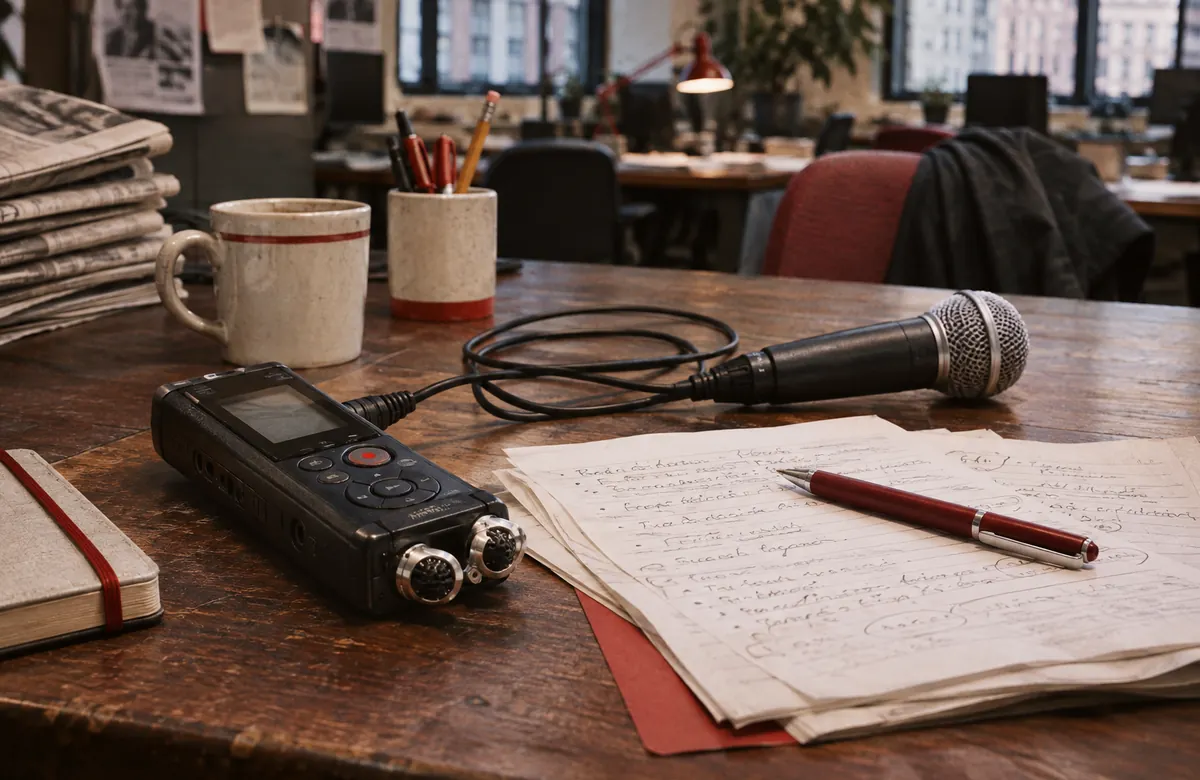
A recorder on a reporter's desk used to represent a pending assignment. Someone had to listen to the whole interview again, often at reduced speed, and type what was said. A long discussion about a city project could occupy an afternoon before the reporter even began writing the story. The work taught patience and sometimes revealed an answer the reporter had overlooked in the room.
Speech recognition has changed that sequence. A reasonably clear recording can produce a rough transcript early in the reporting process. The reporter can search for a phrase, mark the passages worth hearing again and get a better sense of the argument in a long meeting. None of that means that listening has become dispensable. A recording, not the convenient text derived from it, remains the primary record of the conversation.
The distinction matters wherever a reporter works, whether the assignment is a Chicago school board meeting, an interview with a musician or a conversation with a public official. A machine-generated document has the appearance of a finished written record, even though the system may have made a consequential mistake several pages earlier.
Begin before the interview
The easiest correction to a machine transcript is the one that never has to be made. In a quiet room, put the microphones near the people speaking, check the input level and listen to a short sample through headphones. Sitting at the opposite end of a table from a recorder may seem fine while the meeting is underway. The recorder picks up the room differently from a person sitting at the table. Every scrape of a chair and every conversation in the hallway competes with the interview.
Ask how the guest spells their name and the names of organizations mentioned in the discussion. Keep notes of unfamiliar words, particularly place names and specialized terms. Someone discussing Chicago housing might refer to a neighborhood, a municipal department, a community group and a developer in one sentence. An unfamiliar word can sound like a common one to a recognition system. The reporter's notes give the editor a way to detect this failure.
Record separate channels when that is possible. In an interview where each participant has an individual microphone, separate audio tracks make speakers easier to distinguish. They also allow the editor to work around the occasional noise made by one person while the other is talking. In a public meeting, record the agenda alongside the audio. A speaker's identity often becomes apparent from the order of proceedings.
Preserve the original file as soon as the interview is over. Make a copy for transcription and editing. A reporter should never have to reconstruct an original statement from a compressed clip that somebody made for social media.
A transcript is a search index
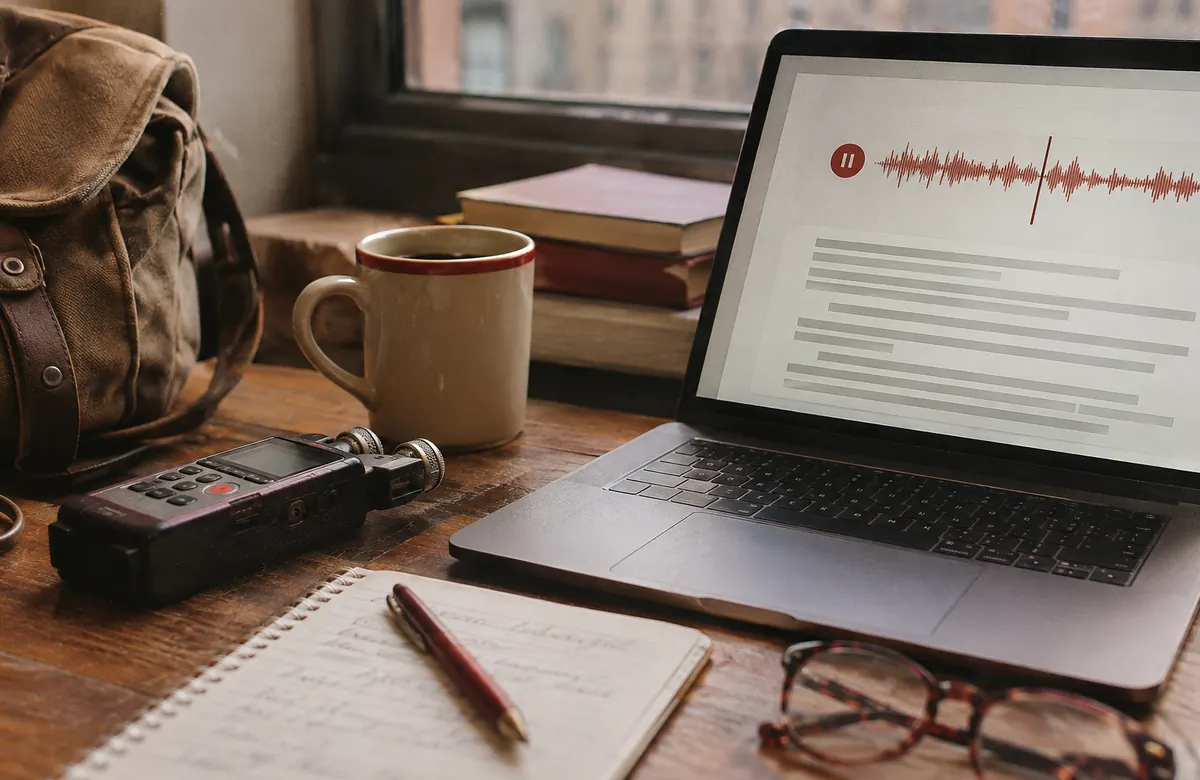
Think of the first automatic transcript as an index to the recording. Its immediate use is discovery. Search for the name of a street, the amount a speaker mentioned, or the question that produced the most interesting response. Jump to the relevant timestamp and listen.
For a lengthy hearing, assign rough topic labels to sections of the transcript. Start with the agenda items and later add topics introduced by speakers. This makes the document useful even when the recognized text is imperfect. A reporter covering a second meeting the following month can return to a particular exchange instead of starting another search of several hours of audio.
Speaker identification has its own limitations. Systems that divide an audio file into speakers generally assign labels according to apparent changes in voices. They do not inherently establish who the speakers are. Two people who interrupt each other can be confused, and someone who moves closer to a microphone may seem like a new speaker. Replace generic speaker labels with names only after checking the recording or contemporaneous notes.
The difference between speaker identification and transcription is especially important with a panel discussion. The words may be correct but assigned to the wrong person. A transcript that attributes a criticism to the person being criticized has failed at the central job of journalism, even if it contains dozens of flawless paragraphs.
Listen carefully to the words that carry weight
Accuracy is not distributed evenly across a sentence. The filler in a long answer can contain three mistakes without changing its main point. A single missed word in another answer might reverse its meaning. Words such as not, no and never, or expressions that signal doubt, merit special care. So do addresses, dates, quantities and the names of people accused of wrongdoing.
Return to the original audio before quoting. Listen far enough before and after the line to understand what the guest was responding to. A concession that sounds definitive when isolated may have depended on conditions laid out a moment earlier. A question may have included the very claim that a short answer appears to endorse. It is the reporter's job to make the context visible.
Different publications handle the minor hesitations of spoken language differently. Some remove repeated filler from an otherwise faithful quotation. Some leave almost everything intact. Decide on the publication's practice before editing, rather than tidying a speaker's words until they are easier to fit into the story. If an unclear passage cannot be verified with confidence, paraphrase what is known, seek clarification or leave it out.
Treat a proposed paraphrase with the same care. A transcription error does not become harmless simply because quotation marks have been removed. In a story about a local institution's budget, confusing the amount of a grant with the annual operating cost can produce an equally inaccurate sentence in either format.
Use correction patterns to improve the next recording
It is worth noting the types of error a newsroom encounters. A reporter working on arts stories might find that the software misses performers' names, titles and occasional passages of dialogue. A neighborhood reporter might find that some local words are repeatedly rendered as unrelated English words. A political reporter might see problems when people interrupt speakers in a crowded room.
Keep a small private list of recurring problems. This is not a permanent scorecard of the software's quality. It is an aid to planning. Next time, place a second recorder near the speakers, get a written program before an event or ask a guest to spell a name on the recording. The list may also show when a particular kind of interview should be transcribed manually from the beginning.
Compare services using the newsroom's own recordings. A polished demonstration of a scripted reading in a studio is little help in choosing a tool for reporting at a noisy festival. Select a representative sample, record the mistakes that would actually affect publication, and measure how long a careful human review takes. Include difficult sections, not just clean opening exchanges.
For language reporting, vary the voices and recording conditions in the sample. Ask a fluent reviewer to check samples in a language the rest of the newsroom cannot understand. The newsroom needs to assess transcription quality in the work it performs, not infer it from an attractive output on a different kind of audio.
Keep the layers of the transcript separate
Store three things distinctly: the original media, the unreviewed transcription and the reviewed material used by the newsroom. Give the files consistent names and record the date of the review. A raw machine result should never quietly replace the checked document, especially when several people work on a story simultaneously.
A public transcript, where one is justified, needs an additional review. Consider remarks that could identify a vulnerable person, statements that should not have been collected and parts of a conversation subject to an agreement between the reporter and the source. The recording may be an internal reporting resource without being suitable for release in full.
The best transcript systems help a reporter move between audio and text quickly. The goal is not to present a transformation of speech as documentary certainty. It is to give people the time to hear, understand and check what their sources said. That work has always taken judgment. Faster transcription leaves more of the day available for it.