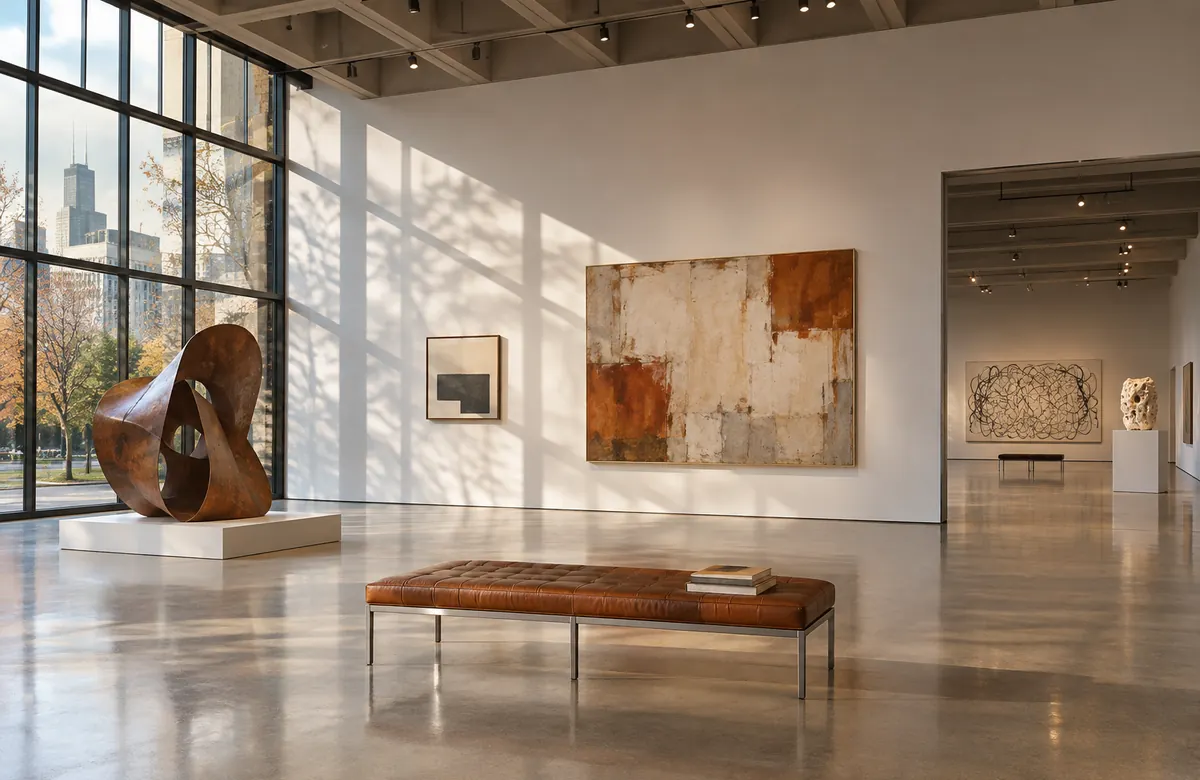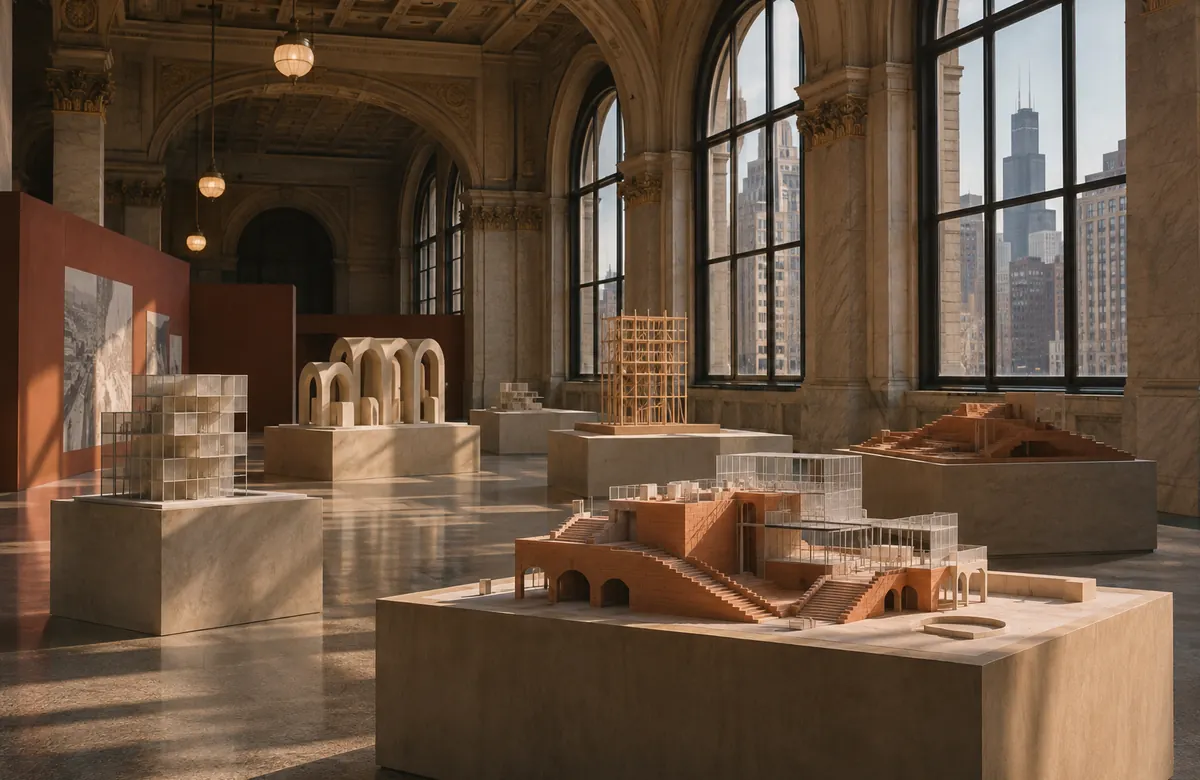
In an exhibition about architecture, one of the first difficulties is the impossibility of bringing most of the material into the room. Buildings are large, expensive and fixed to the ground. A drawing can reveal the designer's arrangement of space, and a model can help visitors comprehend proportions, but neither conveys the whole experience of walking into the completed building on a particular morning. Exhibition designers have considerable freedom to address this difficulty, as well as unusual opportunities to bring questions about space to people who do not work in architecture.
The Chicago Architecture Biennial has been working with these possibilities since 2015. The city is particularly well suited to such an undertaking. It provides a remarkable physical history of commercial construction and experimentation with structural systems. It also serves as evidence of the uneven distribution of access to well-designed housing, public facilities and open space. Walking out of an exhibition and back into Chicago can become a way to continue the discussion begun inside.
Exhibiting the state of an architectural art
The first Biennial, held in 2015 under the title The State of the Art of Architecture, gave Chicago audiences a way to investigate what contemporary practitioners were attempting in many locations around the world. The exhibition at the Chicago Cultural Center had important advantages over the sort of presentation one might see in an architectural firm's offices. People could form comparisons without being especially familiar with the conventions of professional design, and there was no requirement that every project on display be completed as a permanent building.
Several things can be learned from the latter condition. A temporary object made at architecture's scale may make evident the behavior of a particular material under load. A prototype intended to be seen by visitors can concentrate attention on a property that in an ordinary building forms part of a much more complicated system. An ambitious proposal can raise questions worth considering even though its maker has not found anyone able or willing to construct it in the form presented.
Archival work can be equally revealing. Understanding how a building emerged from several earlier plans and negotiations over its eventual purpose can change a visitor's impression of the final design. An exhibition of architects' drawings does not need to depict finished buildings alone. The documents recording the difficulty of making those buildings may be the more interesting ones.
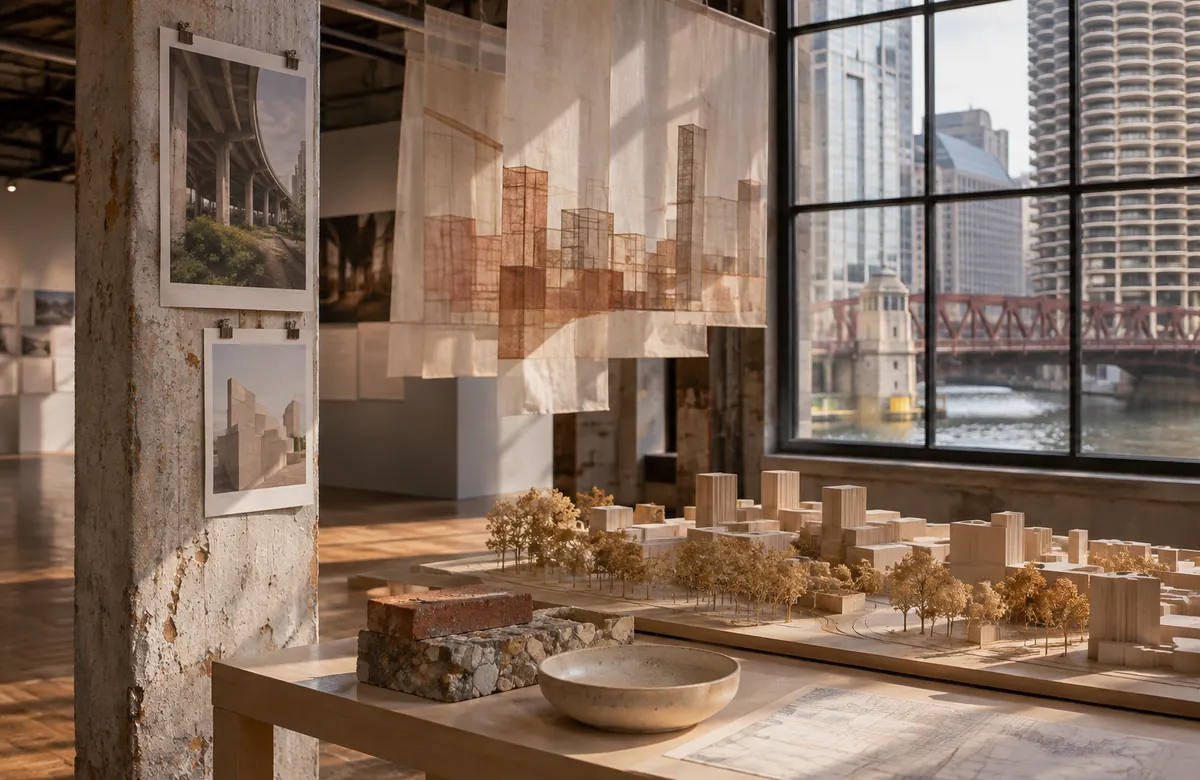
The Biennial's second edition in 2017, Make New History, expanded the conversation about what architects might do with the accumulated work of previous generations. This involved more than imitating attractive elements from historic structures. The existing city can serve architects as a resource of engineering knowledge, possibilities for conversion and evidence of the social decisions expressed by construction in another period. A valuable contemporary project may involve choosing what is worth carrying forward and what requires reconsideration.
The opportunities in other parts of Chicago
The Cultural Center itself is an interesting place to encounter contemporary architectural thinking. Built in the late nineteenth century as Chicago's central public library, it later acquired a different role as a public cultural venue. Its remarkable decorative interiors remain evidence of decisions made about how a civic institution ought to look and feel. A temporary project placed in that setting can create a productive contrast of assumptions about the character of public space.
There are also good reasons to take an architecture exhibition beyond such a conspicuous downtown building. A proposal that concerns housing might gain considerably in relevance from being considered by people already familiar with housing conditions in a nearby neighborhood. Students studying their own areas may have detailed knowledge of the routes they take to school, the ways streets are actually used and the places where spending time outdoors is comfortable. Those are observations an architectural drawing normally leaves out.
As one response to that need, the 2017 Biennial established community partnerships with cultural organizations including the Hyde Park Art Center, the National Museum of Mexican Art and the Beverly Arts Center. Programs connected to architecture and history could occur in places where participants already had reasons to go. The educational opportunity worked in both directions. Architecture had particular things to offer the audiences of those organizations; the people familiar with a neighborhood could make the visiting designers' account of urban life more precise.
Effective public programming has to allow for substantial differences between the interests involved. A discussion of a building's striking facade may reasonably be of secondary importance to a neighbor whose immediate concern is whether the land will accommodate affordable homes. The architect may be working with restrictions initially described to the designer in only a few pages of a brief. Better communication about those constraints gives participants a clearer idea of the sources of disagreement and the achievable scope of change.
Recent editions and the problem of unused land
The third edition in 2019, titled ...and other such stories, considered the wider conditions in which architecture is produced. Artistic director Yesomi Umolu drew practitioners' attention to questions of land, memory, civic participation and their relationships to the built environment. Chicago's physical history made such inquiry particularly pertinent; the same circulation of goods and people that made the city extraordinarily productive has created complicated and unequally distributed costs.
The Available City, the 2021 edition curated by David Brown, explored the possibilities of available land. Some of its projects considered how the continuing involvement of residents and other participants might influence its use. This was an interesting opportunity to consider architecture as the creation of places over time, including spaces in which a permanent building might not initially be the best answer to the needs of those nearby.
An empty lot never remains truly empty in an analytical sense. It has an owner and a history. Its position in relation to other buildings, the public infrastructure beside it and what grows on its surface are consequential. The land may provide an opportunity for recreation or for constructing a needed facility. It may also occupy an important place in the memory of a family because a house once stood there. Asking who has the opportunity to determine what happens next brings an understanding of the value of a property that extends beyond an appraisal of its monetary worth.
The fifth edition in 2023, This is a Rehearsal, was curated by the Chicago-based collective Floating Museum. Its emphasis on iterative approaches was appropriate to the development of places that involve many participants. Someone coming to an initial meeting about a proposed space may develop new views after seeing others interact with an experimental version of it. The ability to make revisions in response to actual use is a considerable advantage, provided that somebody has arranged for those revisions to happen.
Visiting with questions of your own
It is possible to enjoy the Biennial without arriving prepared to understand a completely new professional vocabulary. Choose one particular question raised by a model or an object. Why has the artist used that material? Could you turn the corner shown in the drawing in a wheelchair? How would the room in the proposal be heated in February? There may not be an obvious answer, and finding out how the designers have thought through such questions can become the most engaging part of a visit.
Then consider the places you ordinarily use in Chicago. Try to determine why a certain bit of street is comfortable at one time of day and unpleasant at another. Notice how the designers of a civic building imagined its relationship to the surrounding public space. An architecture exhibition can help you look for those things without having to turn every effort at understanding the city into a proposal to build something new. That expanded awareness, which survives after the objects from an exhibition have been packed away, is a useful accomplishment of the Biennial's activities.