A painter's work rarely arrives in a museum under the conditions in which it was originally made. It has left the studio, changed hands and acquired a great deal of information about its cultural position. The visitor approaches it in a space designed to establish certain relationships between objects. Where a work hangs, what appears alongside it and even the number of people capable of standing in front of it can influence the viewer's experience of its actual materials.
Chicago's Art Institute and Museum of Contemporary Art have valuable differences in the way they produce those conditions. Both display art of the twentieth and twenty-first centuries. Their origins, collections and relationships with living artists differ, giving members of the public several ways to engage with relatively recent works of art. In the years following the opening of the Art Institute's Modern Wing and through the disruptions of 2020, those differences have been particularly interesting to contemplate.
An extension of the Art Institute
Designed by Renzo Piano and opened in May 2009, the Modern Wing of the Art Institute greatly increased the space available for categories of art including twentieth-century European painting and sculpture, architecture, design and contemporary works. The building was conceived as an addition to a museum with an extensive range of objects from different parts of the world and times in history. For the visitor walking between the Modern Wing and the older galleries, the difference between installations is part of the experience.
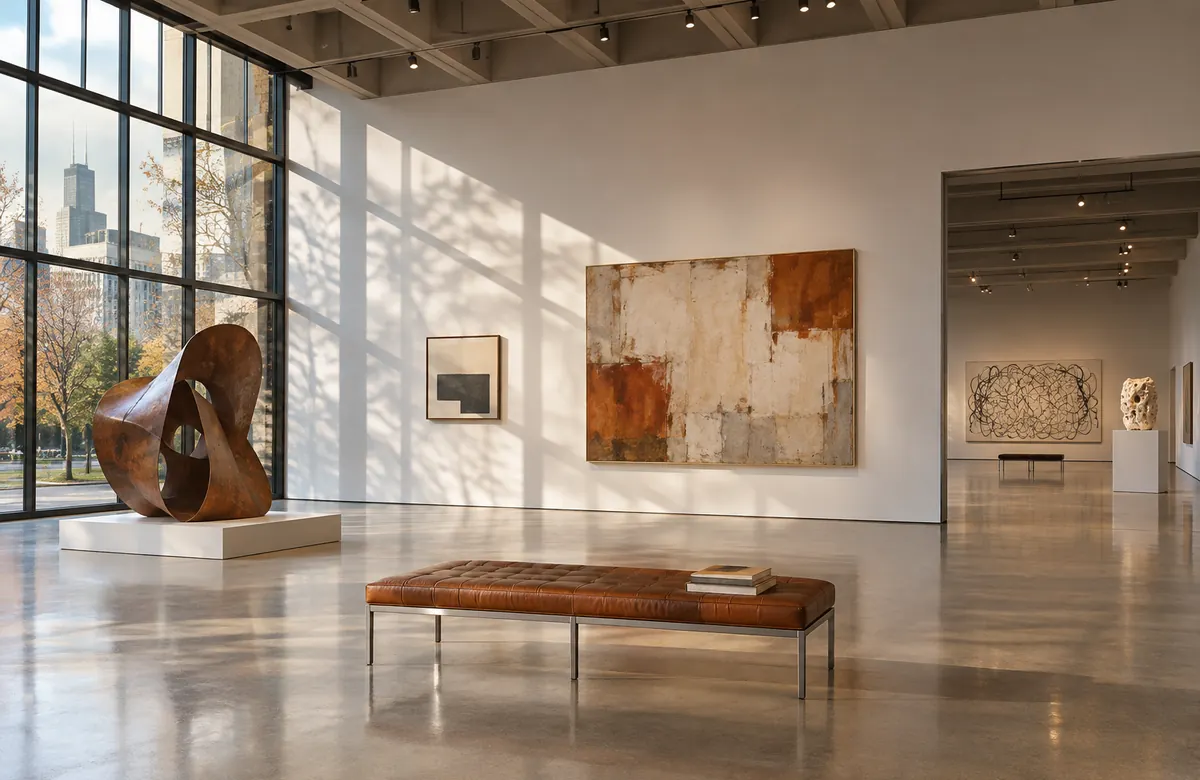
Light plays an important part in the new building. Piano's approach to the roof of the wing gives it a distinctive outer appearance and enables spaces for art to make use of carefully managed daylight. The building's connection with its surroundings is also noticeable. Views beyond the galleries can help a visitor understand where the museum stands in relation to Chicago's parks and the city itself.
One pleasure of an encyclopedic museum is the possibility of making unexpected comparisons. A visitor who has spent some time with older European paintings may encounter an example of twentieth-century painting that relies on very different ideas about the organization of the canvas. A work in which the distinction between subject, painter and viewer has become uncertain might be easier to understand after studying a work in which that relationship seems quite evident. The museum permits such a comparison without requiring that a person take a course in the history of either period.
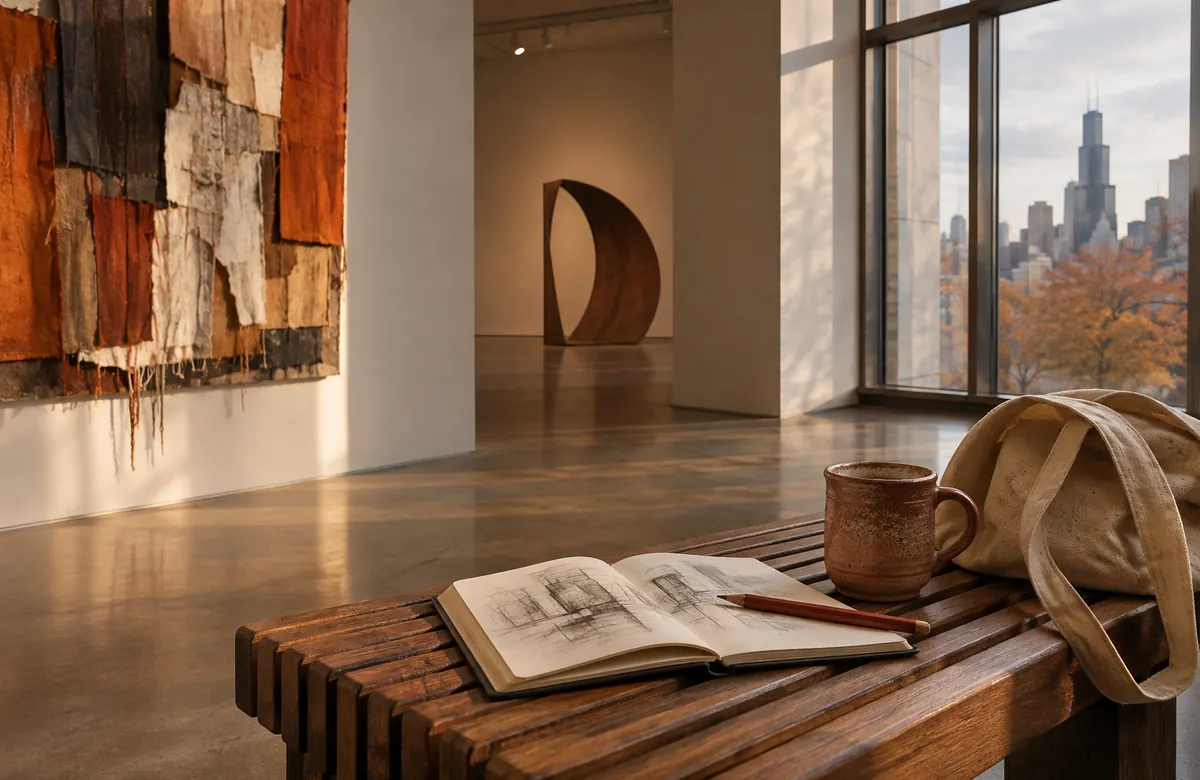
It can also be useful to encounter an unfamiliar work without immediately reading its label. This is a relatively simple experiment. Stand where the object is large enough in your field of vision that you can appreciate its proportions. Notice some physical detail in the way its materials meet: whether a brushstroke takes on the texture of the surface beneath it, for example. Then read the description. Information about the date or the artist's intention has a more definite object to act on when you have already formed some idea of what you are looking at.
A museum established for the art of its own era
The Museum of Contemporary Art opened in Chicago in 1967. Its original conception was that of an institution devoted to organizing temporary exhibitions of new work. It began developing a permanent collection in the following decade. The museum's move from Ontario Street to its larger site east of Michigan Avenue in 1996 came after a substantial history of presenting experimental art.
This history makes a difference to the visitor's understanding of the institution. An exhibition of recent work is not necessarily an account of endeavors already recognized by historians as successful. A curator may want to investigate a current artistic argument or give a group of working artists space to discover the relationship between their approaches. An exhibition can be an attempt to articulate a still unsettled subject rather than an illustration of a subject already adequately defined.
Think of an artwork that incorporates sound or uses video played across multiple screens. The arrangement of an individual display matters particularly strongly: the room may have to permit people to move around, distinguish overlapping sources of sound or choose the sequence in which they encounter the images. An artist may be able to participate in decisions about the installation. In other cases the museum must work with earlier instructions and attempt to preserve the intentions of the artist in circumstances that the initial presentation could not have anticipated.
An installation often gives the public a problem of time. Looking at a painting for a few seconds may provide a reasonably coherent first impression, even if staying longer will change it. A video artwork with a duration of forty minutes rarely works like that. A visitor who enters at the midpoint cannot establish what the beginning contributed, and has a choice about whether to remain until the work repeats. There is no universally correct way to handle that decision. The museum's programming can invite an unusual degree of control by the viewer over the experience.
When a building closes
The value of a space arranged for viewing art became unusually apparent during the widespread museum closures in 2020. For people who had regularly visited museums, the ability to look at art from home was still important. A collection database or online exhibition could offer information about objects and artists in numbers that were impossible to accommodate in one visit. Images could reveal details difficult to examine without getting inconveniently close to a painting at the museum.
What was harder to convey through a display of photographs was the encounter with the physical scale of the work. A tall sculpture represented by the same size of image as a small model loses a crucial point of comparison. The reflective quality of a surface may vary as a person moves across a gallery. A drawing that possesses extraordinary precision at an ordinary viewing distance may become substantially less interesting as an overcompressed image on a screen.
Rather than declaring a preference for the gallery or the website, pay attention to the advantages of each. An online collection makes it much easier to compare works at different institutions. It may supply information about an object's materials and earlier owners that can be considered at length before a visit. In the building you can investigate the qualities that are difficult to convey digitally. Afterward you can begin making different kinds of comparisons from the evidence of your own encounter with the work.
Visiting in a way that leaves room for discovery
One way to enjoy the Art Institute is to select a small group of galleries and allow at least part of the visit to depart from the original plan. A person interested in architecture might spend more time with a drawing related to a building than with the large painting that happens to be nearby. The museum's many kinds of objects make that wandering particularly rewarding.
A visitor to the MCA might begin with one work that is difficult to understand from a brief description. Find out what the institution has published about a particular exhibition and assess whether it changes your interpretation. A conversation with a companion about how a work is made can offer insight before either of you commits to a firm judgment about it.
An afternoon in both institutions would demand enormous attention. There is no reason to complete them in one trip. Go back when there is time, and recognize that the thing you remember from a visit may owe its importance to a relatively unremarkable detail. Museums enable sustained physical encounters between the public and objects that are difficult to arrange elsewhere. The distinctly organized spaces in Chicago give visitors several chances to explore the surprising consequences of those encounters.