A community art center can make it possible to see a serious exhibition in the morning and spend part of the afternoon learning to make a relatively simple object. These activities need not involve the same kind of artistic work. A student beginning to work with clay might previously have been studying a complicated painting in an exhibition room. Nevertheless, the opportunity to see a problem of material or design solved by an experienced artist can have considerable consequences for the way the student tackles the elementary tasks of a class.
Chicago has many institutions devoted to presenting or teaching art. The places that bring those two activities together reveal especially interesting features of the relationship between making an artwork and forming an audience for it. Their regular use by people who undertake a variety of activities helps sustain both parts of the undertaking. Someone may first encounter an unusually ambitious new exhibition while simply bringing a child to a workshop.
A long history in Hyde Park
The Hyde Park Art Center began in 1939 as an initiative undertaken by people working in art in the neighborhood. Its original name was the Fifth Ward Art Guild, quickly changed to the Hyde Park Art Center. The development of the organization reflected the belief that the making and showing of art could have value to local people beyond the small segment already familiar with the principal personalities of a particular artistic movement.
Over subsequent decades the center helped provide Chicago artists with opportunities to show distinctive new work. Exhibitions during the 1960s brought attention to artists whose interests came to be associated with Chicago Imagism. The timing of those exhibitions mattered. A person encountering a group of artworks only after the artists become established finds a story about the place of the works in art history already available. The people responsible for coordinating an early group exhibition have to develop an appreciation of the work without relying on a widely accepted account of its importance.
The freedom to conduct those exhibitions may depend on whether an institution has established a meaningful relationship with a public of its own. A neighborhood audience with a regular reason to visit can allow programmers to consider proposals that might not correspond to a large preexisting demand for a particular artist. The visitor to an exhibition acquires the chance to inspect work without any particular assumption about whether the artist is about to become well known.
The Hyde Park Art Center acquired a permanent freestanding home on Cornell Avenue in 2006, and its 75th anniversary came in 2014. The subsequent opening of additional facilities for creative activity helped continue its educational undertaking. Its history offers a particularly clear example of the time needed for an independent cultural organization to establish the various material conditions under which it can carry out its work. Many of the activities that subsequently occupy its schedule require more than the existence of an adequate exhibition room.
Learning what materials do
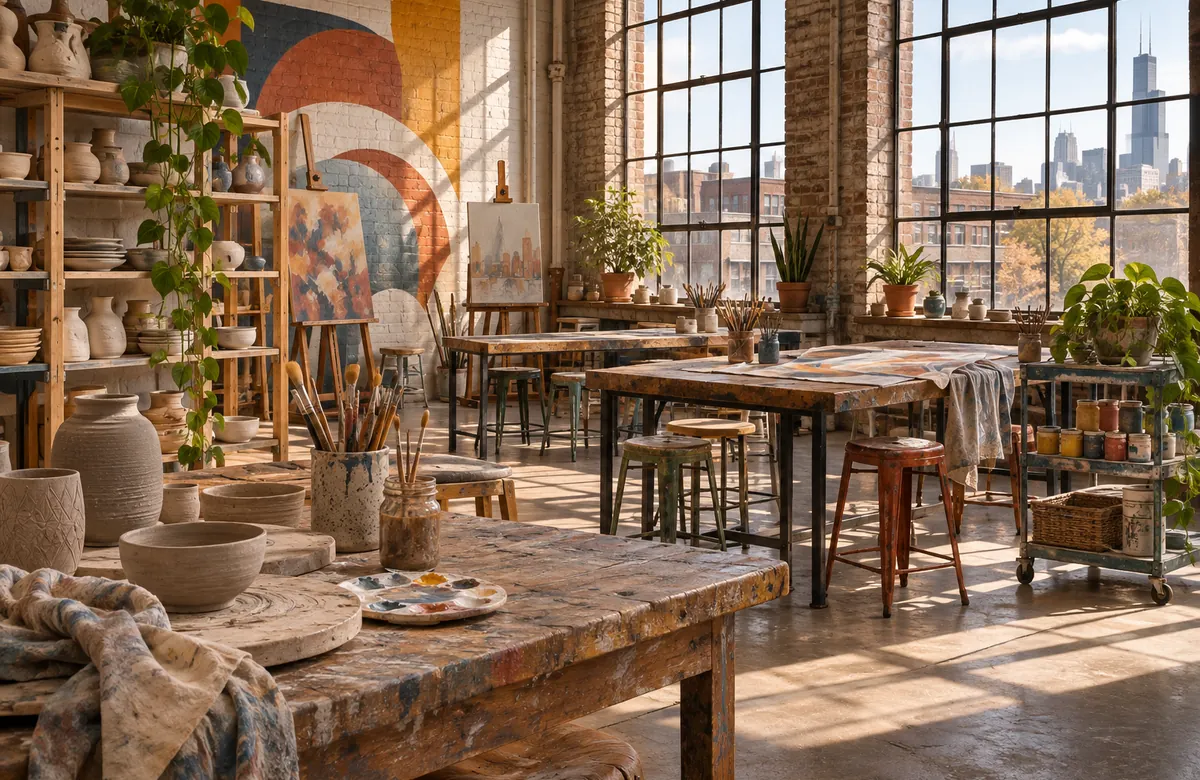
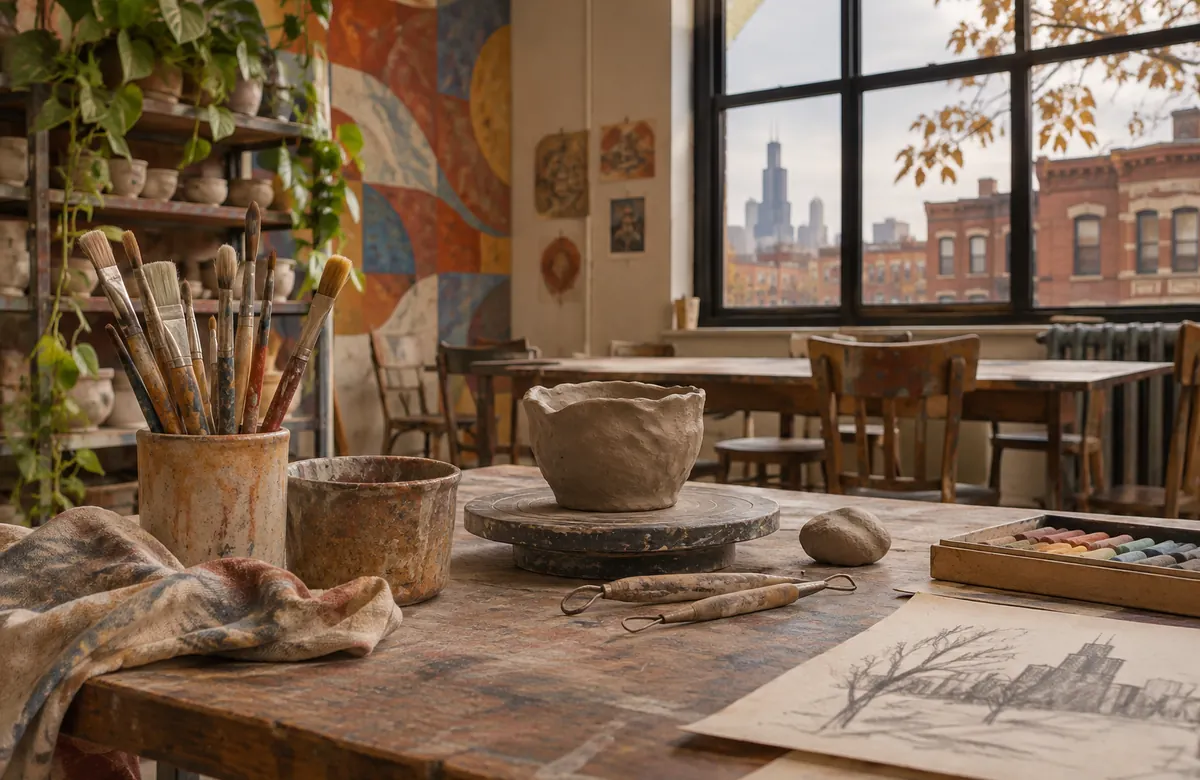
Consider the difference between looking at the surface of a ceramic vessel and trying to make an object with a surface you consider particularly pleasing. Some knowledge about the characteristics of the material can be gleaned from a finished piece. Working directly with it introduces further complications. The wet clay changes shape more easily than you expect, and achieving the appearance you want may depend on deciding earlier than you had imagined how the sides of the vessel will be finished.
The person responsible for teaching a skill can explain the practical relationships between such decisions. Rather than suggesting that a particular failure reveals a lack of ability, a teacher could help the student recognize that the material was too wet or that the distribution of its thickness made the shape unstable. The ability to identify such problems makes the work of experimenting with different kinds of objects much more satisfying.
A class can provide access to equipment unavailable in a student's home. Having made an object from clay, for instance, the student still needs access to a suitable kiln and someone who understands how safely to use it. Printmaking and photography have their own material requirements. Although contemporary software makes it possible to imitate aspects of various techniques, sharing the necessary physical facilities permits a group of people to acquire knowledge about things the software does not reproduce.
The people working alongside one another in a studio make another valuable part of the educational environment. A student's discovery about a tool can quickly become useful to another person engaged in a substantially different project. They can admire an unexpected property of the surface of a neighbor's work without necessarily knowing how it was produced. The opportunity to exchange information at precisely the moment when an observation is relevant makes such learning effective in a way difficult to replicate with a series of individual lessons at home.
The art center and the artist in the neighborhood
A center's exhibition program can enhance the visibility of the cultural work done by people who live in the area without requiring that every piece have the area as its subject. Someone who has spent many years teaching or working elsewhere in Chicago may have a complicated interest in abstraction or experiment with a distinctive use of recycled material. The work might have no identifiable references to the neighborhood in which the artist found time and space to make it. The presence of the artist there remains quite consequential to the cultural history of that place.
Residencies and other programs designed to provide useful time and space can address difficulties faced by a person undertaking a more ambitious project than ordinary studio circumstances permit. A residency may create the occasion to work at an unusually large scale, pursue an unfamiliar technique with the assistance of others or enter a conversation with people whose own creative activities had seemed quite distant from the artist's project. The effect of such an opportunity is not always immediately apparent in any one object presented in the subsequent exhibition.
The Chicago public benefits from having such facilities at multiple locations in a city of considerable geographic extent. Chicago neighborhoods have varying access to the equipment useful for particular kinds of art. Some cultural organizations specialize in providing students with resources or presenting work that could not be shown easily in a much larger institution. Their distinctiveness matters. A facility organized around offering opportunities to young artists has requirements different from those of a gallery whose main undertaking is maintaining sales of new works.
Getting involved without pretending to be an artist
There is no obligation to have a longstanding creative practice before taking an interest in a neighborhood art center. Someone who has not made a drawing since childhood may discover an unexpectedly absorbing activity in observing the proportions of a small object on a table. The achievement is perfectly valuable as an experience, even if the first three drawings remain unsatisfactory. A course provides another example of a sensible way to understand something about the arts that does not immediately depend on possessing confidence in an existing talent.
Visit when there is time to explore the exhibition rooms, and consider beginning with a question related to ordinary perception. How did the artist decide where to place the figure in the picture? What happens to the appearance of a textile when someone views it from the opposite side of the gallery? Subsequently, if you see a class advertised that might help you investigate one of those things directly, you have a particularly concrete reason to attend it.
The valuable thing about institutions such as the Hyde Park Art Center is the relationship between their various activities rather than their success in delivering any individual skill to every participant. Many visitors will never produce an artwork intended for exhibition, and some working artists will never find it especially interesting to teach a formal class. Their ongoing presence within the same cultural environment creates occasions for the work of each to contribute to the experience of the other. That exchange deserves a lasting place in Chicago's neighborhoods.