A dancer working in a large theater and someone learning the steps of a social dance in a public park have a good deal in common. Both need to understand the time and distance available for a movement. Both might find that a change of direction becomes considerably easier if they pay attention to the other people nearby. An observer could derive pleasure from watching either dancer. The judgments each person makes about the activity, however, can be radically different.
Chicago provides several particularly interesting settings in which to consider those differences. Its professional companies undertake large productions and smaller choreographic experiments. Public dance programs allow people without formal training to begin a practice that might ordinarily seem inaccessible. The city itself brings together people familiar with very different musical traditions, many of which have a physical aspect as central to the experience as listening to the sound.
Watching the work of a company
The Joffrey Ballet established Chicago as its permanent home in 1995, several decades after the company originated in New York. Its history of combining classical training with a willingness to experiment had preceded that relocation. The city's dance audience consequently acquired the opportunity to observe a substantial body of work grounded in a particular company's approach to performance over a succession of seasons.
A dance performance differs considerably from a play with a script. A choreographer may tell a recognizable story without presenting it in words. The visible characteristics of human behavior supply many of the necessary relationships between the characters. The speed with which one dancer turns away from another can communicate something altogether different from a long gradual movement in precisely the same direction. The music and arrangement of the rest of the stage affect the way the audience understands the significance of that decision.
It is worth watching the dancers for a while without attempting immediately to put each part of the performance into words. Follow the line of one arm, noticing how the dancer distributes weight in the course of moving it. Watch the development of an exchange between two distant parts of the stage until you can recognize something similar in the patterns of movement. The choreographer may have arranged for the audience to discover a visual correspondence before the dancers establish a relationship directly through contact.
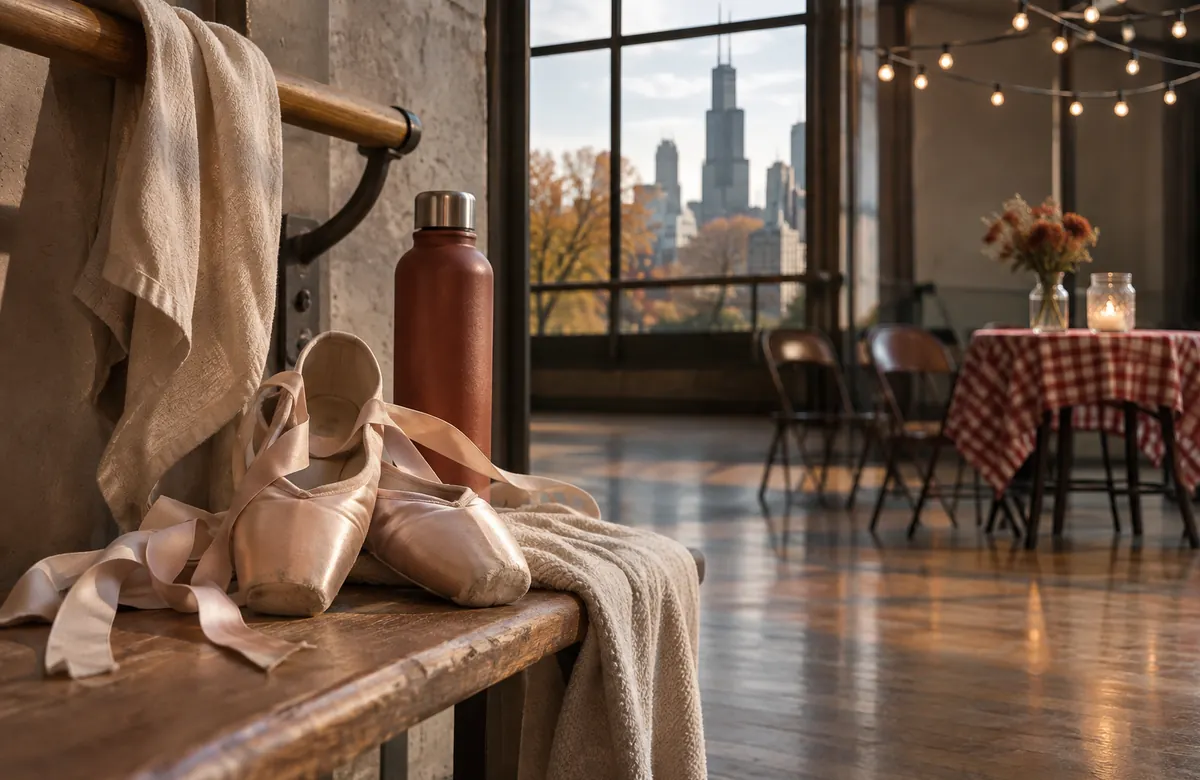
The Joffrey's move into the Lyric Opera House for performances beginning in 2021 demonstrated the importance of an ensemble's surroundings to its work. A large stage offers room for particular kinds of group movement and elaborate scenic structures. It brings different requirements for lighting and other practical aspects of presentation. From the back of a large room, fully extending a limb may not create the same dramatic effect as it would if the spectator occupied a chair quite close to the performer.
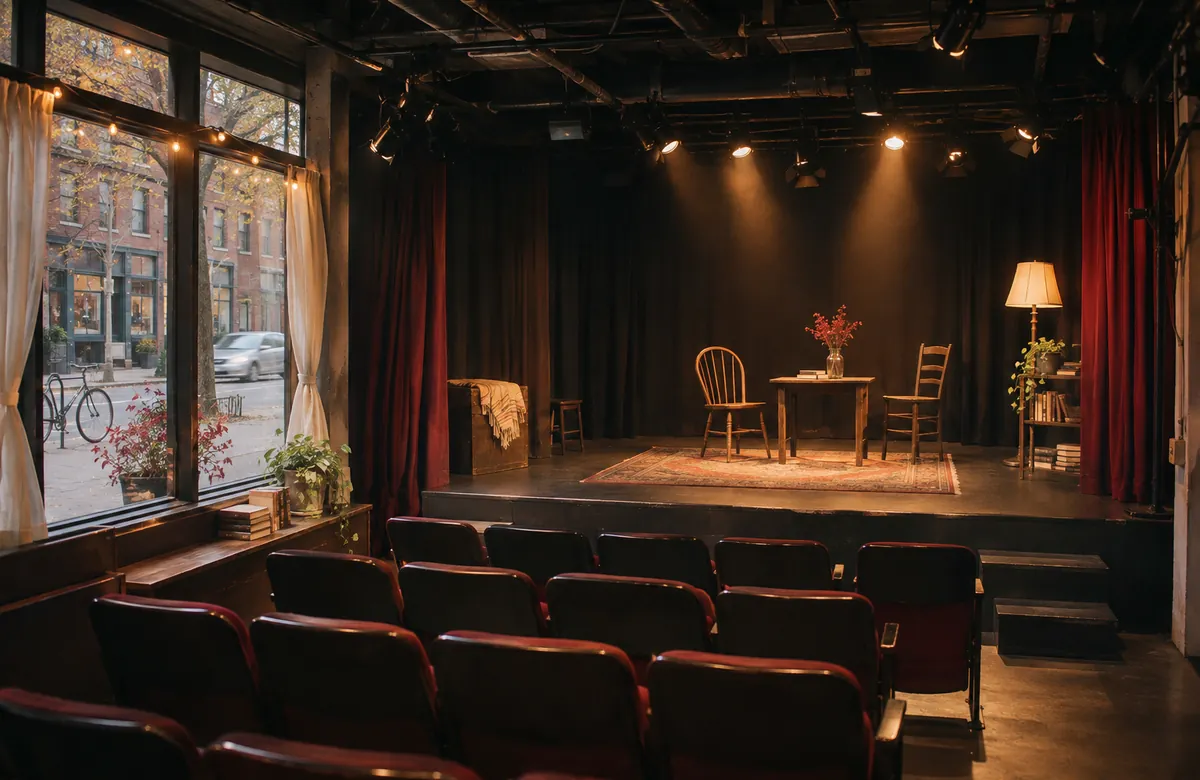
Visitors who have primarily experienced dance in theaters of this scale should eventually see smaller productions. Chicago's dance community has encompassed companies exploring modern and contemporary forms, practices developed by individual choreographers and performance involving multiple kinds of artistic work. A composition for a handful of performers may make much more extensive use of silence or a complicated physical relationship between the people onstage than could easily be accomplished in a sweeping theatrical spectacle.
A night of dancing outdoors
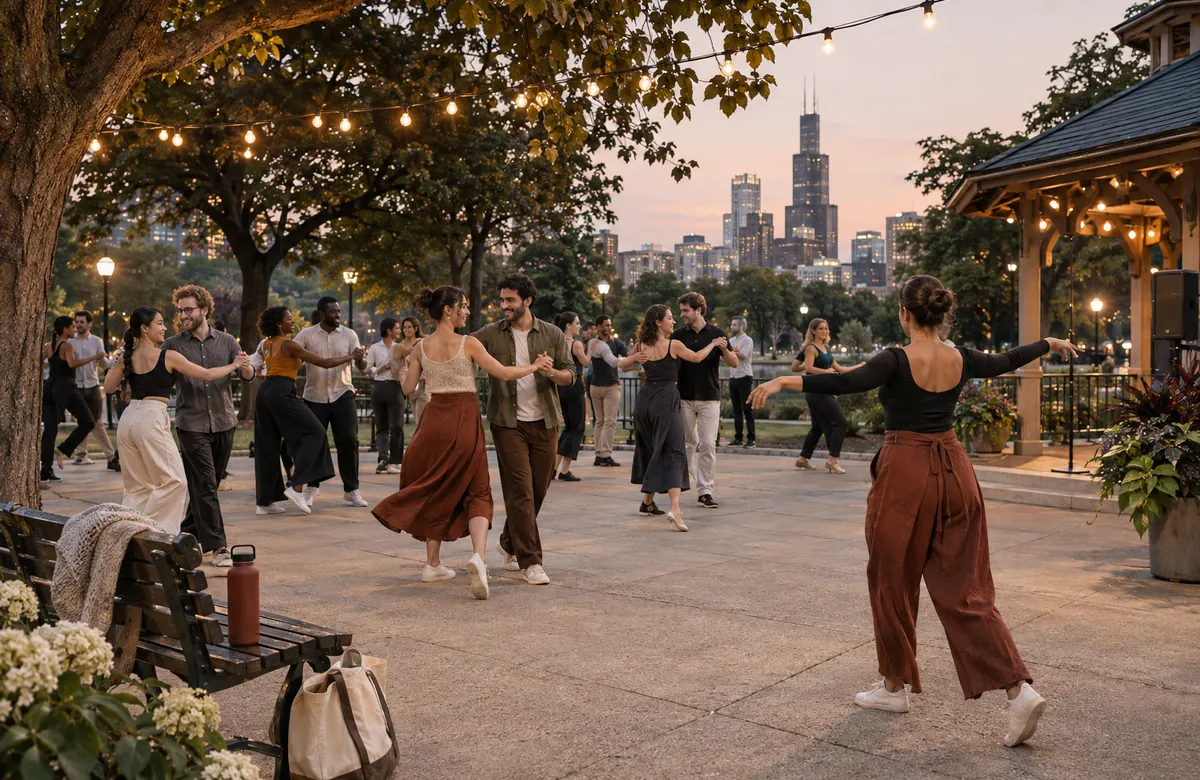
The city's Chicago SummerDance program began in 1997. Its combination of instruction and opportunities for public social dancing made it possible for many people to explore dance without arranging to attend a formal studio. The setting has commonly included outdoor space in Grant Park as well as programming in other parts of the city. The organizers have had the opportunity to introduce the public to dance traditions connected to different kinds of music and to give experienced dancers a convenient place to participate.
Part of the program's achievement is the relative simplicity of starting. Arriving in time for instruction can eliminate some of the difficulty of trying to follow other people once music is playing. An instructor can establish a manageable basic sequence and provide information about the way its movements relate to the rhythm. The participant then needs only enough space and attention to practice the combination of movements in the company of others.
For somebody accustomed to experiencing an entire musical genre through records, such instruction can be revealing. They discover how important the apparently uncomplicated bass part is in keeping track of their own movements. They recognize the time needed for their partner to accomplish an ordinary change of direction. A sound that had seemed inconsequential acquires importance because it provides information about when something needs to happen.
Social dancing creates a genuinely different understanding of music because of the opportunity to coordinate with another person's movement. A leader must convey information as unobtrusively as possible, and the other dancer needs space and time to respond. Dance partners improve the quality of the experience by developing increasing awareness of each other's physical position. The practice succeeds when it enables both people to move in satisfying ways rather than requiring one of them to demonstrate an impressive repertoire of steps.
Public dances also place several generations in the same space. Somebody who became familiar with particular songs many decades before a younger participant can introduce the other person to one of the pleasures of hearing them. A teacher may explain the origins of one style, and a participant who grew up around that form of dancing may supply another perspective on its practice. A social dance gives a person the possibility of learning these things physically rather than relying only on descriptions of them.
Dance under changed public conditions
The interruption of normal cultural life in 2020 was a difficult development for people who made and practiced dance. The experience of watching a group engaged in movement is extraordinarily hard to reproduce in an electronic meeting. A teacher who is accustomed to recognizing whether students have understood an exercise in front of them has difficulty noticing the same things across several small images. A performer who tries to practice a movement in a modest apartment encounters more limitations on the space available than in a rehearsal studio.
For all those difficulties, recordings of choreography and remote instruction could help preserve relationships between people who had been sharing those experiences. They could also give the artist an occasion to examine movement from unfamiliar points of view. Moving a camera across a space introduces possibilities that artists presenting a work to an audience in a theater cannot readily exercise. Works made specifically for a screen could use that freedom profitably.
The reestablishment of shared physical practice afterward made another set of values especially apparent. Performers once again received immediate information from each other that was not filtered through an electronic process and could use it to alter the pacing of the work. Participants in a social dance could pay attention to the subtle movement of someone nearby rather than to a teacher whose image might disappear temporarily. The particular difficulties and benefits of being physically present became easier to identify.
Learning to enjoy both scales of movement
Consider alternating between opportunities to dance and opportunities to observe dance over the course of a season. The remarkable work of a professional dancer becomes easier to comprehend after even an elementary encounter with some of the problems they have learned to handle. Meanwhile, a public dance is an excellent place to discover that mastering a few movements can enable participation in a type of music that previously seemed distant from one's experience.
Chicago's theaters and public spaces make it possible to develop a deeper understanding of dance without committing to a career in it. Some experiences are best approached by taking a seat and watching a group of other people's movements develop across a whole work. At other times, the most valuable discovery occurs when the next dance begins and a stranger steps beside you to demonstrate again how the familiar movement falls into place.