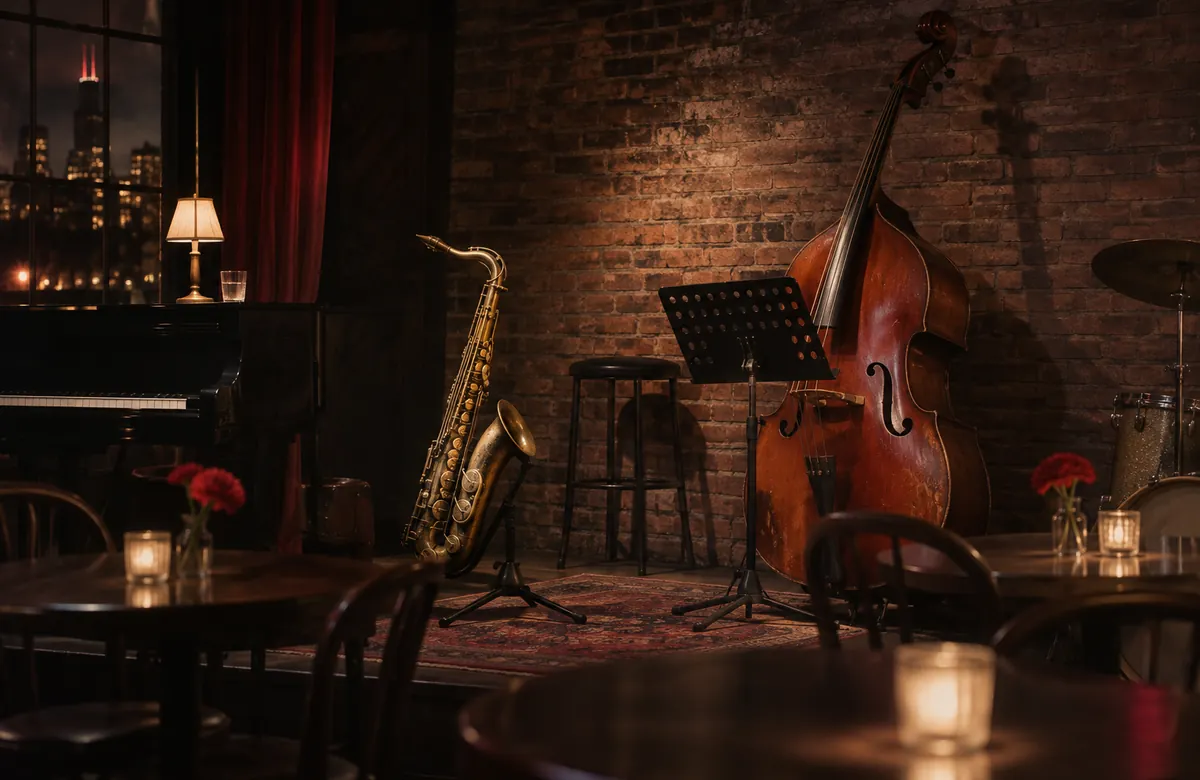
Imagine two saxophonists playing the same standard on the same evening. One stays close to the melody, letting its phrases open out over the rhythm section. The other dismantles it into fragments, leaving the pianist and drummer to determine the shape of the performance. Even when a listener recognizes the underlying tune, the experience is fundamentally different. That is one of the reasons to hear jazz in Chicago in a room where the musicians can talk to one another with their instruments instead of presenting a version selected in a recording studio.
The city has a serious history of recording and presenting jazz. Chicago is also an unusually good setting for noticing the ordinary work needed for that history to continue: a quiet Tuesday performance, a rhythm section learning unfamiliar material, a newcomer arriving with a horn and a handful of charts. These things take place far away from the spotlight of a large festival. An evening arranged around close listening offers a different understanding of the music.
The older rooms underneath the new music
Anyone following the geography of Chicago jazz should eventually consider Bronzeville. In the early twentieth century, the South Side was a center of Black cultural life shaped in part by the Great Migration from southern states. Entertaining audiences was important work, and the area supported establishments where players refined the emerging idioms of jazz. Musical ideas circulated between people, record sessions and nightclubs much more quickly than a simple chronology of famous recordings might suggest.
One remarkable example is the Sunset Cafe on East 35th Street. The building started life as a garage. It was adapted for nightclub use in 1921, and its history includes performances by Louis Armstrong and Earl Hines. The City of Chicago designated the building a landmark in 1998. That physical survival is particularly valuable because a piece of sheet music cannot convey what it felt like to attend a show or how a former garage organized its floor.
Chicago's jazz history also involves experiment rather than nostalgic preservation alone. The Association for the Advancement of Creative Musicians, founded in 1965, encouraged original composition and the development of distinctive individual voices. The AACM's musicians broadened the possibilities of jazz performance; listening to more conventional club work and then to adventurous ensemble music makes the differences in their approaches apparent. Many worthwhile musical evenings resist easy classification.
The twentieth-century story cannot simply be transferred into the twenty-first. Venues have changed hands or disappeared. Residential and commercial patterns that once supported extraordinary concentrations of musicians have shifted. Access to cheap rehearsal rooms, recording studios and clubs determines where musicians can afford to gather. What persists is a set of relationships between working players and the places in which they find opportunities to develop new work.
What a small club offers
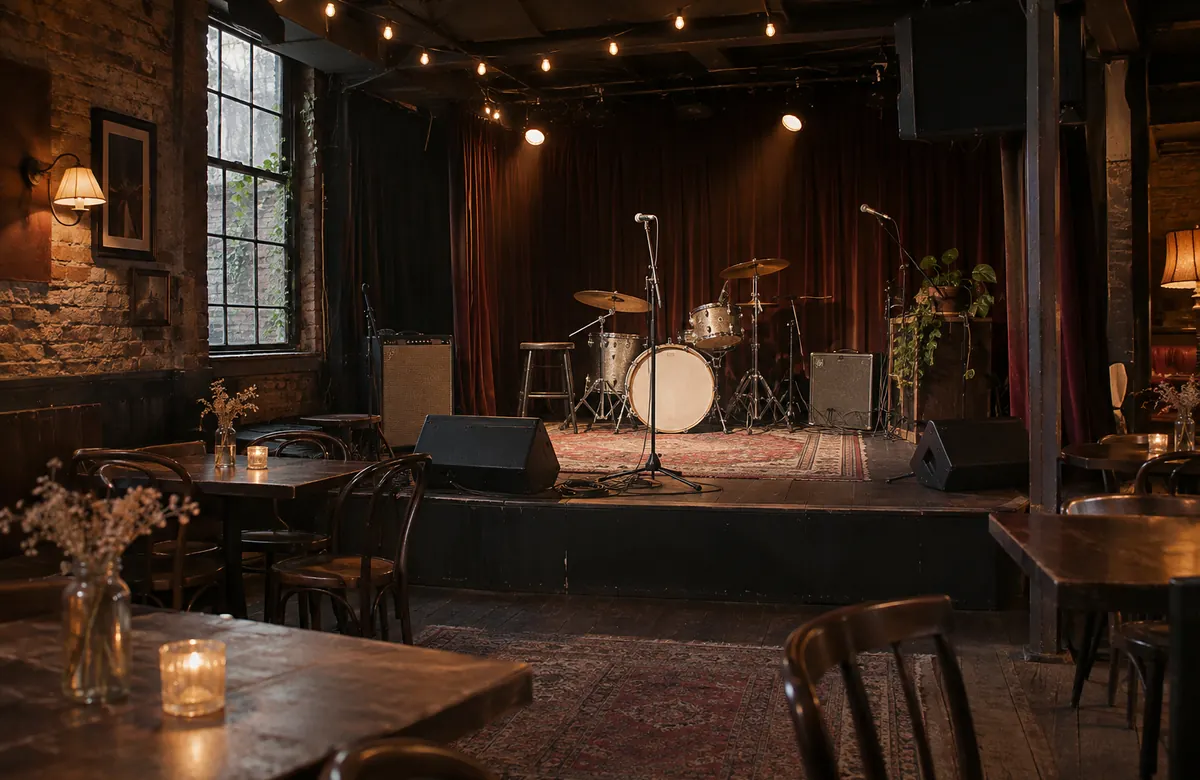
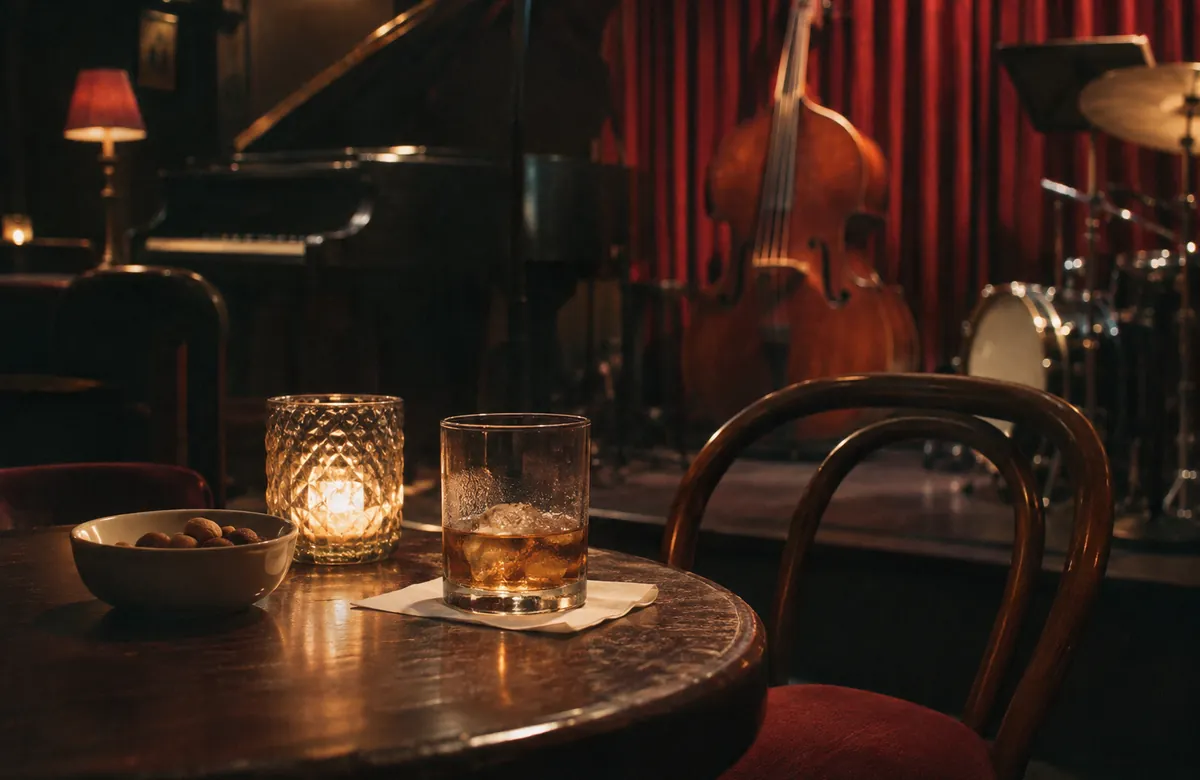
At an amplified concert, a listener often hears a mix chosen to make the music coherent throughout a sizable building. A compact club can expose more of the physical event behind that mix. The sound of a drummer's brushes catching the head of a snare, the movement of fingers on the bass strings, and the varying strength of a trumpet player's breaths become distinct parts of the music. The distance between a high note and a rest feels different when you are close enough to observe the action that creates them.
Chicago has rooms where that kind of listening is possible. The Green Mill in Uptown is an especially familiar example, a long-established venue whose programming brings people together around live performance. Andy's Jazz Club in River North is another conspicuous name, with groups playing in a restaurant setting. The Jazz Showcase has an independent history in the city, and its programming places experienced players alongside musicians building an audience for their own work. The individual club's character matters more than compiling a list of buildings that once hosted a famous artist.
There is a skill to being a club audience member. The ability to have a drink while hearing a show does not turn a composition into background sound. During a bass solo or an unusually quiet section, conversation at the next table becomes much more conspicuous than it would at a rock concert. A good room often establishes its conventions at an early moment in the evening. You need not be a jazz scholar to appreciate them. Listening for a while and observing how the other people in the space respond is generally enough.
Musicians depend on spectators in ways that can be surprisingly tangible. A reaction to a rhythmic figure can give a player a reason to pursue it. The musicians might begin with a well-established arrangement but make decisions about the length and energy of its sections in response to one another. A performance that felt merely adequate during a rehearsal can become unusually lively in front of people who have come specifically to hear it.
A city's summer of jazz
Chicago Jazz Festival brings another kind of attention to the music. Its free public concerts make it possible for people who have never bought a ticket to a jazz club to hear experienced groups. The festival offers scale, with stages capable of accommodating much larger audiences than can fit comfortably in a neighborhood venue. A programmer can place different musical approaches alongside one another without expecting every visitor to commit to an entire evening devoted to one of them.
Outdoors, the experience of listening has its advantages and inconveniences. Wind and background noise may swallow a very soft passage. People can arrive partway into a set, and the festival grounds become a place to spend an afternoon rather than simply hear a particular performance. That informality has real value. A person who came with a friend may hear a musician for the first time and decide later to seek out a recording or another date at a club.
By contrast, the groups that make their living in smaller rooms need a more continuous relationship with listeners. A summer festival cannot provide weekly opportunities for arranging new pieces or trying a different mix of musicians. The running calendar during the rest of the year is the infrastructure that supports those experiences. The two forms of presentation reinforce one another without doing identical work.
How records and live music fit together
A recording allows an attentive listener to return to a phrase until its shape becomes familiar. It is possible to study the thing a particular musician does with time and to compare one interpretation with another. This can be especially rewarding after hearing a composition for the first time in a club. The record is no longer the only evidence of how the music sounds.
Start with a tune you remember from a recent show. Listen to earlier interpretations of it, noticing where the melody provides a point of departure rather than something to be reproduced precisely. Then return to the club. You may discover that you are suddenly able to hear an exchange between the keyboard and bass which earlier sounded like a random flurry of activity. The process is pleasurable; no one has to test you afterward.
Chicago's musical tradition is best treated as something its listeners help to sustain, more than something that can be assembled in a collection of famous names. The past is audible in the work of contemporary musicians, but so are their colleagues, their current preoccupations and the decision they make in the middle of a performance. Buy a ticket when you can, respect the room, and give musicians enough attention to surprise you. On a good night the space between the stands and the last row of seats becomes immaterial.