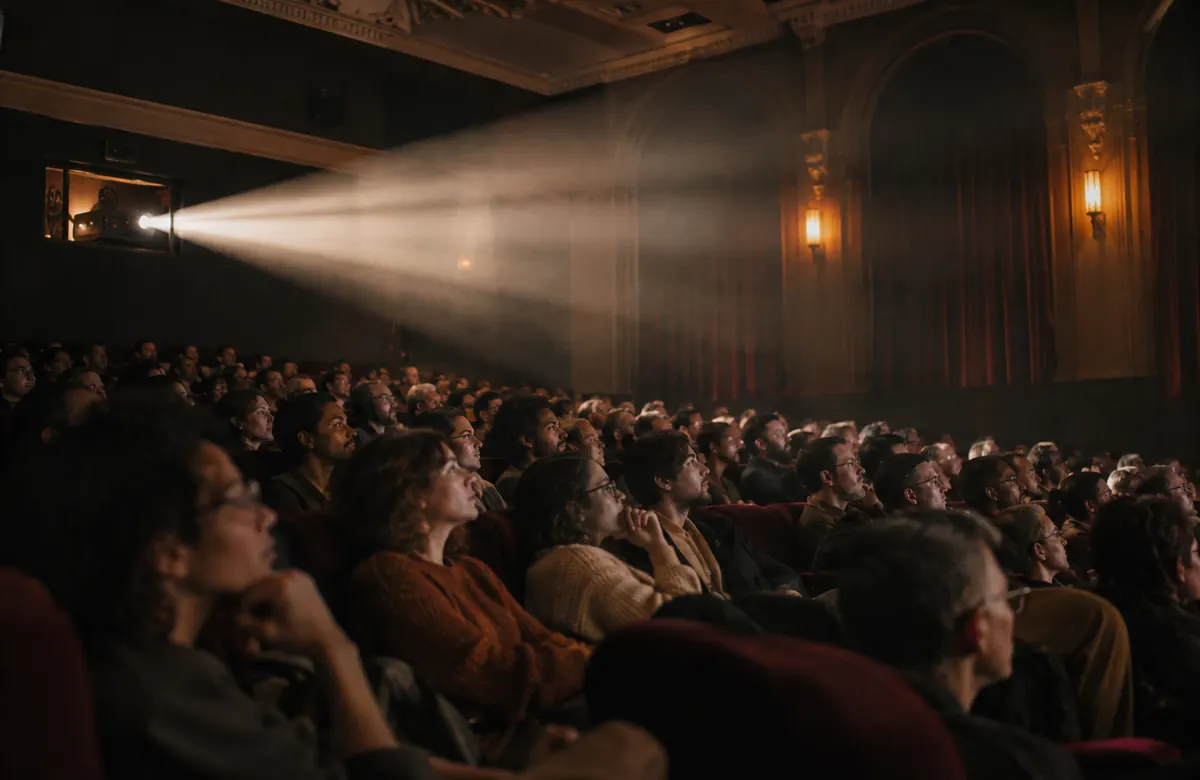
There is something curious about the concentration demanded by a film in a theater. You could have rented an identical work and encountered it in short installments in your living room. Instead, you arrive at an appointed time, find a seat and wait in dim light until the image takes possession of a wall. The longest and most difficult scene in the picture is no easier to leave than the rest. It might turn out to be the one that occupies your thoughts for the next several days.
Independent cinemas in Chicago have been sustaining this kind of encounter in an environment that now offers a remarkable quantity of films at home. It is reasonable to wonder how a theater could compete with that convenience. The problem with the question is the assumption that the only thing a theater offers is access to a particular film. The room, the projection and the decisions of the programmer have a great deal to do with the event.
Two very different rooms
On Southport Avenue in Lakeview the Music Box Theatre occupies a building constructed in 1929. As an art-house cinema since the 1980s, it has developed audiences for independent features, older films and a variety of recurring programs. Its physical design remains related to the elaborate movie palaces of the period in which the building opened. The place encourages a visitor to linger over the detail of a room constructed around a kind of entertainment that was itself quite young.
The Gene Siskel Film Center on State Street offers another experience of independent exhibition. It evolved from the Film Center of the School of the Art Institute of Chicago, established in 1972. The center was named for Chicago film critic Gene Siskel in 2000 and moved to its State Street premises in 2001. Its roots in education and its selection of international, documentary and experimental work distinguish it from a neighborhood theater with a commercial history.
Both places are worth knowing because instead of delivering interchangeable groups of films in identical rooms, they have developed identities through their programming. The same film can arrive in the context of a director's career, a collection of recent independent releases or a series devoted to a genre. The context changes the things a regular visitor is inclined to notice about the work.
Each building also has its ordinary geographical relationships with the city. The Film Center's place in the Loop enables someone to stop after a daytime visit to other cultural institutions. The Music Box has a neighborhood identity, with businesses on its street and residences nearby. In both cases the theater is more likely to become a regular part of people's lives if they find the logistics of visiting it pleasant. Local exhibition depends on these very uncinematic matters.
Repertory programming as an approach to history
When an older movie appears on a contemporary cinema schedule, the programmer may be doing something more productive than appealing to the audience's memories. Films have histories that can become difficult to comprehend if each one is encountered accidentally. A viewer who sees a familiar crime picture beside a less familiar one made several years earlier may have a much more precise idea of the innovations of both directors. A selection can connect works overlooked by the current accounts of a genre's development.
People sometimes confuse the age of a picture with its familiarity. A film made sixty years ago may contain arrangements of sound and image that look stranger to a young spectator than anything in contemporary commercial cinema. Screens, listening practices and conventions of acting have changed. These are differences worth enjoying rather than historical defects that require correction.
Film exhibition is also a problem of material preservation. The copies available for distribution may be physically damaged or may represent a version not intended by the people who made the original work. Restoring a film involves decisions about which elements to use and how to reproduce their appearance and accompanying sound. A theater showing a carefully restored version can give a viewer access to more coherent evidence of what a director and cinematographer were trying to do.
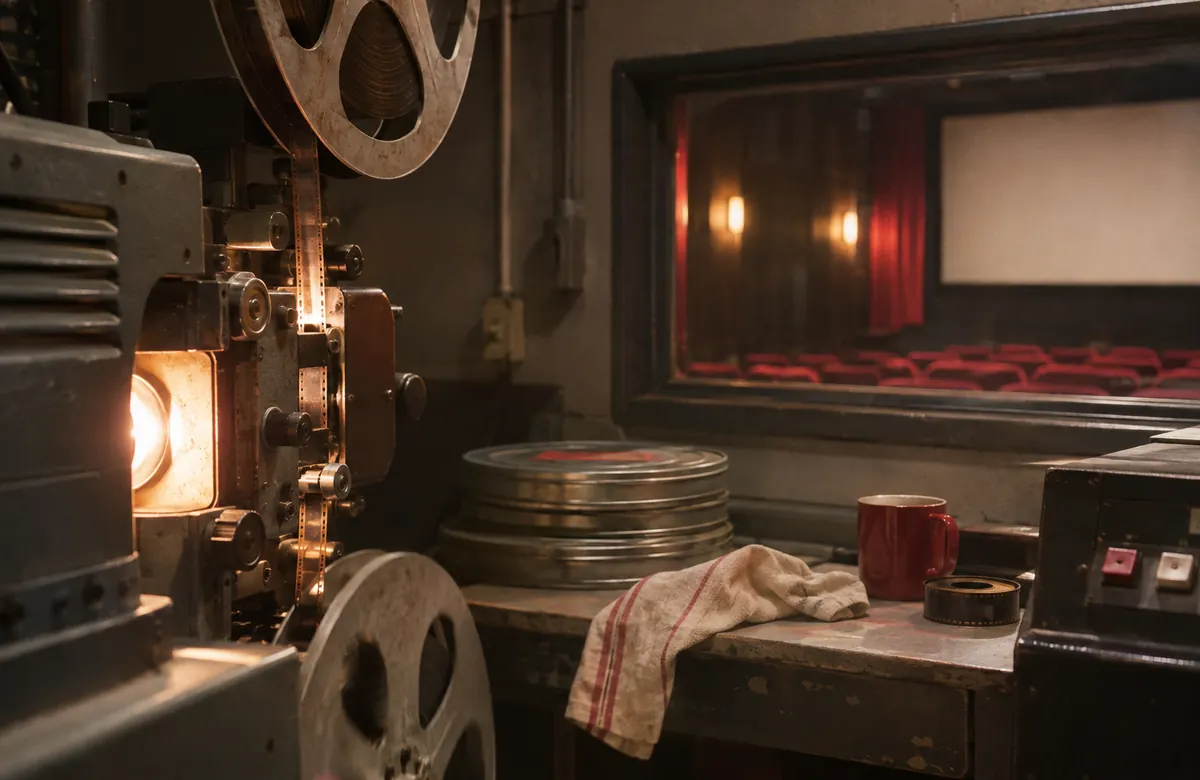
Some repertory cinemas also retain the ability to project films from celluloid prints. The Music Box is known for showing 35mm and 70mm prints as well as digital films. Projection using film requires appropriate machinery, trained people and attention to the condition of each copy. A well-executed screening represents a chain of practical care from the archive or distributor to the seat in the cinema. It need not be regarded as more authentic than every other form of exhibition to be a valuable skill in its own right.
A room full of careful attention
The economic circumstances of the independent cinema involve a recurring tension between the programmed schedule and the attention needed for a particular screening. A heavily attended evening showing of a celebrated movie can pay bills that a poorly attended afternoon program does not. A repertory theater can sometimes make unusually obscure work available because another part of its program draws a more predictable audience. It is an invitation to audiences with different cinematic interests to share a cultural institution.
The COVID-19 crisis placed intense pressure on this arrangement. The ability to select movies remotely became more important, and theaters tried various methods of getting films to audiences without packing people into shared indoor spaces. The development was valuable in some respects. A person interested in independent releases who had mobility limitations or lived outside Chicago no longer had to resolve the entire trip before choosing a film.
Once many theaters reopened, it was obvious that remote availability and physical exhibition did not offer identical pleasures. A comedy viewed by a room of people produces a noticeably different rhythm of laughter. Some of the quieter documentaries reward an unusual level of concentration that a dark auditorium makes easier to maintain. A picture viewed on the large screen permits details of the actors' movements to become part of one's experience even when the framing places them at some distance from the camera.
How to become an art-house regular
One approach to unfamiliar programming is to follow the names in a particular series rather than immediately judging the appeal of each film's basic plot. The series may be assembled precisely because the director's approach differs from a now-standard treatment of that plot. Descriptions of the period, country or original format can serve as invitations to consider the images and sounds rather than as prerequisites for entry.
Try the different lengths and formats of an independent cinema's schedule. See a program of experimental shorts. Notice how a picture shot for a comparatively narrow image looks when presented without excessive cropping. Go to a documentary in the afternoon when there is enough time to think about the subject afterward. Pay attention to whether an apparent lack of dramatic events gives you greater freedom to observe something else in the frame.
The opportunities to do these things depend in part on small decisions by those who attend. A ticket bought to an obscure screening is a direct expression of interest in programming of that sort. Returning to a particular theater after a satisfying evening helps a business or nonprofit organization understand what audiences value. Chicago's independent cinemas provide a setting for audiences to acquire film history through memorable encounters with the works themselves, and for films once thought commercially unpromising to find the time and attention they deserve.