House music makes considerable use of repetition, yet its most interesting moments are often discoveries of difference. A dancer follows the pulse for what seems like a long time. The bass line drops away, a few elements continue on their own, and when the low sound returns, the room responds with a rush of movement. Anyone who hears the same track quietly for the first time at home may fail to understand just how consequential that change is at the volume and physical scale of a dance floor.
The difficulty of appreciating this music away from a crowded room is part of Chicago's particular contribution to it. House did not begin as a self-contained set of commercially prescribed recordings. It depended on the relationship between a person selecting and manipulating the music and people who had come somewhere expressly to move to it. That relationship had a history in the city's club culture before it reached an international market.
Frankie Knuckles's place in the picture
Frankie Knuckles arrived in Chicago from New York in the late 1970s and became closely associated with the Warehouse, a dance club that developed a devoted audience. The venue offered continuity between records. It gave the DJ the chance to experiment over a span of several hours, accommodating changes in the intensity of the room. The material played there might encompass different forms of disco, soul and other dance-oriented recordings.
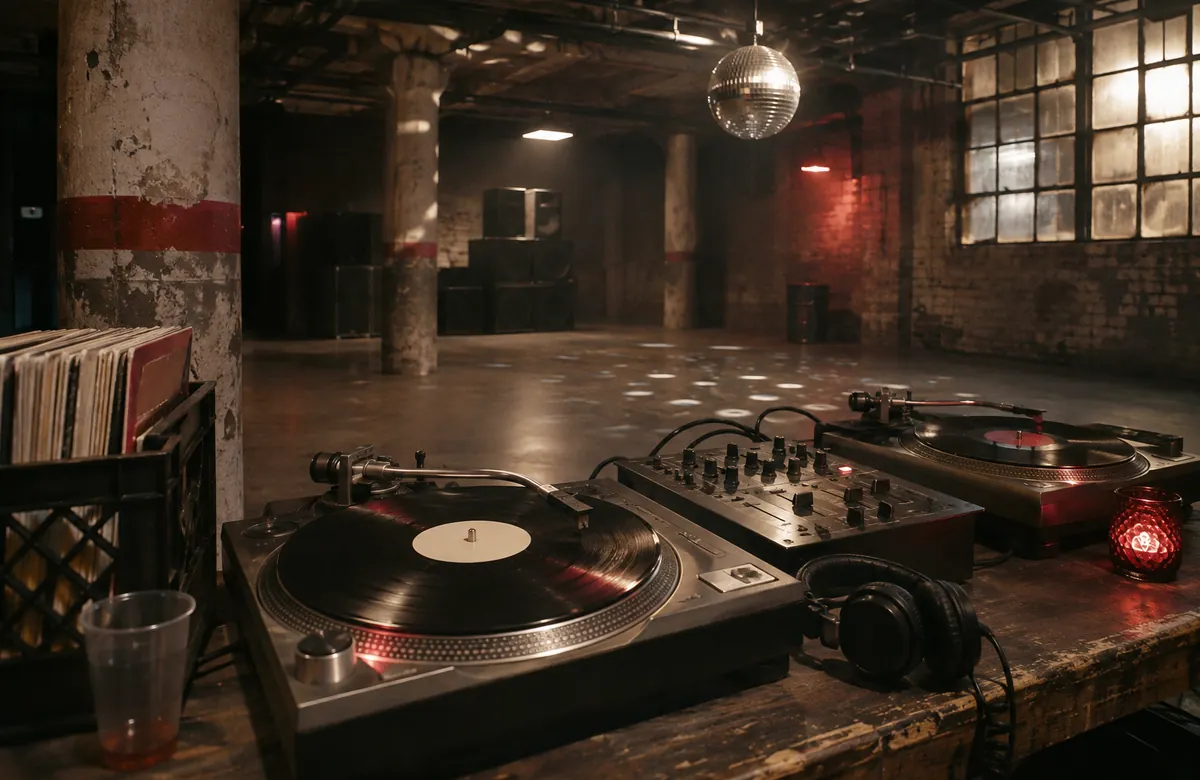
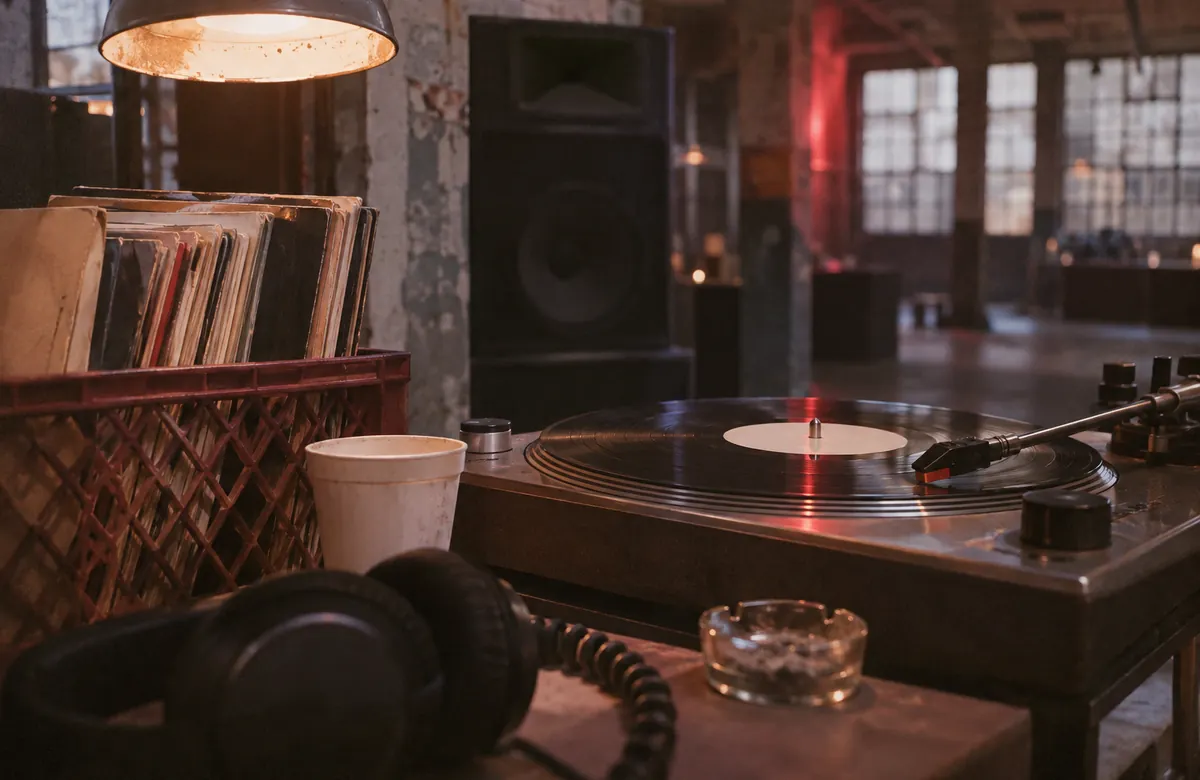
Knuckles used records as components of an extended event. Two pieces of music could be joined and passages altered to make the movement of a crowd feel almost continuous. There was a practical reason to acquire multiple copies of certain records: with a suitably timed transition, a particularly effective passage could be prolonged. This musicianship involved the understanding of intervals, beats, texture and the anticipated reaction of dancers. It did not resemble putting songs in a list and pressing a button.
The club was particularly important to Black and gay Chicagoans, people who could face hostility or exclusion from other nightlife. Its practices fostered a sense of belonging. Music helped establish the conditions in which people came to recognize one another; a party at the right place and time could be a social environment unavailable elsewhere in the city.
The association between the club and the genre's name is strong enough that the two usually appear together in accounts of house history. The precise linguistic origin of the word, however, is not settled simply by the existence of the Warehouse. Genre names emerge through usage, and they can be carried across places in conversation, in record shops and later on record labels. It is more useful to follow the process by which the public came to recognize a new kind of music than to imagine everyone agreeing on its name at a particular instant.
Records made from the needs of the room
The move from modified performances of existing records to the creation of tracks specifically adapted to club systems was significant. Producers made distinctive use of drum machines, synthesizers and sequences. Musical ideas that might have needed an entire rhythm section to modify in performance could be created by a smaller number of collaborators with some electronic equipment.
These machines did not dictate the musical outcome. A steady kick drum established a shared measure of time. Other drum sounds could create a different kind of movement; a hi-hat placed off the main beat makes a dancer experience the beat differently. A bass line and a keyboard figure could knit together a long section of a comparatively simple track. The point was to make the sonic parts work well together on equipment capable of playing them loudly and over a sustained period.
House producers and DJs continued to draw on previous records. An electronic track could carry traces of gospel singing and soul arrangements, which helps explain why descriptions of the genre only in terms of futuristic equipment are unsatisfactory. A recorded voice brings physical memory to the music. Setting that voice over a rhythm built by machines results in interesting contrasts rather than a neat dividing line between human and technological sound.
The work traveled through several routes, including local radio, clubs and independent record distribution. For a record to become popular elsewhere, some combination of people had to circulate information about it, organize nights at which it could be heard and make it available for purchase. DJs could return from another city with new material. The distribution infrastructure mattered long before a producer could upload a track to a global streaming service.
What it means to designate a dance club
In 2023 the Chicago City Council approved landmark status for the Warehouse building. Knuckles had died in 2014, nearly a decade earlier. Protecting the structure was an opportunity for the city to give formal recognition to a place that held particular significance for the people who made and experienced this music, as well as for the enormous number of musicians influenced by house in other cities.
Preservation raises a useful problem. The memorable thing about the club was an experience created over time by people. A room can be identified as the setting for that experience; the facade alone cannot make it available to a new generation. The most important equipment may have been replaced or removed long ago. There is no straightforward way to reconstruct an audience, let alone the relationships between individual people in it.
For a musical site, then, material preservation represents a beginning rather than the whole job. The people who remember the scene have valuable knowledge about the nature of the nights, the songs that worked well in the room and the effort behind organizing the gatherings. Recorded performances, oral histories, posters and photographs can illuminate an environment that otherwise appears to us in fragments. The career of a DJ is difficult to convey through records sold under the DJ's name alone.
The designation also suggests a reasonable change in our understanding of what counts as significant Chicago architecture. A simple industrial building could become crucial to the emergence of an influential art form precisely because its original use was adaptable. It had a different cultural value for dancers than it had for the commercial enterprises that occupied similar buildings.
Listening to contemporary house in its home city
The public Chicago House Music Festival and its associated programming offer opportunities for new listeners to encounter the work of local DJs and the history they represent. These occasions operate somewhat differently from the club setting. Outdoor stages, scheduled sets and the presence of a mixed audience make the event a convenient introduction; clubs can offer the extended experience of dancing to a single DJ's shifting selection.
If you are interested in the music's structure, listen closely to an early record without repeatedly trying to identify the title of every sample. Follow the kick drum for a minute or two, and pay attention to the parts that are added around it. One keyboard line can begin to sound different after the introduction of a new bass sound. Notice how the pursuit of relatively small changes makes a gradual shift in the texture of the whole recording particularly effective.
Chicago's continuing dance culture demonstrates that house music is capable of eliciting new responses without shedding its older characteristics. The immediate pleasure of a successful club night is its own reward. The larger claim for this music is grounded in the practical intelligence of the DJs, producers and dancers who learned how to produce that pleasure across a remarkable length of time.