Borrowing a book is one of the simplest transactions someone can undertake at a Chicago Public Library branch. Obtain a card, choose an item and arrange to return it. A person who has completed this transaction hundreds of times may regard the system as entirely straightforward. But a library has to design its services for people who have never used them, who have only recently arrived in the city, who cannot read the available instructions comfortably or who have stopped coming because of some previous difficulty.
In September 2019, Chicago Public Library announced that it was eliminating most overdue fines. The distinction between asking people to return borrowed materials and imposing accumulating charges when they fail to do so was central to the change. A charge seemingly small enough to be unimportant to one borrower could have been the reason another person avoided the library altogether. The policy treated the barrier to returning as a problem worth addressing in its own right.
When the institution celebrated its 150th anniversary in 2023, its account of its long history placed digital access and community activities alongside printed materials. That combination is unsurprising to anyone who spends time in a busy neighborhood branch. The library has become one of the few indoor public institutions where a person can arrive without a scheduled appointment and work with information in several different ways.
Returning to the library
There are obvious practical reasons why a library wants books back on time. Another person may have requested the same title, and a missing copy can produce a long wait. The collection is an asset whose usefulness depends on circulation. For decades, overdue fines were one way libraries tried to encourage prompt returns. A recurring charge also supplied an incentive to avoid postponing the trip indefinitely.
The problem arose when accumulated charges discouraged the very activity they were intended to encourage. A borrower who expected an unpleasant conversation about a debt might avoid visiting a branch even after locating the overdue item. A family could be reluctant to use the same institution again. The effect would be particularly serious when the library was one of the household's principal sources of reading material.
Removing most overdue fines is different from deciding that items do not need to be returned. A library still requires a method of dealing with materials that are lost and communicating about due dates and requested copies. The important distinction is between the cost of an item that must be replaced and a charge accumulating because of a delay. These policies change the nature of the conversation that occurs when a borrower comes back.
Chicago's policy shift offers an example of how an institution can improve access without erecting a new building. A person who already knows the location of a branch and wants to use it may face an obstacle created by its rules rather than its physical entrance. Examining the rules at the point where someone encounters them can reveal surprisingly effective ways to change the institution's relationship with residents.
A place to work with a computer
A second aspect of a modern library's work becomes apparent when a visitor arrives without intending to borrow anything. Computers provide access to applications, government information, records and communications. Someone who uses a library computer may have a temporary problem with their own equipment, or may have no adequate equipment at home. Their need for the machine is not necessarily visible to another person who regards it primarily as a convenient facility.
Reliable access to the internet involves more than the existence of a network. Entering information into an unfamiliar application can be difficult on a small screen. Some activities require printing or scanning a document. A person might know exactly what they want to accomplish but need help figuring out the next step in a digital process. A library employee can often make an important difference by guiding that person toward the relevant instructions or helping them locate a necessary resource.
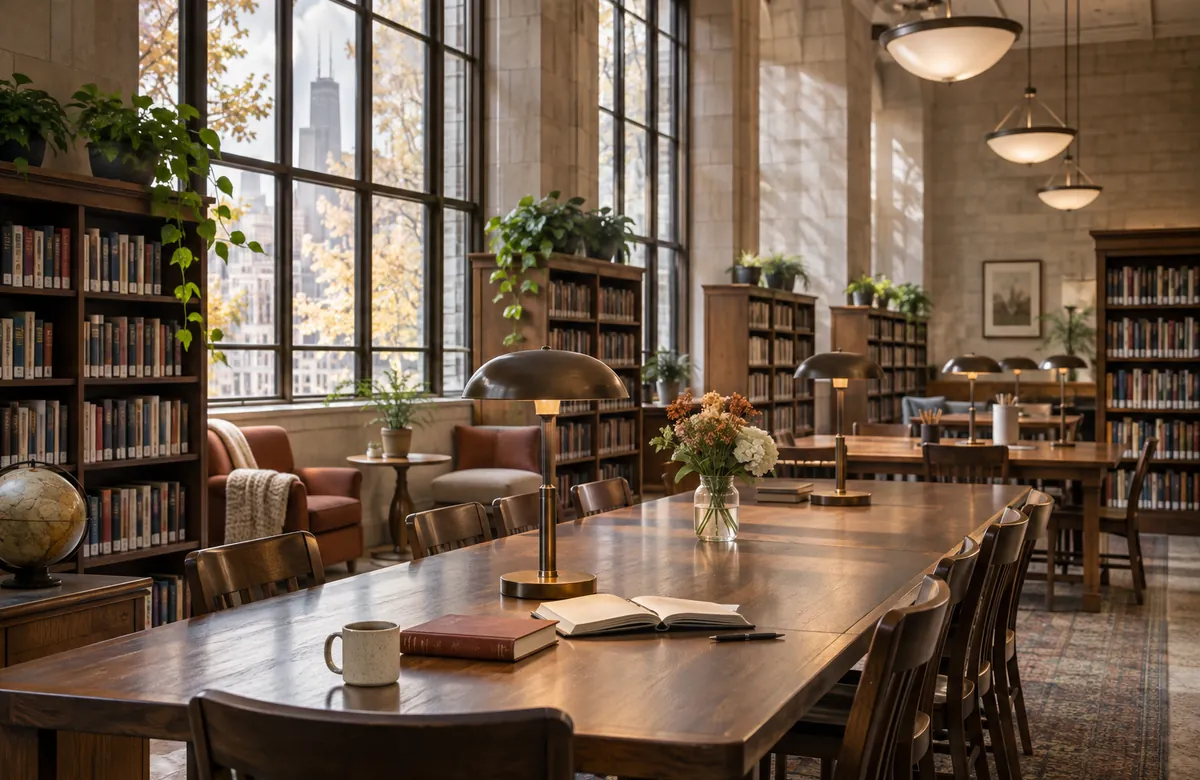
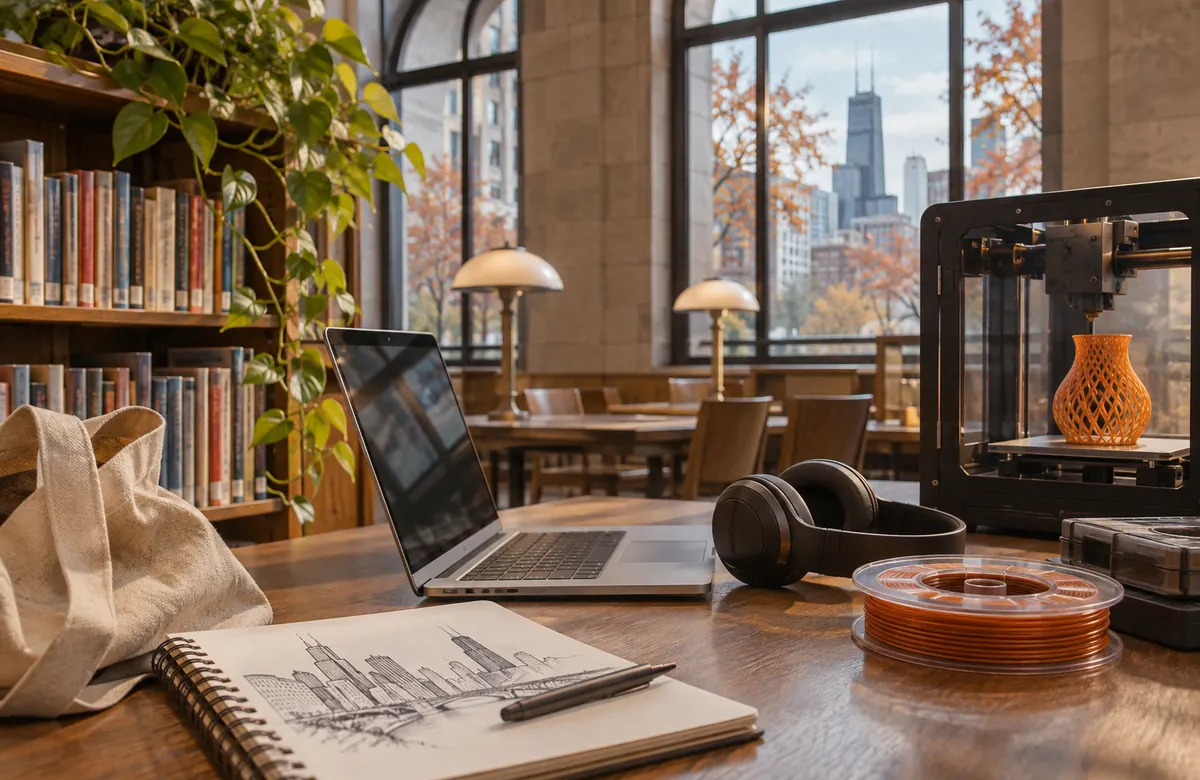
These uses have influenced the design of library spaces. A conventional reading room can accommodate many people seated quietly at large tables. Working with several devices may require electrical outlets, surfaces with enough room for equipment and storage arrangements that were not necessary when most visitors arrived carrying only a book. Someone joining a video conversation faces different acoustic needs from someone reading silently. A well-designed facility allows both to work without needlessly disturbing one another.
The library also has to support different levels of knowledge. Instructions that make perfect sense to a frequent computer user may be hopelessly vague to someone seeing an interface for the first time. Help offered without embarrassment or impatience is especially valuable in a public environment. It preserves the visitor's ability to ask another question rather than leaving the person convinced that the institution is not intended for them.
Learning through making
Chicago Public Library's YOUmedia programs provide an example of learning that does not revolve exclusively around a printed assignment. The program began in 2009 with a space devoted to high school teenagers at the Harold Washington Library Center. Its activities have included forms of creative work with digital media. The important feature of such a facility is the chance to explore a subject through active production rather than only through material about somebody else's production.
A teenager interested in audio or video may be able to learn a great deal by creating a small project. An error in a recording can become a reason to investigate acoustics. Editing footage can reveal how a change in sequence influences the meaning of a scene. These are difficult lessons to communicate entirely through written instructions. Access to equipment and people with relevant knowledge helps learners discover the questions they want to pursue.
Making facilities of different kinds available within a public institution also allows visitors to develop an interest before making a substantial purchase. A person initially attracted to a piece of unfamiliar equipment can discover whether the activities it supports are appealing. This is particularly valuable for people who cannot reasonably justify the cost of buying specialized tools without having tried them.
Not every branch can contain the same range of facilities at once. Branches occupy buildings of different ages, sizes and configurations. The useful comparison is between the needs of the communities they serve and the activities offered there or elsewhere in the network. A highly specialized facility may benefit people from across the city, while routine services should be convenient enough to support frequent neighborhood visits.
A public interior
Libraries have a distinctive advantage over many other American indoor spaces. A visitor is not required to buy something in order to spend a reasonable amount of time there. One person sits with a newspaper. Another works on a personal project. Someone else briefly consults a reference and then leaves. Their presence has a purpose, but it need not resemble the purpose of the next person at the table.
Maintaining that quality requires thought about the ordinary details of operating a building. A closing time affects workers who cannot arrive until evening. A table that is difficult to approach with a wheelchair provides less useful space than its dimensions suggest. Being able to find help quickly matters to someone who arrived with a specific problem and a limited period in which to solve it. The everyday operation of a library can be as important for access as the formal list of its available services.
The shift away from most overdue fines in 2019 made one aspect of the institution's relationship with its users easier to see. Access can be obstructed by a series of little difficulties, and a public service succeeds when the people responsible for it recognize those difficulties. Chicago's library network has endured by providing recognizable services while changing the methods through which people obtain them. On an ordinary afternoon, the different activities taking place around a branch's reading tables offer a better sense of this process than a list of the titles on its shelves.