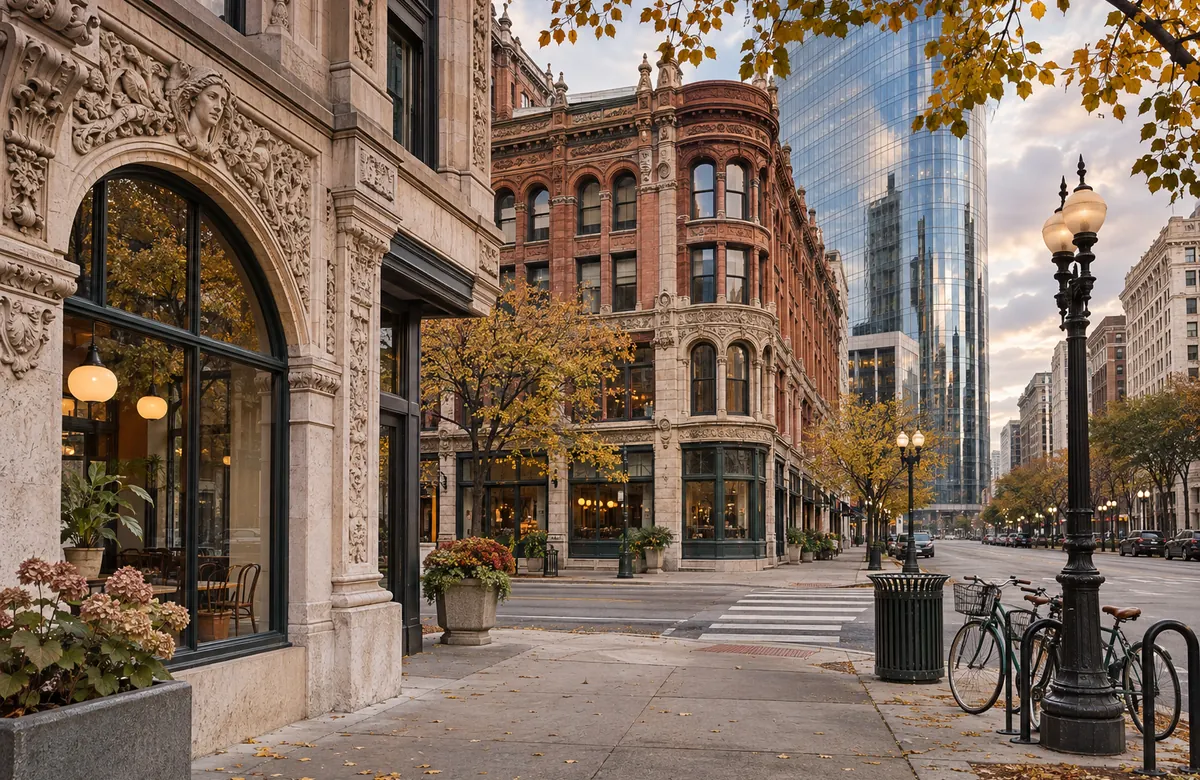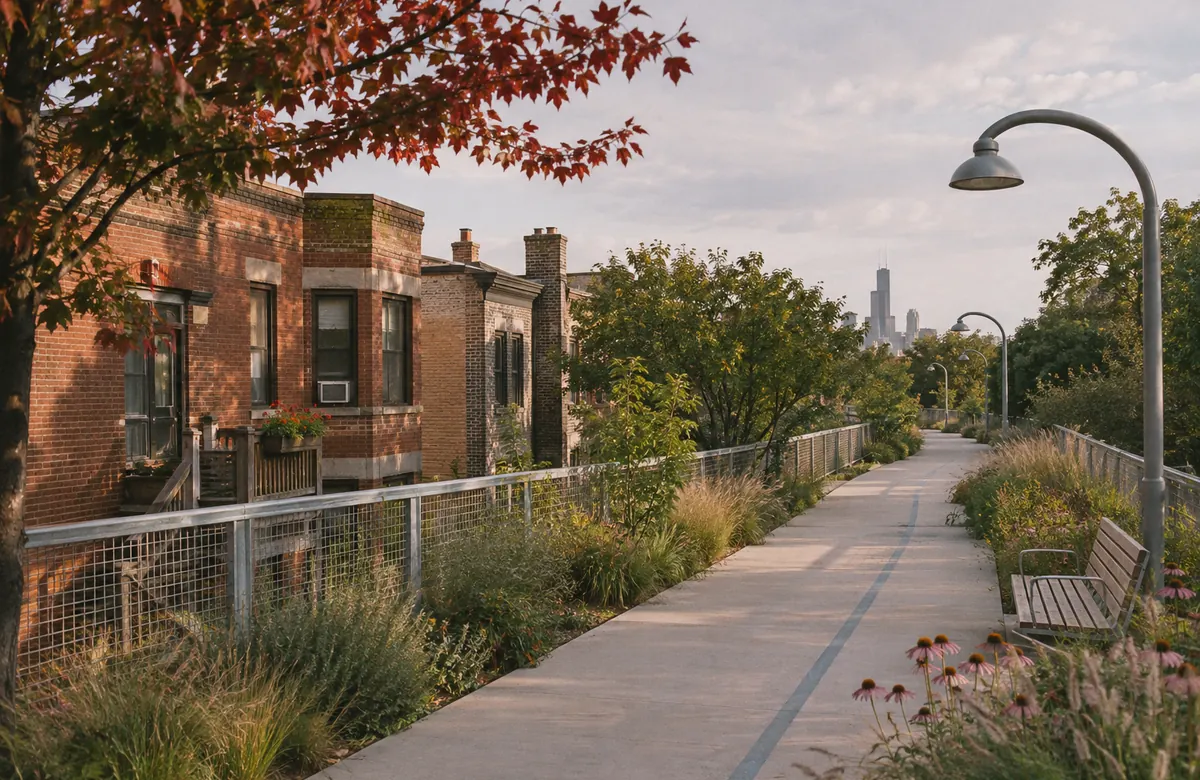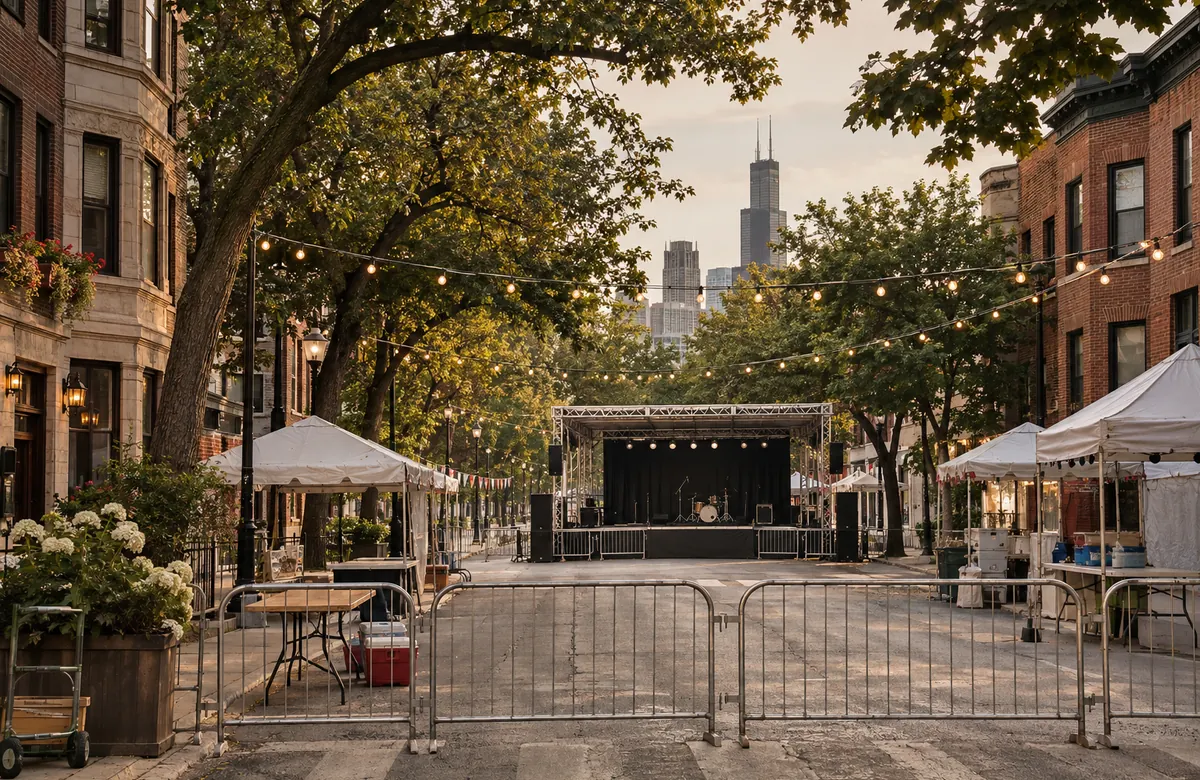
On a particularly busy Chicago summer weekend, someone can turn from an ordinary residential street into what feels like a completely different city. A stage occupies a place where traffic normally travels. Tables have arrived in what was previously a lane for moving cars, and people stand in the middle of the road talking without looking over their shoulders for vehicles. By the following morning, most of the additional equipment may be gone. Drivers pass through the same intersection as though nothing unusual had occurred.
The change can appear so familiar to Chicago residents that the work required to produce it becomes difficult to see. During the summer of 2020, Chicago was deprived of much of that recurring transformation. Authorities canceled permitted special events through Labor Day as the city dealt with the coronavirus pandemic. Major events such as Taste of Chicago and the Chicago Jazz Festival were unable to proceed in their usual forms; numerous smaller neighborhood events were also canceled or postponed. Performances and programs shifted to other formats where that was practical.
The empty festival streets made several aspects of the city's summer culture particularly apparent. Large audiences depended on the efforts of relatively small organizations. Businesses accustomed to planning for an unusually busy day lost that opportunity. Musicians and other performers faced the disappearance of occasions to work and meet audiences. And the physical experience of gathering outdoors, normally so straightforward that it did not require much explanation, suddenly became a difficult proposition.
A street with a temporary purpose
The distinctive quality of a neighborhood festival lies partly in its reuse of ordinary space. A dedicated concert venue has been designed in anticipation of a particular kind of crowd. Its entrances, backstage rooms and audience areas exist permanently. The organizers of a street event begin instead with a landscape built primarily for movement and access to adjacent properties. For a short period, they must transform it into a place where a substantial number of people want to remain.
The location itself can contribute to the character of the event. People who visit the surrounding businesses regularly recognize buildings behind the temporary equipment and become familiar with the unusual view of their street. Visitors from elsewhere may acquire a different impression of the neighborhood than they would have had while passing through by car. The ordinary boundaries between places for movement and places for activity have been rearranged.
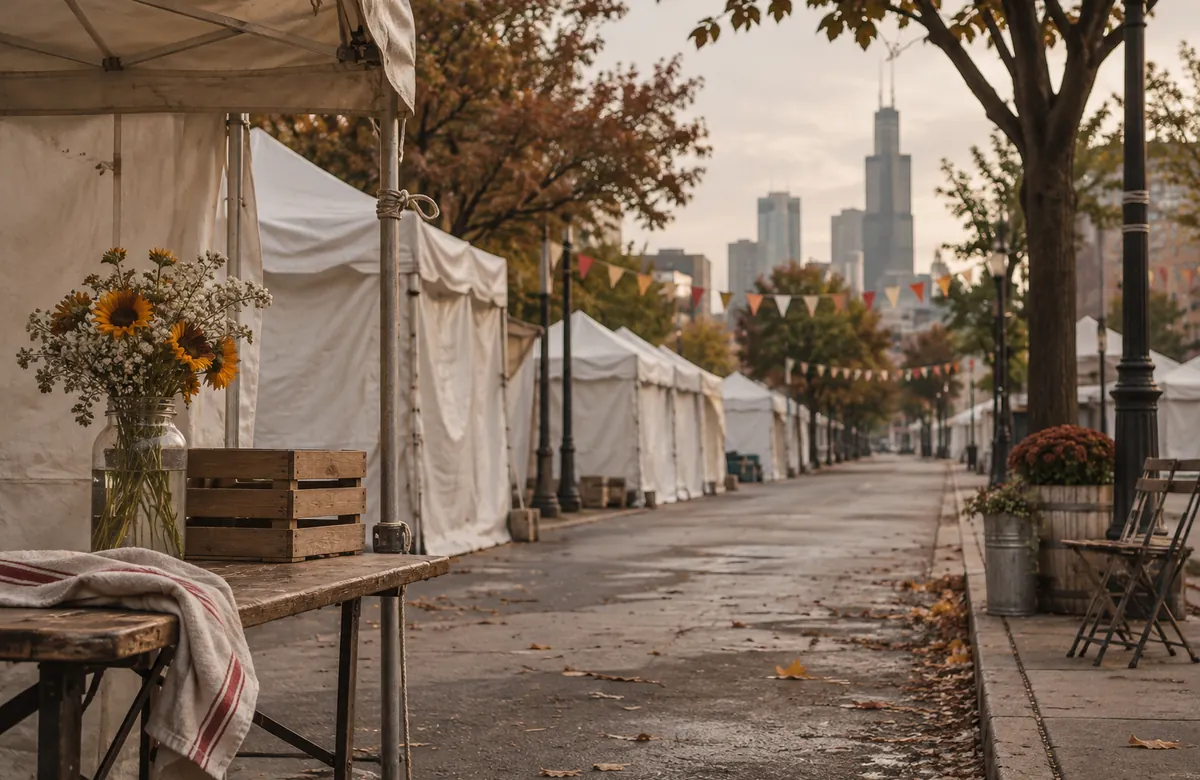
That process involves a remarkable number of practical decisions. An occupied sidewalk still has to provide access to particular buildings. Deliveries and emergency services require space. Vendors need locations from which they can operate safely without repeatedly crossing the paths taken by visitors. A stage needs reliable equipment and a predictable relationship to its audience. Arranging a few blocks of street for a one-day event can be comparable to setting up a rudimentary assembly of businesses and entertainment venues from scratch.
The possibilities for making a mistake are correspondingly numerous. A queue that works perfectly well in a drawing can obstruct an unexpected route when its actual length is visible. Amplified sound can be difficult to contain near neighboring apartments. A poorly placed sign can leave visitors unsure whether they are headed toward an entrance or an area reserved for the people making the event possible. The experience accumulated by organizers and workers over several seasons helps them address these problems before the crowd arrives.
Why the neighborhood’s calendar matters
For a visitor, the date of a festival might be simply a convenient fact used to arrange a weekend. For people involved in running local establishments, it can be a more consequential event. A restaurant preparing for a busy day needs enough people working and an adequate supply of ingredients. A vendor may have committed to spend a certain amount for space at the event and equipment to use there. A performer has set aside time that otherwise might have been available for another engagement.
Such commitments help explain why the loss of an event in 2020 mattered beyond the immediate disappointment of people who had planned to attend. Businesses make decisions in advance on the strength of expected opportunities. Canceling a large gathering may invalidate decisions made weeks or months before. The effect can extend to individuals providing equipment, transportation or production services who have little direct contact with festival audiences.
The actual significance of a festival to a particular business should not be assumed. An exceptionally busy day could bring welcome sales to one establishment while making it difficult for another to serve its regular customers. Certain businesses depend on access routes that become less convenient during an event. Those differences are reasons for organizers to work with people using the surrounding streets throughout the year rather than treating everyone's interests as identical.
Wider participation can also help preserve a festival's relationship to its original setting. A generic collection of attractions that could be installed at any street corner may draw an audience but have little connection to the neighborhood itself. Involving local organizations, performers and vendors gives the gathering characteristics that cannot simply be transferred to another location. The street becomes important to the subject of the event as well as to its logistics.
Listening without standing in the same place
Amid the cancellations in 2020, organizers and performers looked for ways to present music, dance and other activities without bringing ordinary festival audiences together. Digital programs and performances could preserve contact with some listeners. They allowed people interested in a subject to encounter work even if they had never been able to attend a particular outdoor event. They could not, however, simply reproduce every aspect of an audience gathered on a Chicago street.
The experience of listening to live music while moving through an outdoor space differs from selecting a performance on a device. A passerby may hear something unfamiliar before even identifying the stage from which it comes. Someone who had planned to meet a friend or purchase food can become an audience member almost accidentally. The performer receives a changing collection of listeners, not all of whom arrived with a prior interest in the work.
Those chance encounters have cultural value that is difficult to reproduce through systems where people begin by searching for something they already recognize. They help listeners develop an interest in artists and styles of music that they would not necessarily have chosen independently. In a neighborhood with several places to hear performances during an event, the visitor may make discoveries simply by moving toward the next intersection.
Recorded and transmitted performances provide their own possibilities. A listener can return to a recording or stop and examine details that went unnoticed on a first hearing. Someone outside Chicago can become acquainted with a local musician. The methods are complementary. The 2020 disruption made it unusually easy to identify the qualities of each by considering what was lost when only alternatives to the typical gathering were available.
The work that makes a little chaos enjoyable
Street festivals have an engaging element of unpredictability. A visitor does not know whom they will meet or how long they will stay. An unplanned detour leads to another performance. None of these possibilities requires that the actual management of the event should be unpredictable. They depend instead on the establishment of reasonably dependable conditions in which people can move around and make decisions freely.
After the peculiar summer of 2020, the continuing tradition of outdoor events offered Chicago residents opportunities to return to streets temporarily arranged for gathering. The enduring attraction does not come solely from the publicity attached to an event or from the scheduled names on its program. For a short time, a public street serves a kind of urban life ordinarily difficult to pursue in the space devoted to traffic. People need no particular destination beyond the next interesting thing they notice. The transformation is temporary, but the relationships among the people who create it and the places where it takes place can develop across many years.