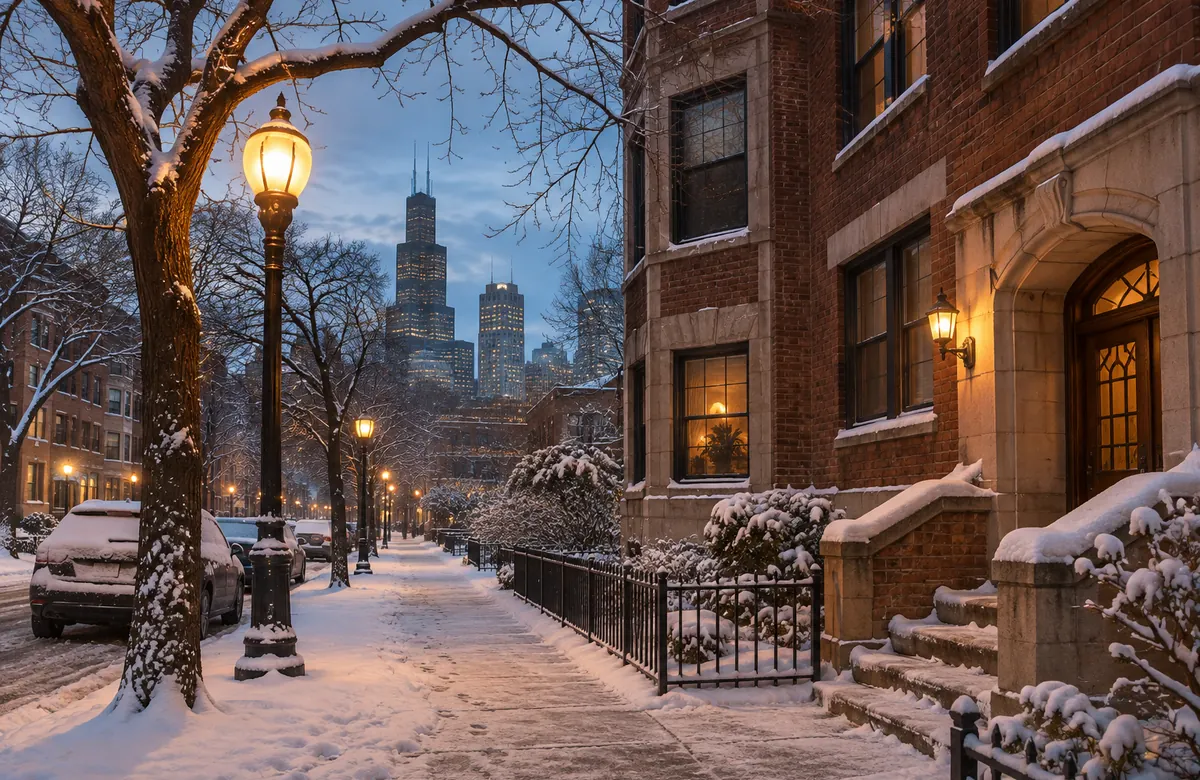
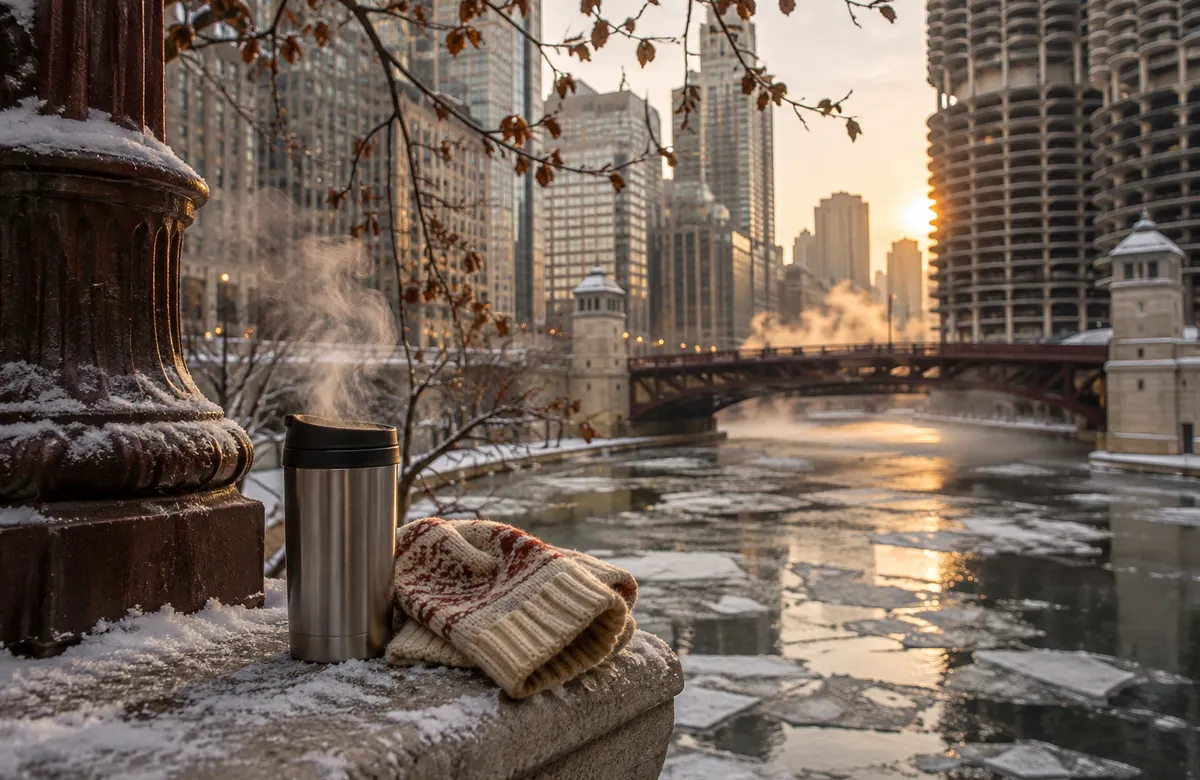
People often tell stories about a Chicago winter by describing a dramatic outdoor scene. Ice collects at the shore. Snow turns parked cars into almost identical white shapes. Pedestrians lean forward into the wind and gradually disappear behind scarves and hoods. These are memorable images, but they miss much of the activity that distinguishes a severe winter morning from an ordinary one. The most consequential events may be taking place in boiler rooms, transit vehicles and kitchens, far outside the frame of an attractive photograph.
On January 30, 2019, the temperature at Chicago O'Hare International Airport fell to minus 23 degrees Fahrenheit. The National Weather Service identified it as the city's lowest measured temperature in thirty-four years. The exceptionally cold period lasted through the following day. Those conditions provided an unusually vivid example of a general urban problem. Chicago's culture of winter preparedness depends on systems that make movement and shelter possible when spending time outside becomes difficult.
An extraordinary temperature is only one part of that problem. How long the cold lasts, whether sidewalks are icy and what kind of shelter a person can find all affect an individual's experience. The same weather produces widely different conditions for people living in different buildings or making different kinds of journeys.
A city designed around short distances outdoors
People living in a place with considerable seasonal variation become familiar with particular details of its architecture. A recessed doorway provides protection while someone searches for a key. A station with a reliable indoor waiting area looks considerably more valuable in January than it did in September. A store with a difficult door or an exposed queue may suddenly appear less accessible. The convenience of one building in relation to another can begin to matter as much as the services each provides.
Downtown Chicago contains a system of passages and building connections that permits some travel without exposure to the street. On many neighborhood streets, however, the ordinary walking network consists of sidewalks and whatever shelter individual buildings provide. The pedestrian has to consider each part of the trip: the distance to the bus stop, the likely wait and the portion of the journey at the other end. A route that is usually manageable can become impractical without a substantial change in its actual length.
Older apartment buildings illustrate some of the problems involved. Apartments with different orientations and positions in the same structure do not necessarily have identical heating needs. Drafts around windows can produce discomfort even when the nominal room temperature seems satisfactory. Entrance ways that were perfectly adequate in mild weather may accumulate ice when wet footwear is continually carried inside.
These details help explain why residents respond very differently to a severe cold forecast. In a well-maintained home with dependable heat, the decision may concern postponing an optional trip. In an apartment with inadequate insulation or a failing heating system, remaining indoors provides much less reassurance. A resident should not have to depend on an uncertain personal arrangement for basic protection from the weather.
Clearing a route rather than a rectangle
After a snowfall, clearing pavement makes an immediate contribution to the use of a street. But an important distinction separates a cleared area from a continuous walking route. A stretch of sidewalk can be immaculate while the adjacent intersection remains blocked by a heap of snow. A pedestrian using a cane may find the last few feet of an otherwise comfortable walk the most difficult part of the journey.
Snow management therefore concerns connections as well as individual pieces of property. Where roads meet sidewalks, vehicles and pedestrians require different kinds of clearance. A pile left by plow operations may be difficult to negotiate. A bus stop needs an area in which passengers can wait and board without moving through a substantial accumulation. A crossing may require attention again after traffic carries water onto it and freezing conditions return.
In neighborhoods where residents depend heavily on walking or public transportation, these connections have value far beyond aesthetic cleanliness. An uncleared route may prevent someone from reaching a shop or an appointment. An older resident could become reluctant to leave home even during periods when temperatures are no longer exceptionally low. A clear sidewalk can be the difference between participating in ordinary neighborhood activity and remaining isolated for several days.
The effect of local cooperation becomes apparent on a block after a storm. Some people have the necessary equipment and strength to clear a large area of pavement; others cannot do the work independently. The importance of arrangements between neighbors is particularly evident where buildings cannot rely on a dedicated maintenance staff. Snow does not recognize differences in property ownership or individual physical ability.
Waiting for the train
Severe winter conditions also reveal which transportation facilities have been designed with the waiting passenger in mind. In summer, ten minutes before a bus arrives may be of little concern to someone comfortably standing outside. The same interval in bitter cold requires much more preparation. Knowing when the bus is likely to arrive can help a person decide when to leave the shelter of a nearby building.
This puts a distinct value on accurate arrival information. A prediction that is only slightly wrong may create little inconvenience in mild weather and considerable discomfort in difficult conditions. Information about a major delay needs to be available early enough for passengers to choose another route. Station announcements, digital displays and accessible service information can therefore become important elements of a city's protection from cold rather than mere conveniences.
Public transportation depends on a large network of employees working throughout these conditions. A driver, repair worker or station employee may spend a substantial portion of a shift exposed to cold or traveling between locations. The service that passengers observe is only the visible outcome of preparation and maintenance, including the activity needed to keep vehicles, switches and information systems functioning. A worker clearing a platform can affect the experience of hundreds of people who will never know who did the work.
Reliability varies from route to route and situation to situation. In extreme conditions, the fact that one service is operating does not establish that every connection needed to complete a particular journey will be available. Planning with room for uncertainty can help individual travelers. But well-coordinated services and clear public information make that planning much easier.
The less visible city of winter
One of Chicago's durable cultural habits is the tendency to speak about cold weather as a shared test of character. Comparing memories of winter can establish a sense of fellowship between people who lived through the same conditions. A story about a difficult commute may be amusing several years later. Yet this kind of conversation can obscure differences between an inconvenienced person and someone facing a serious housing or health problem.
The January 2019 temperatures showed why the quality of ordinary services matters disproportionately at certain times. A public building that normally serves as a convenient meeting place may become a particularly valuable shelter. A business whose employees know several of their regular customers may notice when somebody stops appearing. A functioning transit route allows people to reach places where they can obtain things they need.
Winter changes the practical meanings of ordinary city features. A sunny seat beside a window, an entrance sheltered from the prevailing wind and a reliably cleared crossing become much more significant. Rather than assuming that a city copes well simply because generations of people have endured the cold there, it is worth examining the work that makes the next winter manageable. The results are most visible when unusual weather arrives. Much of the preparation happens on days when there is no particular reason to take a photograph.