Hyde Park can be difficult to describe to someone who has never spent time there. The University of Chicago provides an obvious introduction, and its campus accounts for many of the buildings that appear in photographs of the neighborhood. Yet a visitor moving only between university landmarks will acquire a surprisingly narrow impression of the place. A residential block, a longtime shop or a small public exhibition may communicate as much about Hyde Park's daily life as a famous academic building.
The problem with treating the campus as the entire neighborhood is not that the university's influence can be ignored. Its students, researchers, facilities and events affect activity on surrounding streets. But Hyde Park also has residents with no direct institutional relationship to the university. People have developed their own places to meet, their own interpretations of neighborhood history and their own expectations about what should happen on the commercial streets.
Several establishments provide useful points of reference. The Seminary Co-op Bookstores, the 57th Street Art Fair and collections maintained by local historical organizations belong to different parts of Hyde Park's cultural life. The neighborhood's intellectual interests are apparent in each of them, but their audiences are not identical. Studying them together makes it possible to understand what exists between the world of an academic institution and the ordinary routines of a city neighborhood.
A good place to go looking for books
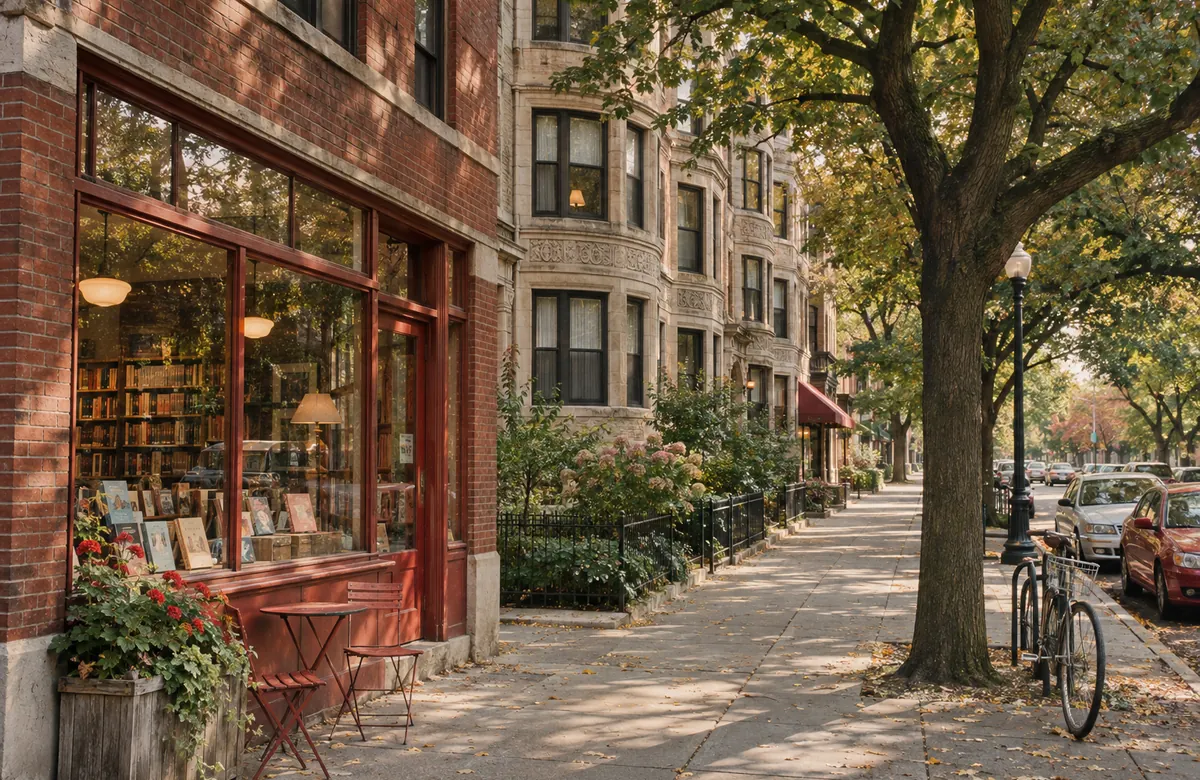
Independent bookshops express some important features of a neighborhood. Their inventories reflect decisions about what people might want to read. The availability of a specialized title can depend less on the general size of the local population than on the interests of a relatively small group of regular customers. A shop with an extensive selection allows customers to encounter subjects they had not previously intended to investigate.
Hyde Park's bookselling tradition has benefited from the demands of readers closely connected to the university. Scholars, students and visitors have provided an audience for academic publications that might be difficult to find in a conventional general-interest shop. But those bookstores also accommodate customers arriving with less specialized interests. Children's books, cookbooks, fiction and local history can bring a different set of readers into the same place.
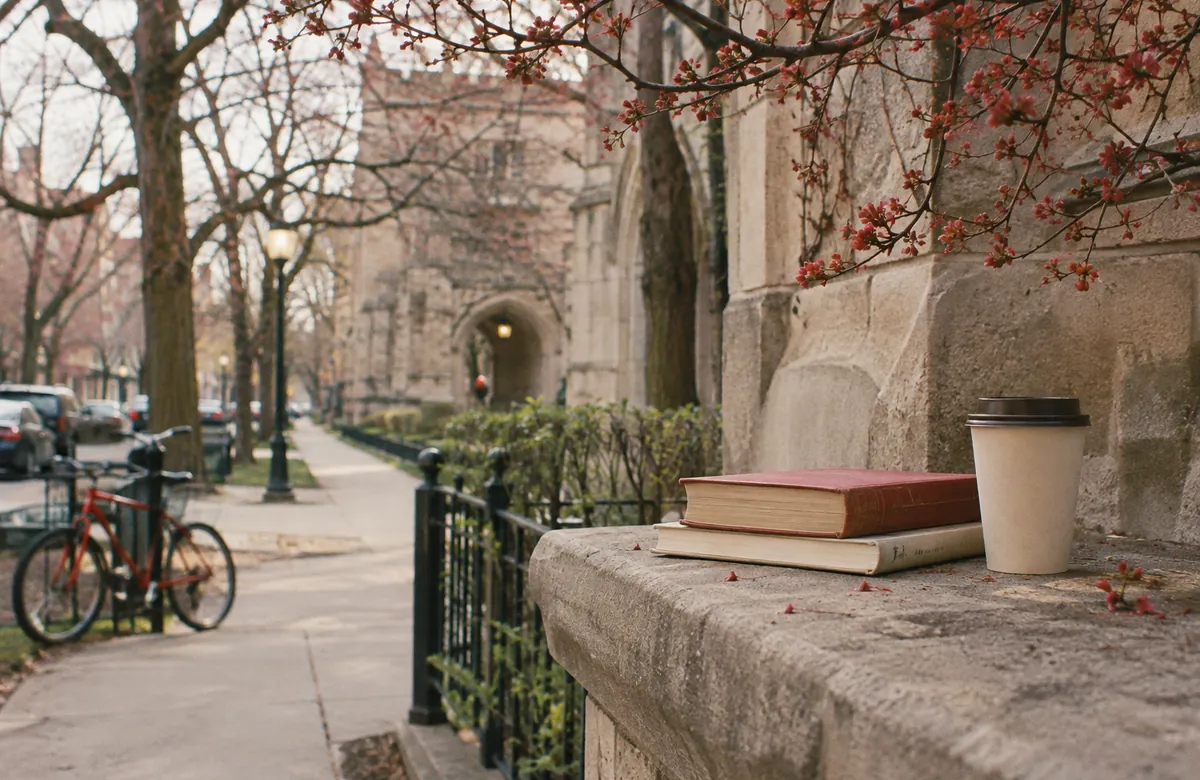
The experience of browsing has become particularly meaningful as commerce has shifted online. Digital search works extremely well when the customer knows the author or title. Discovering an unexpected book can be more difficult when the search depends on an exact phrase. An actual shelf suggests relationships between subjects. A customer sees a book they recognize beside something less familiar and makes a connection that would be impossible to specify as a search term beforehand.
A bookshop in a neighborhood like Hyde Park also provides a place for events that need relatively modest accommodations. An author and a small audience can discuss a work without requiring an auditorium or an expensive production. The conversation may bring local people together who would otherwise have little occasion to meet. Supporting the room makes such gatherings possible in addition to paying for the books physically sold there.
Art beyond the lecture room
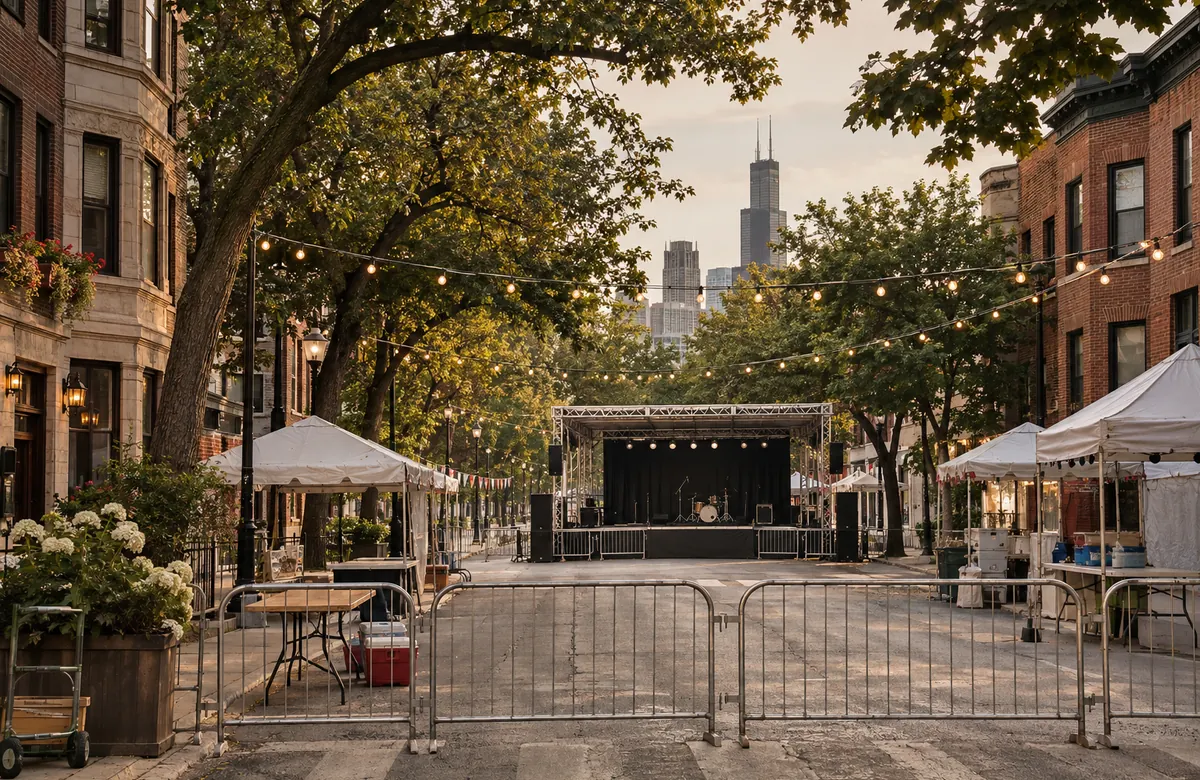
Hyde Park's annual 57th Street Art Fair has a history dating to 1948. Although its format is familiar to people who visit outdoor art fairs in other places, its longevity is an important local feature. A recurring event gives artists and residents opportunities to develop relationships not dependent on a new institution or a new building project each year. The street is temporarily organized around a different set of activities.
In a gallery, space, light and controlled admission help create the conditions for looking at art. At a street fair, an artist has to manage wind, sunlight and the other attractions competing for a visitor's attention. Paintings and objects are encountered amid ordinary movement, alongside the architecture of the surrounding block. Artists have a direct opportunity to explain their techniques to an interested visitor. For a person who has never entered a commercial gallery, that encounter may feel less formal than a discussion arranged indoors.
The setting also encourages people to consider how artworks are made and who makes them. The costs of materials, studio space, equipment and transportation are not generally visible when considering only a finished object. A conversation at a booth may reveal why a particular print was produced in a small edition or why a ceramicist spent a considerable amount of time refining a glaze. These encounters make the relationship between cultural life and daily work apparent.
Art fairs can also create a useful point of contact between people who have lived in the area for different periods. A person remembering earlier forms of an event can share that recollection with someone newly arrived. The memory of what used to occupy a particular block is itself an important part of the experience of attending. A street temporarily occupied by booths may look distinctly different yet remain recognizable from year to year.
Keeping the neighborhood’s records
The Hyde Park Historical Society was founded in 1977. Its collection documents the development of Hyde Park and Kenwood through photographs, publications, organizational records and other materials. Such a collection offers an indispensable counterpoint to the history available in accounts of university administration and architecture. Residents have pursued political causes, established businesses, argued over development and operated local organizations whose activities do not necessarily appear in institutional records.
Local history deserves particularly careful treatment because personal recollections and preserved documents often describe overlapping but unequal parts of the past. A family photograph might show a building that no longer exists but provide little information about its exact location. An old directory may identify the business that occupied the corner but offer no sense of the activity on the surrounding sidewalk. Bringing the sources together establishes a more complete picture than either could provide alone.
Hyde Park's history includes changes in patterns of housing, struggles over racial exclusion and debates about redevelopment. These subjects are essential to understanding the neighborhood's physical form. A block can change considerably while retaining many of its original houses. Looking only at surviving architecture may obscure the movement of people through the area and the circumstances that prompted particular moves.
Newspaper collections are another useful resource. The Hyde Park Herald, first established in 1882, recorded events at a scale rarely matched by a metropolitan daily. In 2022, the paper combined with South Side Weekly under a nonprofit organization. Accounts preserved in local publications help future residents reconstruct debates that mattered especially to people living near the subject under discussion. The recovery of a single article can turn a vague memory about a building into a much more specific understanding of why it looks the way it does.
Streets connecting separate worlds
The routes between the university, residential blocks and the commercial district play a major role in the neighborhood's character. People can arrive in Hyde Park with different purposes and repeatedly cross paths. A graduate student coming out of a library might head toward a restaurant where longtime neighbors are having dinner. A resident who has little reason to enter an academic building may nevertheless attend a public event nearby. The connections depend on ordinary practical matters, such as whether street crossings are comfortable and places to meet are within walking distance.
A lively commercial street needs more than recognizable buildings. Its establishments need a sustainable customer base, adequate space and employees able to reach their workplaces. In a neighborhood with both transient students and residents who have lived on the same block for decades, businesses may serve audiences with differing schedules and preferences. The availability of ordinary goods and services matters alongside the presence of highly regarded cultural institutions.
Hyde Park is particularly interesting to explore by alternating between destinations rather than concentrating on a single type of attraction. A walk that begins with a major university building can lead to a nearby block of apartments. A visit to a bookshop might be followed by time in a park. The differences between these experiences are central to understanding why the area has generated so many accounts of its history. Its campus belongs to a neighborhood that is being made and remade well beyond classroom walls.