A documentary made for a local publication might be viewed in a quiet room, on a commuter train or by somebody who cannot hear its soundtrack. Captions affect whether all of those viewers can understand what happened. They are particularly important when a film relies on interviews or sounds that identify an event. If the captions convey only a vague approximation of what was said, a viewer may miss the central argument even while the pictures remain perfectly clear.
Captions should be considered part of the documentary rather than an afterthought attached to the published video at the last minute. The work involves transcription, timing, editorial judgment and a check of the way the finished text appears. A small publication can handle these tasks without a large production department if it plans them into the edit.
Decide what the viewer needs to read
Captions communicate the aural component of a video in text. World Wide Web Consortium accessibility guidance distinguishes the spoken words from other useful audio information, such as the identity of a speaker or an important sound. Both can matter in reporting.
Consider a short film about the organization of a Chicago concert. Part of it shows a darkened auditorium from backstage while a voice speaks over the pictures. The identity of the person may not be visible in the shot. At another point a call from the audience prompts a response from a performer. A caption track made only from the performer's microphone misses part of the exchange.
The person reviewing the captions should watch the images as well as listening to the audio. A visible shot may make a speaker label unnecessary. A conversation heard over unrelated footage may require one. Label speakers consistently enough that a viewer can follow an exchange, and describe sounds when their presence or change conveys information. There is no need to label every tiny movement made in the room.
This is one area where automatic transcription and automatically timed captions have different limitations. A speech recognition service might return the words spoken into a microphone while omitting the context supplied by a sound. A documentary editor knows what the image is showing at that point and how the sound relates to it. That knowledge belongs in the caption review.
Check the text against the final edit
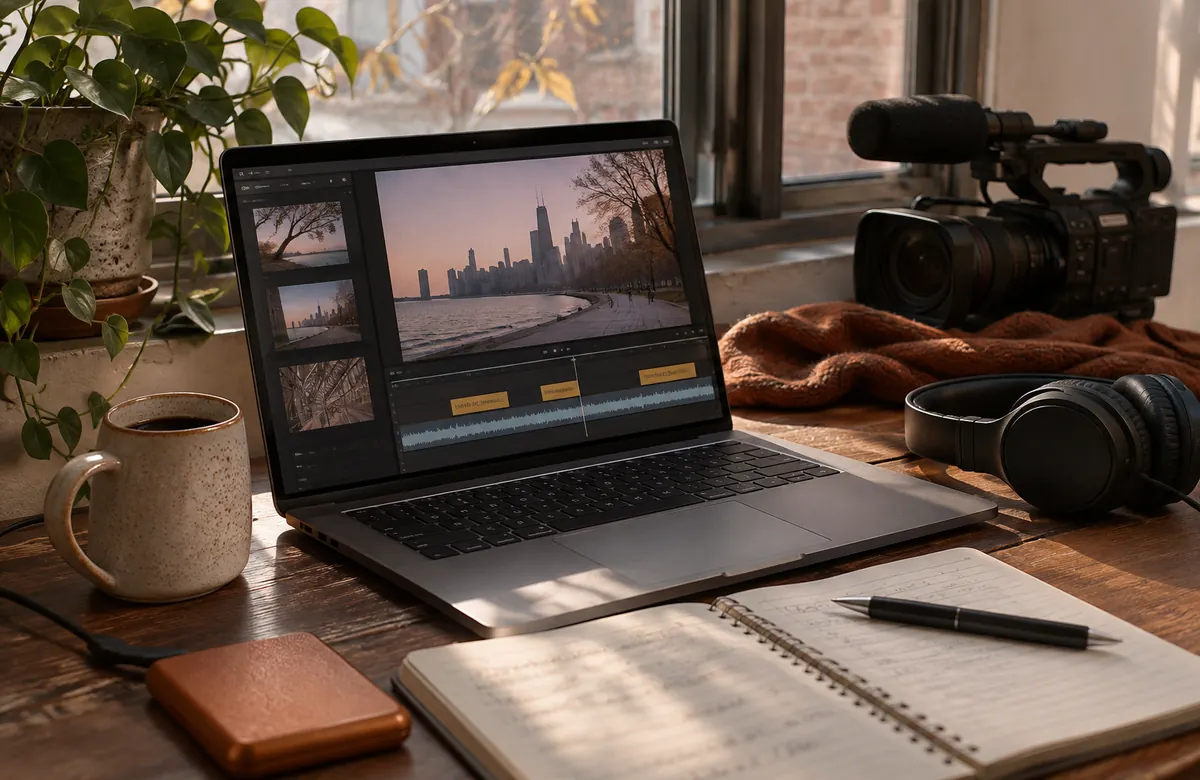
Generate or prepare captions from the final cut of the video. If the captioning starts earlier, compare it closely with the completed edit. A small movement of a clip along the timeline can leave a caption sequence displaying an answer before the viewer sees the question. Even where the words remain right, the timing becomes confusing.
Listen to the names, places, numbers and statements of consequence. A transcript that mistakes the title of an exhibition will cause confusion, and one that omits a denial in an interview may distort the subject's account. For an unclear name, consult the same source material used to fact-check the accompanying article. Do not fill in a hard-to-hear word merely because a suggested phrase seems grammatically sound.
If the video includes speech in another language, have the captions reviewed by a person who can understand the original. A translated subtitle track and a same-language caption track do somewhat different jobs. Decide which tracks the publication intends to offer. A translated track may need to balance the length of the translated sentence with the time a viewer has to read it. In any case, preserve the meaning and the degree of certainty expressed by the speaker.
Make meaningful changes before the visual timing pass. Revising a long caption into two shorter units can alter its timing. Choosing a more accurate spelling in the completed sequence may affect where the text wraps on a narrow screen. A consistent order of work avoids correcting those problems twice.
Make time for reading
Watch the video with the sound off. That simple test puts the editor in a position to experience the caption sequence as a principal source of information. Notice whether a long line appears briefly and disappears before the next line arrives. A caption should remain visible long enough to be read while keeping an understandable relationship to the action and sound it represents.
Break lines at natural points in a phrase. Avoid dividing words that belong immediately together when there is a better alternative. The viewer should not need to wait for the next line to make basic sense of a caption that appeared halfway through a sentence. Try to maintain a comfortable rhythm across an exchange instead of cramming an entire answer into a few very large caption blocks.
Allow space for the picture. A film may contain its own graphics, including names and titles identifying interviewees or text from a document. Captions that cover those graphics exclude someone from information that is available to a viewer with the captions turned off. Move captions if the playback system permits it or adjust the video's text placement during the edit. Check both versions where practical.
The size of a caption in an editing program is not necessarily the size a viewer will encounter on a phone. Different players may interpret styling differently or allow users to adjust the appearance. Review the finished result in the player used on the site. Check that it remains legible with a bright scene behind it as well as during a darker shot.
Keep an editable caption file
Captions embedded directly into the picture may be useful in some social video contexts, particularly where there is no practical way for a viewer to turn on a separate track. They are difficult to correct without re-exporting the video and cannot offer the same degree of control as a selectable track. Where appropriate, store an editable version of the captions independently of the video.
A separate timed caption file can be maintained alongside an archived master of the video. Choose a format supported by the publication's video player and the services through which it distributes the material. Web video players commonly use WebVTT captions; other delivery workflows may call for different formats. Verify the requirements of the actual player rather than assuming that a file accepted in the editing software will work elsewhere.
Keep related files together. A documentary with several cuts for different platforms should have caption tracks that correspond to the duration and timing of each cut. Assign clear names and a version identifier so a corrected full-length track is not confused with the caption track for a shortened excerpt.
Offer a useful transcript
A timed caption file is designed to accompany moving images. A transcript should also be considered for a reader who needs to understand the material independently of the player. The transcript may require more explanation of the pictures than the captions do. Imagine what it would take to understand a film about a public art installation if the pictures were unavailable. A spoken line referring simply to this one over here would mean little without additional context.
Keep the transcript structured and easy to find on the individual video page. Speaker labels, short paragraphs and appropriate headings can make it possible to locate a particular discussion without playing the whole film. Describe significant visual information that the soundtrack leaves out. W3C guidance on media accessibility discusses transcripts that combine information from audio captions and descriptions of relevant visual material.
For an interview accompanying an article, the publication may decide to provide the full edited interview or a carefully written account of it. Avoid labeling a short selection of the remarks as a full transcript. A reader should be able to understand which parts of the recorded material have been made available.
Test the final page, including the caption control, after publication. Captions that worked during a private review may become inaccessible when a video is moved or its player settings change. Verify that visitors can find the transcript where one has been provided. This modest technical check finishes a job that began when the film was planned. It makes the documentary available to someone encountering it under conditions the camera operator could not have anticipated.