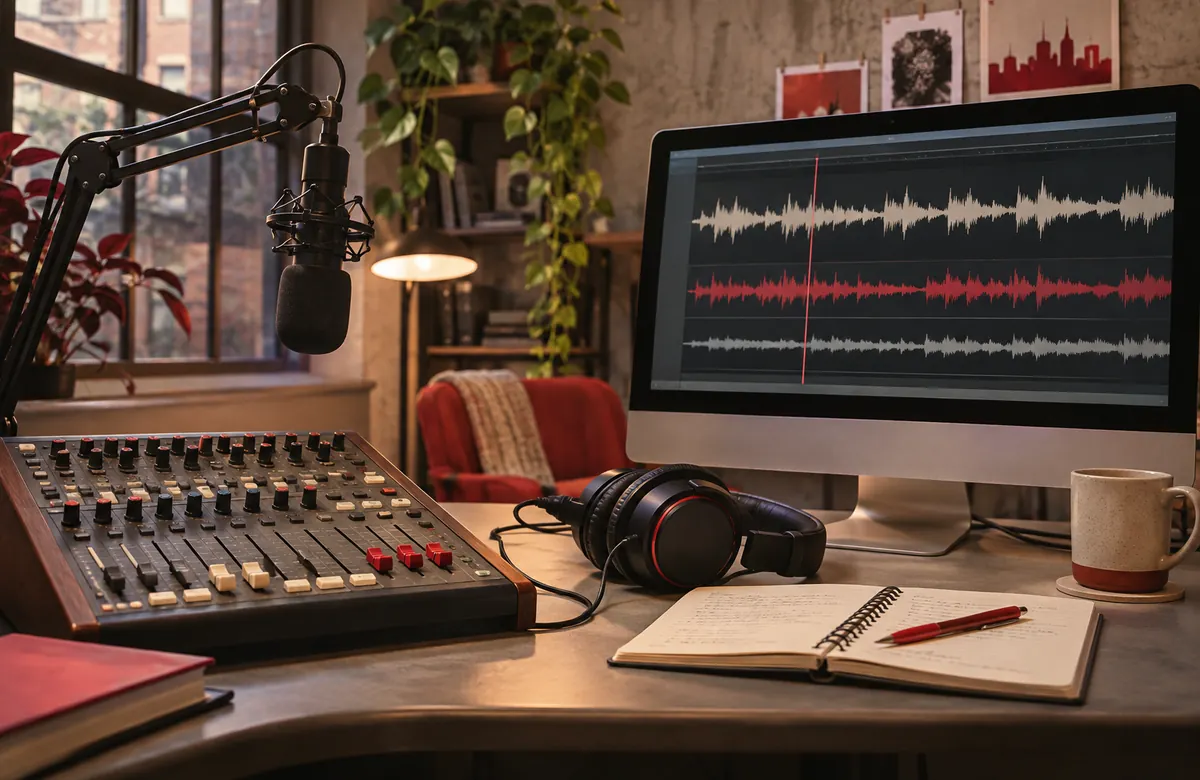
A well-recorded episode still has a long way to travel before someone hears it on the way to work. It needs an export that sounds consistent on different devices, a place to live on the web and a feed that tells podcast applications where to find it. The audio must stay there long enough for somebody who discovered the program three months later to play it. A production mistake in this last stage can ruin work that took days to report and edit.
Think of the release as a chain of documents rather than a single upload. There is an original recording, an editing project, a mastered audio file, an episode description, artwork and the public listing for the audio. All are related, and correcting one may require checking several others.
Preserve the recording and the session
If a project is assembled in an audio editor, its project file may refer to recordings stored beside it or elsewhere on a computer. Moving the folder can break those references. Before archiving an episode, make a copy that includes the media the project actually uses. Open that copy and check that it plays independently of the temporary working folder.
Export a high-quality master in addition to the file intended for distribution. The master should not depend on the software used to assemble the episode. It allows the publication to create a new delivery file later without applying compression to a compressed version. It also gives the archive a straightforward way of playing the completed work when an old editing program is no longer available.
Do not overwrite the location recordings with the processed audio. A documentary editor might later want to revisit a sentence that was cut. A colleague could need to assemble a corrected edition of an episode. The original recordings, properly secured, remain useful to both.
Adjust for listening, not for a screen
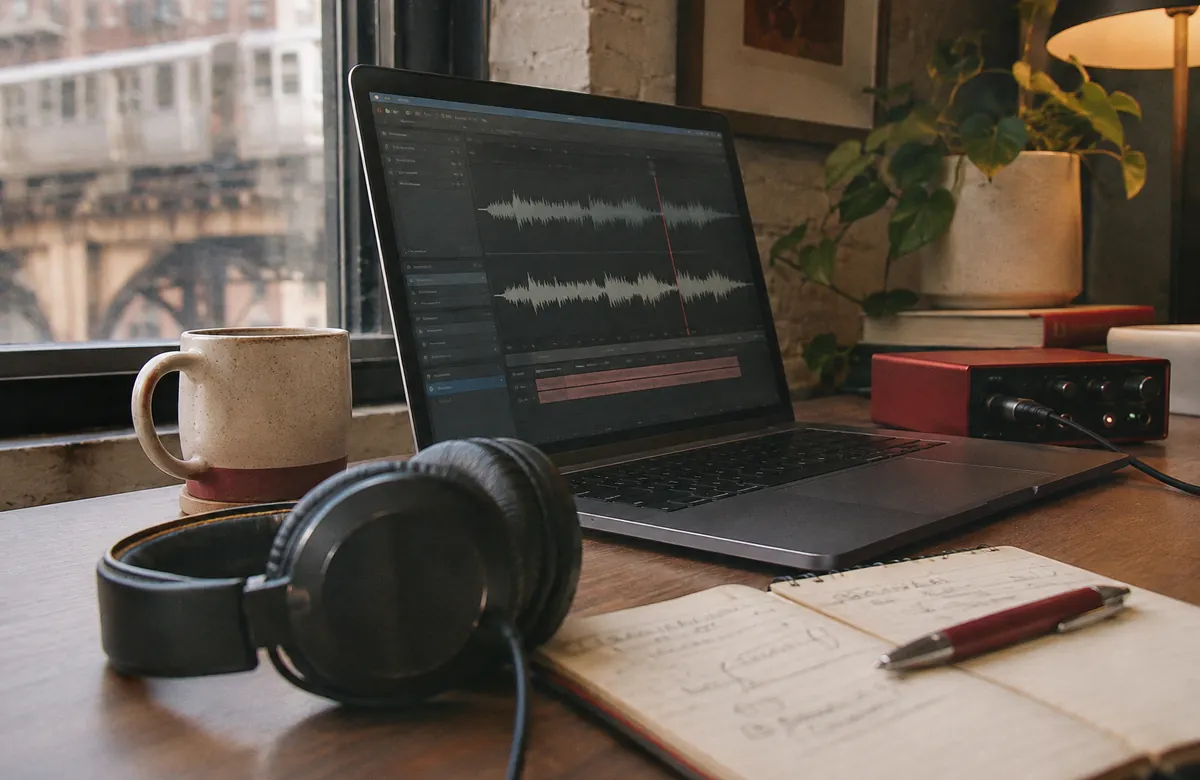
The waveform in an editor is useful for finding clipping, quiet passages and isolated sounds. Its outline does not tell an editor everything about the experience of listening. A pronounced bass sound may register clearly on a studio speaker and almost disappear from a phone. A quiet question can be audible to someone wearing headphones at a desk but impossible to understand on the bus.
Match the relative levels of speakers before thinking about the overall loudness of the episode. If the guest is consistently much quieter than the host, a global volume increase changes the whole file without correcting the imbalance. Work on the tracks individually, then listen for shifts when the conversation passes from one voice to another.
Compression can help to reduce the gap between soft and loud sounds, but a compressor adjusted too aggressively may make breathing or room noise more conspicuous. Small changes followed by careful listening usually prove more useful than several layers of automatic processing. Play a difficult exchange without watching the waveform and note where your understanding falters.
Listen to the finished audio with the music and announcements in place. A sharp jump into the opening music may send a listener reaching for a volume control, while a voice mixed too low against a music bed loses intelligibility. The ending should also be part of the check. Sometimes an edit unintentionally leaves several seconds of an earlier take or removes the last word of a credit.
Make a manageable delivery file
The delivery file needs to fit the program. An interview consisting mostly of speech may work perfectly well in mono. A documentary piece that uses the positions of sounds in an environment may have good reason to preserve stereo. Larger files are not automatically better, especially when somebody is downloading an episode on a limited connection.
Choose an audio format supported by the feed services and apps the show uses. For RSS distribution, Apple Podcasts accepts MP3 and AAC audio, for example, and offers suggested bit rates for different channel arrangements. These are delivery considerations, not instructions to discard a higher-quality archive. Consult the services the publication actually relies on before finalizing a new format.
After encoding the delivery file, play it separately. Confirm that the duration makes sense and the correct episode has been exported. Check the start, the end and a few technically difficult transitions. If a speech edit sounds clean in the project but awkward in the export, identify the cause before uploading rather than assuming that an application will fix it.
Keep the final public file name stable when possible. Store an internal version indicator in the release records so that two files with nearly identical names do not become interchangeable on the shared drive.
Understand the feed
An RSS feed is a structured list of the show's episodes and information about the show. An episode entry describes the item and identifies the media file. Podcast applications read that information so they can present the episode to listeners without requiring the publisher to submit it to every application individually. Some listening services also offer other publishing arrangements, but it remains useful for an independent producer to understand the feed.
The feed's address matters. Changing it without coordinating the move can cause subscriptions to stop receiving new episodes. Establish who controls the domain, hosting account and feed configuration. A volunteer producer should be able to take a vacation without leaving the publication unable to update the show.
An episode has an identity as well as a title. If a publishing tool asks whether a corrected upload constitutes a new release, consider what readers need. Fixing a mistaken credit in the old audio is not the same as releasing a new interview. The public listing should distinguish the two. Preserve the release history internally so future producers know which decision was made.
Before announcing a new episode, test the public episode address and refresh the feed in an application where the subscription already exists. Check the displayed title, description, release date and artwork. Confirm that the episode plays outside the office and is not restricted to a staff login. Feed validation can identify technical mistakes in its structure, though it cannot confirm whether the content itself is editorially correct.
Make an episode useful without the audio
A short description should tell listeners what the episode covers and identify the participants. An hour-long interview may deserve an outline with approximate times, allowing someone interested in a particular question to find it. Keep credits and any correction notes close to the episode, not hidden on an unrelated page.
A transcript benefits listeners who cannot use the audio as well as those who want to find a name or quotation. Automatic transcription can speed up preparation, but names, unusual words and important statements require review. Identify the speakers where the conversation would otherwise be difficult to follow and explain significant sounds if they carry information needed to understand the story.
Consider what someone arriving from a search will see. That person may land on an individual episode page rather than the show's front page. Include enough context to explain the subject and why the conversation was recorded. Avoid addressing the visitor as though they already know an earlier episode or an ongoing assignment unless that connection is clear.
Take the release seriously after launch
Someone should check the episode after publication, ideally on an ordinary phone using a consumer application. Listen to a little of it on a mobile network if feasible, verify the notes and look for obvious problems with the web page. This is the edition that members of the audience will encounter, not the edition displayed in the producer's account.
Record who published the episode, which file was used and where the master and the supporting materials are kept. If a correction is required later, document what changed and make the reason clear where appropriate. An audio file may have been downloaded before the correction, so silently substituting a different version does not necessarily remedy the error for every listener.
The weekly routine need not become elaborate. A short release record and a repeatable check can make a magazine's podcast dependable even when a small staff handles reporting, editing and publishing. The most satisfying test is an unremarkable one: someone taps an episode, understands what they hear and can find it again whenever they wish.