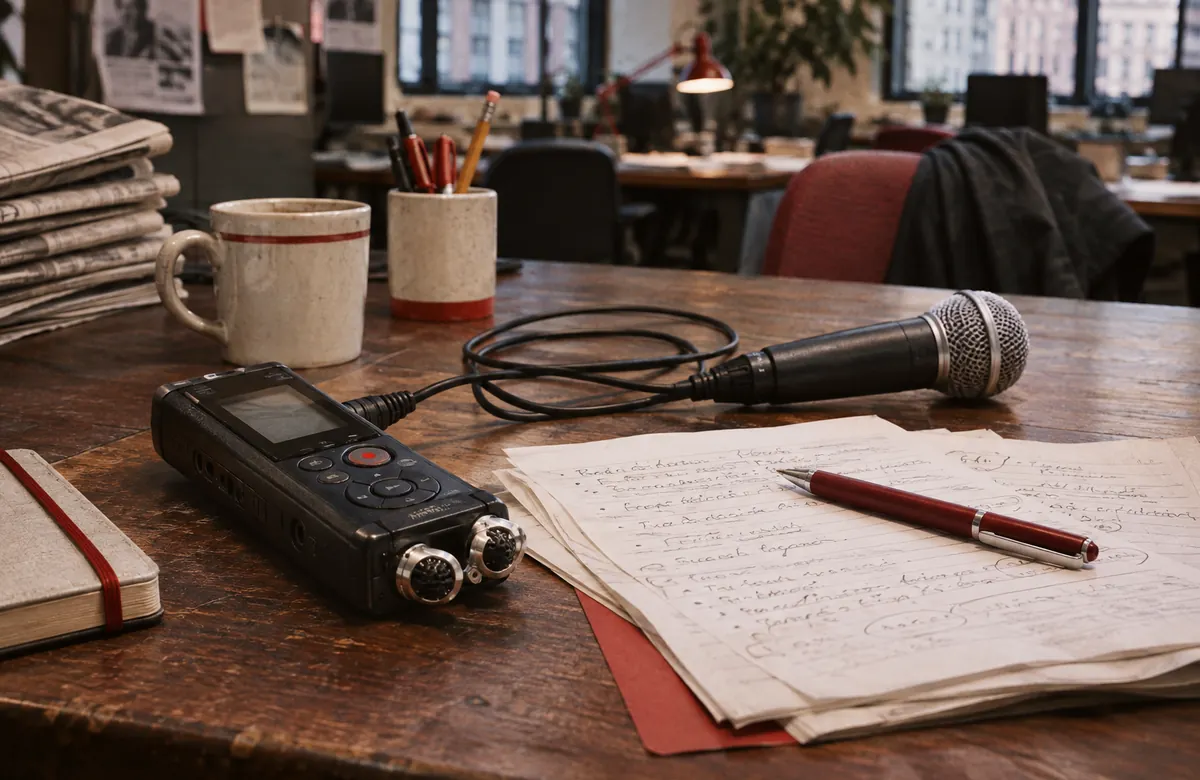
A local magazine preparing a weekly edition might have a short city story, a review of a performance, a reported feature and an essay by a contributor. The articles do not necessarily move through production in the same order in which they will appear. The review arrives late because the performance takes place on Thursday. The feature requires photographs from someone outside the regular staff. An essay may be ready before the assigned writer has submitted a separate story that is supposed to lead the edition.
A publishing workflow connects these pieces without constantly forcing the managing editor to reconstruct the whole issue from conversations and messages. It accounts for the editorial decisions that still need to be made and the production material that has already been approved. It also makes it possible for another editor to step in without learning the personal habits of everyone involved.
Keep the working list smaller than the whole archive
Create a list of stories in active production. A line in the list should identify the assignment, responsible writer or editor, current state, target edition and any decision preventing the next step. Write the problem that needs attention explicitly. A feature waiting for approval to use a photograph is different from a feature that still needs to be written, though both may show similar dates on the schedule.
The editor should be able to scan the list without opening each draft. If an arts review has to be edited before the Thursday edition can close, that condition can be visible beside the review. If a reporter has asked an institution to respond to specific findings, the waiting stage should be recorded so that an absence of response is not mistaken for a lack of further work.
Do not build a complicated status system before observing what the newsroom does. A handful of states can represent most work: assigned, submitted, in review, ready for production and published. Additional distinctions might be useful for particular stories. They should describe actual decisions and not just create opportunities for the editor to update another field in the list.

Review the list at a rhythm appropriate to the edition. At the beginning of the week, editors can consider what reporting must take place before publication. Later, attention can turn to facts awaiting confirmation, illustrations required for stories and pieces that have slipped to a future issue. The list is more useful as the basis for a short conversation than as a decorative record of an ideal schedule.
Maintain a known edition of the text
Give drafts a clear place to live and establish who controls the text during each stage of editing. The reporter should know which draft the editor marked and the editor should know whether a new file corrects that draft or replaces it wholesale. A story that moves back and forth between a publishing interface and several privately stored documents can easily acquire conflicting revisions.
Retain the material needed to support factual claims without placing all private reporting notes in the production folder. The editor might need to consult an authorized copy of an interview or a set of documents. Someone laying out the finished article may only need the checked version of the text, its approved title and the final media. Distinguish those needs rather than giving every participant access to more material than their job requires.
Agree on a point at which substantial changes require another editorial review. Correcting punctuation while setting the article in the publishing system is ordinary production work. Changing the meaning of a statement about a person or institution is not. If a reporter finds a significant new detail after the text has been approved, the edition should allow the appropriate part of the review process to happen again.
The same rule applies to headings and descriptions. A heading written for a short social post should accurately represent the checked article. Compression can be difficult when a reported conclusion is qualified by the available evidence. Check the shorter wording rather than assuming that the review of the larger story automatically covers every later summary.
Prepare all the components of the article
For each story, identify the photographs, illustrations or audio that will accompany it. Give the materials a connection to the story record. The production editor should not need to search a personal inbox for a caption that was supplied along with a different version of a photograph. Ensure that appropriate credits and permissions are represented before selecting the public version of an asset.
If the asset depicts a place, occasion or person, check its description against the story. A generic scene used as an illustration has a different function from a picture documenting the event being reported. The page should not suggest an evidentiary relationship that the image does not have.
Add an appropriate web title and description in the production stage. Their purpose is to tell a reader what the article concerns, including someone who encounters its address without first visiting the magazine's cover page. A description should not merely repeat the heading with a few extra adjectives. Draw it from the actual emphasis and scope of the finished story.
Check category placement and connections with earlier reporting. An article about a performance might usefully refer to a previous story about the venue. A new account of an institution's plans can help a reader understand what has changed since those plans were first discussed. Internal connections are an editorial resource when they take someone toward relevant background rather than constantly sending them to the same unrelated landing page.
Examine the edition as a reader will encounter it
Review the preview of each article on an ordinary narrow screen. Read the first paragraphs, then look at any material that could be difficult to display: a name in a long heading, an image with a detailed caption or a quotation presented in a distinct block. Test the audio or video. Open related articles from their links and verify that they are the intended pieces.
Consider the publication's main page as a set of editorial choices. The order of stories, size of their images and wording of descriptions influence which parts of an edition people see first. A story about a significant public decision may deserve its prominent position even if a review of an illustrated exhibition happens to have a more visually attractive photograph. The layout can serve the editor's priorities instead of choosing them automatically.
Keep a short production check for the issue as a whole. It can cover headings, credited media, publication dates, working article addresses and any planned distribution materials. These are ordinary details that can be checked quickly while the people responsible for the stories are available to answer questions. A long list that mixes significant editorial decisions with every imaginable style preference is less likely to be used regularly.
Close the loop after publication
Confirm that the edition is publicly available and that the dispatches prepared for readers refer to the current versions of its articles. Update publication records with the actual dates and addresses. The new texts can leave the active list, though the record for each story should include enough information to show where its files and supporting materials reside.
Corrections belong to an ongoing process. An editor may receive a question about an old story long after everyone has finished the next issue. Maintain an appropriate record of substantive changes and locate the authoritative version of the article before editing. For a mistaken detail in the text, consider whether the same mistake appears in the description, image caption or related distribution materials.
At the end of each month, review the occasions when production work became unexpectedly difficult. Perhaps the same type of image credit repeatedly arrived too late, or nobody knew who had to approve an edited contributor's essay. Solve the specific recurring problem. It is often enough to move one decision earlier or give an existing task a clear owner.
The system is successful when people spend less time establishing what has happened to a story and more time establishing what happened in the city. That is a modest but useful ambition for a weekly local publication.