The restaurant is often the first institution an unfamiliar visitor associates with Chinatown. This makes sense: food offers an inviting way to learn about a place, and the streets near the center of the neighborhood contain many destinations that a person can explore without making elaborate arrangements. At the end of a meal, however, there is a different kind of decision to be made. Should the visitor immediately leave, or spend more time getting to know a neighborhood that has considerably more to offer than the contents of its menus?
During the 2010s, two public projects made the second choice particularly attractive. A new boathouse opened at Ping Tom Memorial Park in 2013. Two years later, the Chicago Public Library opened its new Chinatown branch. Both projects built on longstanding local institutions. The park had already transformed part of a former railroad yard beside the Chicago River, and library service had been established in the community in 1972. The new facilities increased the number of activities people could undertake without visiting a shop or a restaurant.
An afternoon between the two destinations offers a useful introduction to public culture. At the library, people can study, read or work with information in a carefully designed building. Beside the river, the visitor acquires a view of Chicago very different from the one available in the commercial streets. The contrast reveals the variety of surroundings within the neighborhood and the importance of facilities that people need for reasons unrelated to tourism.
Looking inland from the river
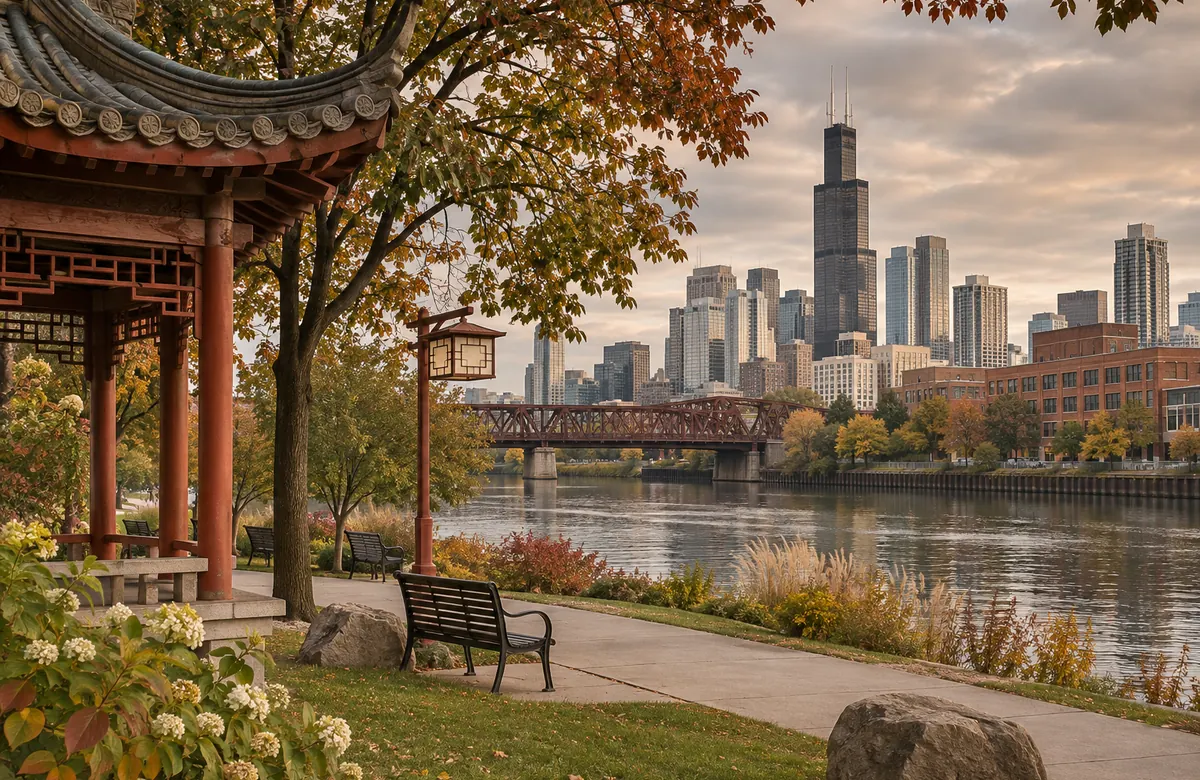
Ping Tom Memorial Park occupies land that once supported railroad activity. The Chicago Park District began converting the old yard into green space in 1998 and subsequently acquired additional property in the area. The park takes its name from a Chinatown civic leader who helped advance its creation. Its setting on the South Branch of the Chicago River is a particularly important feature.
For someone familiar with the downtown riverfront, the view from the park can be disorienting. Portions of the skyline gather at some distance toward the north. The water passes a mixture of structures rather than running between two solid rows of downtown towers. Buildings and bridges make the river's transportation history apparent. The shore offers enough distance to see connections that might go unnoticed while walking on the street.
Restoring public access to such a site required more than clearing away obsolete tracks. A former rail yard generally has little reason to provide comfortable entrances for pedestrians. Its location was selected in relation to industrial and transportation activities, not necessarily to neighborhood walking routes. Converting the land to a park means providing a safe way to approach the river and finding appropriate locations for recreational facilities.
The 2013 boathouse, one of several new Chicago Park District facilities intended to increase recreational use of the river, gives the park another role. A city resident can experience the water from a boat rather than only from the shore. On a pleasant day, the movements at the river's edge are part of the view for people who have no intention of getting onto the water. The boathouse also helps establish an identity for the park beyond that of an empty space with a good view.
A home for information on the neighborhood
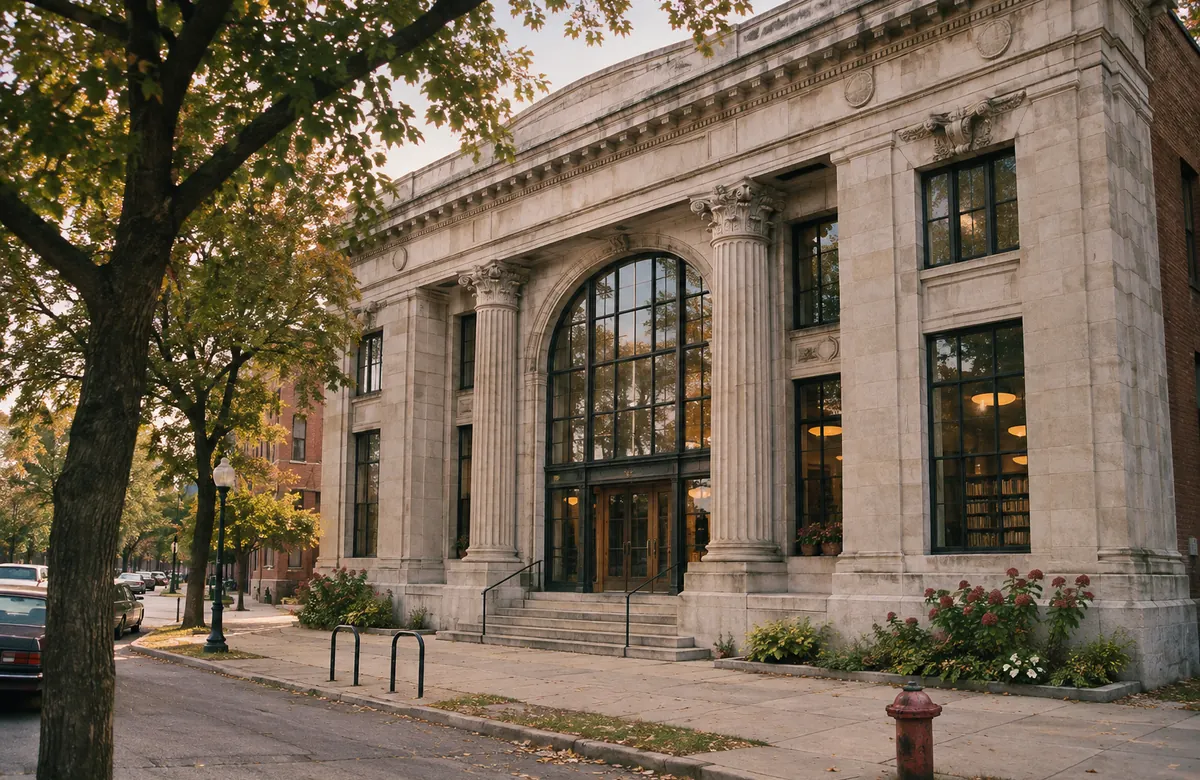
The Chinatown branch of Chicago Public Library has occupied several different spaces. The new building that opened on August 29, 2015, contains around sixteen thousand square feet over two stories, with a partly planted roof and interiors influenced by principles of feng shui. Compared with the previous facility, it provided substantially more room for different activities. Its design recognizes the library's role as a meeting place as well as a center for information.
One particularly significant feature is the library's Chinese Heritage Collection. Materials about Chinese and Chinese-American history and culture can support people interested in the neighborhood for very different reasons. A visitor might want to establish a basic historical understanding before exploring farther. A student could be undertaking a particular research project. Residents may be looking for publications related to their own family history or creative interests. Their questions require access to certain materials but do not have to be motivated by the same purpose.
Modern public libraries need spaces that accommodate such a range of activity. A person studying for a qualification may need a quiet table. Children require different furnishings and more freedom to speak. Meetings undertaken by small groups are easiest when there are rooms whose acoustic conditions allow a conversation without disturbing other users. The variety of library functions places considerable demands on a building even if nothing particularly complicated appears to be happening inside at a given moment.
The new branch's library collections and architecture give Chinatown's public life a distinct kind of visibility. A person can arrive without an appointment and participate at the level of their own interest. Familiar states of activity, such as concentrating on a book or looking out of the window after a period of study, take place in the same institution as specialized cultural events. The building belongs to both kinds of experience.
The streets between public destinations
The streets and crossings connecting a park to a neighborhood library matter almost as much as the two facilities themselves. A pleasant walking route allows people to combine several ordinary errands with a brief visit to one of the institutions. Someone who finds the connections difficult to navigate may treat each destination as a separate trip and use them considerably less often. Urban amenities increase one another's value when they are connected in practical ways.
This is especially apparent in Chinatown because the neighborhood contains transportation infrastructure at several different scales. Trains, roads, expressways and the river create connections across the city while also separating nearby areas. A line on a map that appears to indicate a short walking distance may intersect with a substantial transportation structure. The most informative approach is to examine how people actually move between the blocks, including which crossings are comfortable and where pedestrians have to take detours.
Local businesses occupy part of that network. A shop can supply something needed during a trip between the park and library, while a restaurant provides an appealing place for people to meet. The presence of free public destinations expands the range of possible customers and visitors without requiring every outing to revolve around a purchase. The commercial and noncommercial parts of the district depend on many of the same practical conditions.
One reason to study the history of the public facilities rather than regard them as simple visitor attractions is that their creation required civic organization. A park occupies land that might have been devoted to other uses. A library must be financed, staffed and designed. The results of decisions made over several decades are visible in the ways people can spend their time now. Counting the district's restaurants will not reveal those decisions.
Two places to return to
The library and park provide different attractions at different times of year. When outdoor conditions are unpleasant, there may still be good reasons to visit the library. A clear summer afternoon creates an opportunity to spend several hours beside the river. Both facilities invite return trips because there is no single permanent exhibition or fixed activity that exhausts the possible experience.
For someone arriving in Chinatown primarily to explore the food, this variety supplies another way of learning about the place. A short walk toward the park may be enough to acquire a clearer sense of the location of the neighborhood in Chicago. Reading an account of the area's history in the library offers context for the changes visible in its streets. The visit does not have to be divided into separate categories of entertainment and education. Common interests can guide the sequence of stops.
The 2013 and 2015 openings revealed how much a neighborhood can gain from substantial shared places. A boathouse and a library are unlike in many respects. Both add practical opportunities to a geographic area that outsiders are often encouraged to define by its food and distinctive buildings. The interesting result is not a new list of things a tourist should consume. It is the ability of neighbors and visitors to spend time in Chinatown in a wider variety of ways.