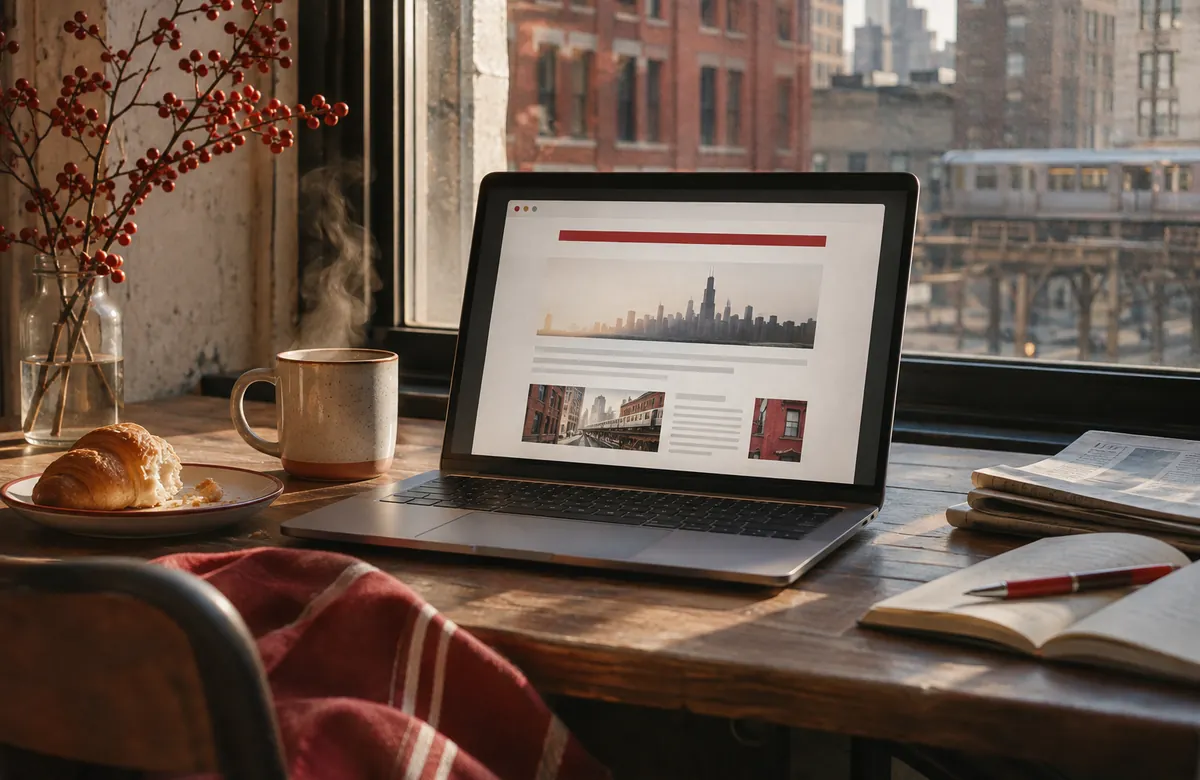
A newspaper home page used to be a reasonable approximation of an edition. An editor decided what belonged near the top; a reader arrived, scanned the headline hierarchy, and chose a story. Increasingly that sequence happens in the inbox instead. The page that starts a person's day may contain a short dispatch from a neighborhood reporter, a link to a city council agenda and a note about the concert they should know about on Friday. None of those elements requires the reader to visit the newspaper's front page first.
The shift matters because an email edition is a publication with scarce space and time. Readers have to recognize the sender, decide whether the contents are worth their attention, and find what they need amid everything else in their inbox. The editor cannot assume that the reader will come back to finish the edition later. A strong email product earns its place by making those decisions easy, not by demanding attention with increasingly urgent subject lines.
An edition, not a list of links
During the 2010s, newsrooms began to treat their emails more like products than merely announcements that another article had appeared. A narrow daily briefing can be useful even to someone who never clicks. Imagine an edition covering Chicago transportation. Its lead explains where a route will change, when the work begins and what alternatives commuters have. A story link provides the history and details for readers who want them. The useful part is available before the click.
A generic digest has difficulty matching that service. Ten headlines from unrelated desks require the recipient to reconstruct the relationship among them. The audience for an investigation into municipal contracting may be different from the group that wants information about a film festival. Both are worth publishing, but proximity in an email is not an editorial argument. A specialist edition can follow a subject across beats. The transport reporter may need to include housing stories, road repairs and labor disputes because they affect how passengers travel.
That does not mean every newsroom needs a separate product for every reader interest. A small publication could send one excellent weekly edition and make its scope unmistakable. The crucial decision is what problem the edition solves. An email billed as the week's essential Chicago arts news needs to tell someone what changed during the week, what is forthcoming and where further coverage exists. It does not need to reproduce the entire culture section. If nothing important has happened, the editor can write a short edition rather than diluting the selection.

Make the promise visible
The subscription page is the start of the editorial relationship. A description that says readers will receive important updates is nearly useless. It tells them nothing about timing or subject. An evening newsletter about local government is easier to judge when the page explains that it arrives on Thursdays and covers public decisions affecting Chicago neighborhoods. A sample showing the previous issue can be more persuasive than a paragraph of promotional copy.
The same specificity belongs in the subject line. A heading like March council meeting: the housing vote moves to committee tells a reader something before they open the message. A heading such as Big changes ahead forces them to spend attention to learn whether the subject affects them. Mystery can work for an essay, but a service news product that relies on it every day teaches commuters to ignore the sender.
Readers will change their minds. Some sign up during a particular election and lose interest afterward. Others discover that they want a weekly summary rather than five messages a week. Giving them a clean way to change frequency, choose a topic or leave makes the product more honest. An editor should find satisfaction in a subscriber who moves to the appropriate edition. Keeping an uninterested address on a list does not improve the journalism.
Work from the smallest useful format
Email design constrains the production process in helpful ways. A newsroom can use a recognizable masthead, a single lead story, a few secondary items and an explicit ending. This arrangement remains legible on an inexpensive phone. Headlines should identify the subject rather than profess its significance. Short paragraphs let the eye return to the point after an interruption. Photographs need descriptions that explain what the image contributes, and a plain-text alternative can communicate all necessary information without the layout.
A collaborative newsletter still needs a responsible editor. Contributors might write individual items, but somebody has to check that a late correction reaches the final email and that the lead actually describes the new development. The person assembling a digest must check the destination of every story link. Reusing a design is sensible; reusing last week's stale date or promotional sentence is not.
The best workflow respects the deadline. A newsletter promised for six every weekday should not require a separate reporting assignment at five thirty. Instead, the newsroom can collect story candidates while work proceeds during the day. The editor then knows which article needs a paragraph of explanation, which item deserves only a line and which belongs tomorrow. A recurring local calendar is worth maintaining as an editorial resource rather than rebuilding it from memory with each issue.
What a dashboard cannot tell an editor
Email publishers often look first at the open rate. That number needs interpretation. The standard mechanism registers a request for a small remote image, not the movement of somebody's eyes across the page. When Apple's Mail Privacy Protection arrived with iOS 15, users gained an option that downloads remote email content independently of reading the message. Open reports therefore became a particularly poor proxy for how many recipients examined an edition.
Clicks can demonstrate another kind of action, although a low click rate need not indicate failure. Consider a useful briefing that supplies all its readers need to know about a temporary street closing. The article link may remain untouched because the email did its job. Replies, subscriptions attributable to an edition and longer-term retention can help an editor understand the role of the newsletter. None of those measures replaces reading an edition from beginning to end as a reader would.
The distinction becomes important if the business office rewards an email for producing immediate visits to the website. An editor could insert artificial breaks into every story summary to raise those visits. But a news product that promised a complete briefing would then become less useful. Over a year, the losses from damaged trust may extend beyond the edition's measurable traffic. An analytical review should start with its stated purpose, then decide which observations could provide evidence that it fulfills that purpose.
Own the relationship responsibly
An email address is practical because the newsroom can communicate directly with the reader without depending on the placement of an item in a social feed. That freedom comes with responsibility. The publication should know why it has each address, how consent was collected and how departures are handled. Publishing a newsletter is not permission to sell its audience's contact details, nor does a subscription to school-board news imply interest in a third-party advertisement.
It is sensible to keep the editorial and distribution responsibilities distinct. A story sponsor can support an edition without choosing its headline. A commercial offer should be marked as an offer. If the edition features a partner's project, the language describing the relationship should appear where the reader encounters the item, not several screens below. An audience earned for its confidence in local reporting deserves that clarity.
Delivery deserves regular maintenance too. Invalid addresses, complaints and an abrupt increase in mail volume can affect a sender's reputation. The necessary work is ordinary rather than glamorous: review delivery errors, verify the sending identity, keep a stable schedule, and remove addresses that cannot receive messages. A small satisfied audience is a better starting point than a large uncertain mailing list purchased for its nominal size.
A good newsletter is one of the few common publishing formats that encourages a finite editorial act. The reader receives an edition, reaches its end and puts it away. On a network that offers almost infinite distractions, that modest promise is worth preserving. The newsroom that can explain today's events within a bounded reading experience has made something distinct from a collection of links. It has built a destination and a reason to return.