A conversation recorded for an hour can make an excellent forty-minute podcast, but duration is a poor starting point for an edit. A producer needs to know what the episode is supposed to help listeners understand and which sections make that possible. Editing only to achieve a target length can remove the examples that explain an argument while leaving the formal opening and all the transitions intact. Editing solely for sound can make the conversation pleasant without fixing its structure. Before making cuts, listen to the recorded material with a short description of the intended episode nearby. Mark the interesting moments, the points where a speaker changes direction, and any factual or technical problems that will need attention. Treat this first listen as reporting and production work rather than an opportunity to operate software.
Organize the session before editing
Create a project directory with separate locations for received recordings, project files, music, graphics if needed, and completed exports. Preserve originals without overwriting them. A project saved with links to sound files on scattered temporary folders may stop working when moved to another computer. Use filenames that identify the episode and distinguish versions. Make notes about the sources of any additional recordings and the permissions or terms under which they may appear. Establish a simple naming convention for edits that other producers can understand. A file labeled new-final-2 says nothing about whether it contains the corrected introduction or an earlier version of the ending. If several people will work on the same production, agree which project version is active before somebody begins another round of changes.
Find the episode inside the recording
Begin with a rough assembly that identifies the major pieces of the discussion. A host may have opened a conversation with a broad discussion of city life, asked about the guest's recent work, then returned to the broader topic in a more specific and useful form. It may make sense to begin the episode with a brief introduction and the later part of the exchange, provided that the change does not distort chronology or the meaning of the statements. Identify sections where a speaker explains a complicated subject through a concrete example. Keep those sections available even if you ultimately shorten them. An effective first pass often consists of moving whole pieces and marking problems, not cutting every short hesitation on the timeline. The larger arrangement determines whether a listener can follow the story.
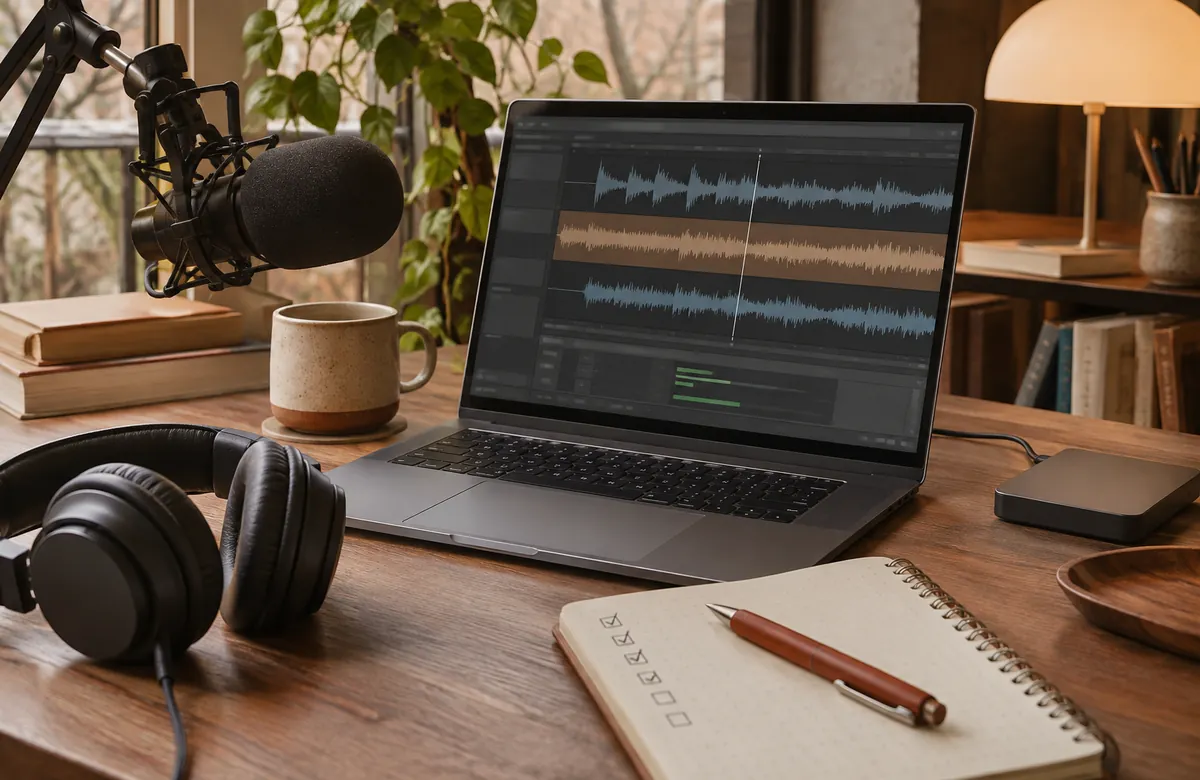
Content edits should respect the logic of the conversation. A guest's answer may refer to something established ten minutes earlier. If its explanation is removed, either retain the necessary context or introduce it accurately. Be careful when taking a lively statement out of one part of an interview and using it in an opening montage. A closing observation about a failed project cannot be presented as a prediction made before the event. Write a note when a significant reordering is made and check the original material before the episode is released. Editorial transparency within the production is important when a later producer or editor must defend a decision. Much of podcast editing consists of identifying and preserving distinctions that are less obvious in the finished recording.
Make judicious cuts to speech
Natural conversation contains pauses, restarts, and minor repetitions. Removing everything that interrupts a complete sentence can make the speakers sound breathless and artificial. A pause before an answer sometimes tells a listener that the subject has considered a difficult question. A long interruption because an alarm sounded in the studio serves a different purpose. Decide whether the sound conveys something relevant. Leave a space between a question and its response that resembles the actual conversation. If a speaker stumbles over one word and immediately repeats it correctly, a small edit may be unnoticeable; cutting a whole uncertain phrase requires more thought. Do not remove a qualification or the first half of a correction merely because the remainder is easier to understand. Listening in real time is a better test of speech edits than looking at the shape of the waveforms.
Simplify the sound before adding elements
Compare the levels of the recorded voices. A quiet guest followed by a very loud host can be uncomfortable on headphones. Establish a reasonable level for both, listening to passages of different intensity. Address distracting mechanical noises and other obvious defects when that is feasible without damaging the voice. Some room noise is less noticeable than an aggressive cleanup that makes speech sound thin or inconsistent. Save more detailed processing for after the major editorial changes are in place; otherwise an editor may spend time treating sections that will never appear in the final episode. Music and sound effects should have a reason to be present. A theme can identify a show and a transition can clarify a movement between segments. An arbitrary dramatic score can give reported statements an emotional coloring not supported by the material.
Support listeners who are new to the subject
Hosts and frequent guests may know the backgrounds of people, institutions, and works discussed on a show. New listeners do not. During the edit, mark the first use of unfamiliar names or terms that need explanation. If an exact identification is important, confirm it from appropriate material. A sentence naming the speaker and their connection to the subject may be sufficient. Do not interrupt an understandable exchange to provide a lengthy biography if the biographical detail will never matter to the rest of the episode. Similarly, take care with numbers. Hearing five figures in quick succession can leave a listener uncertain about which one explains the point. The accompanying written description may be the right place for supporting details while the audio concentrates on what the listener most needs to know.
Titles and descriptions can be developed once the episode's actual structure is clear. Describe what the episode contains rather than what the guest's promotional material promised. Name the central subject early in the description. If the episode uses a recorded excerpt made on another occasion, distinguish it from new discussion where necessary. An ordinary conversation can produce an interesting title through its particulars. It does not need exaggerated language about a revelation or a secret. A useful title helps somebody find and recognize the episode later. Written notes can also identify works discussed during the program, provide context for a complicated subject, and make important clarifications easier to locate. Check those notes against the final edit so they do not describe a segment that has been removed.
Review the completed mix as a listener
Set aside enough time to listen to the episode uninterrupted. Use ordinary headphones or a small speaker as well as the equipment on which it was edited. A level change that feels modest in a quiet studio can be irritating while a listener walks down a busy street. Notice whether spoken words remain clear around music, and whether the first moments of an episode sound like the beginning of the program rather than a partly finished edit. Listen for missed clicks, accidental duplicate words, and cuts that seem to have removed part of a sentence. Pause only to record a precise time and a description of the problem. Making repairs immediately after every discovery can make it difficult to notice problems in the overall sequence.
Ask somebody unfamiliar with the recording to review it. Provide a short account of what the episode covers, then ask where the account became confusing or where an explanation seemed to depend on missing information. A listener who follows the subject closely may be useful for identifying inaccuracies, while a listener encountering it for the first time may better recognize unclear introductions. Review any suggested factual correction against the reporting material before changing the episode. Retain clear information about what changed after this review. Check the exported file rather than assuming it reproduces the editing project perfectly. Listen at the beginning, at significant edit points, and through the end. The version released to listeners should be the same version that has passed review.
Finally, keep the materials needed to address future questions. Retain source recordings according to the publication's policy, the final master, the released version, accompanying text, and the decisions or permissions necessary to explain important parts of the production. The next episode may benefit from notes about a successful microphone arrangement or a particularly clear way of introducing a complex subject. Editing should become a repeatable process without forcing each conversation into the same mold. The most useful part of the process is the attention an editor gives to what a recording contains. Equipment can improve the conditions of listening, but only an editorial decision can determine which parts deserve to be heard.