An oral history recording can preserve details that never appeared in official records. Someone describing a building where they grew up may remember the length of a walk from the bus stop, the sound of a radiator, or the way neighbors arranged furniture before a celebration. These memories give later generations a view of daily experience that cannot be recovered from a lease or planning document alone. The interviewer has a responsibility to the person doing the remembering as well as to the people who may eventually consult the recording. That responsibility begins well before the first question. A person should understand what is being recorded, why it is being collected, and what may happen to the material. The record should retain enough context to remain useful when neither interviewer nor narrator is available to answer questions about it.
Explain the scope of the project
Begin by identifying the part of a life or community experience that the project hopes to document. A recording made for a program about the history of a single street may involve a narrow span of years. A family collection may encompass childhood, work, and later life. Explain whether you hope to make a public excerpt, preserve a full recording for a collection, or keep it privately for the participating family. These forms are not interchangeable. Someone may happily describe a memory to an acquaintance but have reservations about strangers hearing it in the future. Discuss the conditions of participation before recording and record those conditions in a form that the person can understand. Projects connected to libraries, museums, or other repositories should establish how the institution handles access and permissions before approaching participants.
Learn enough history to ask useful questions
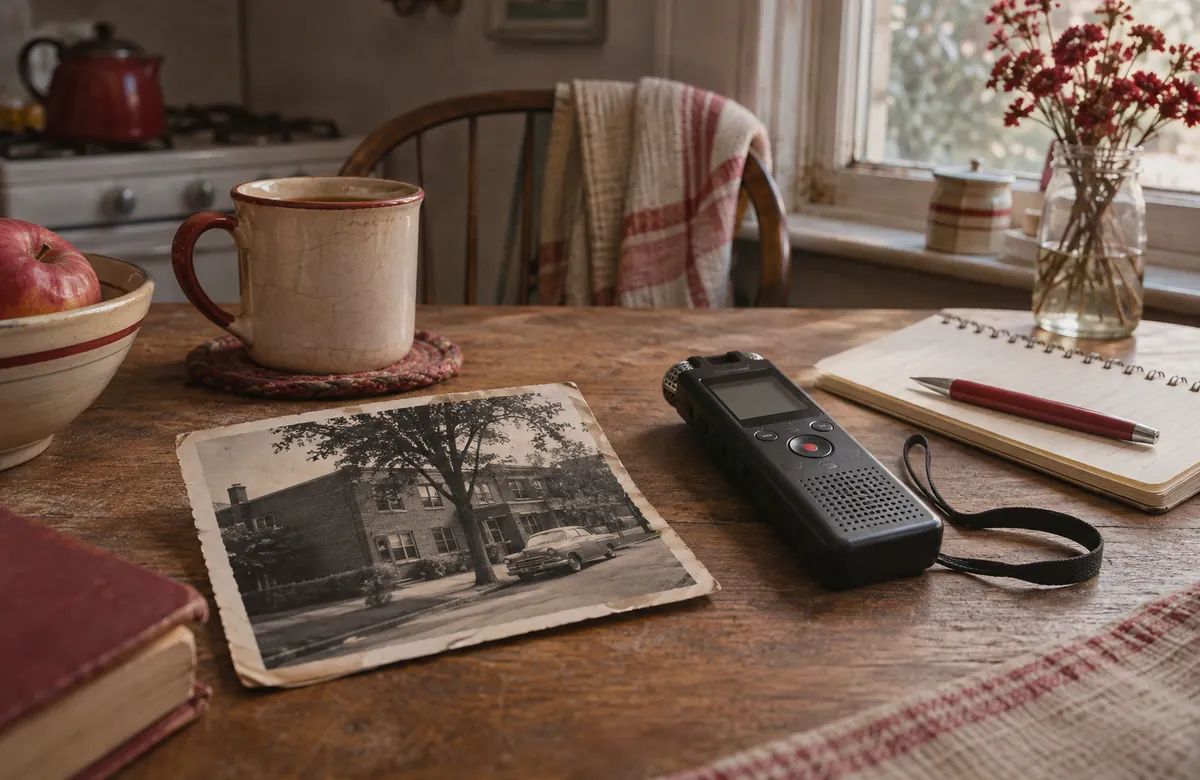
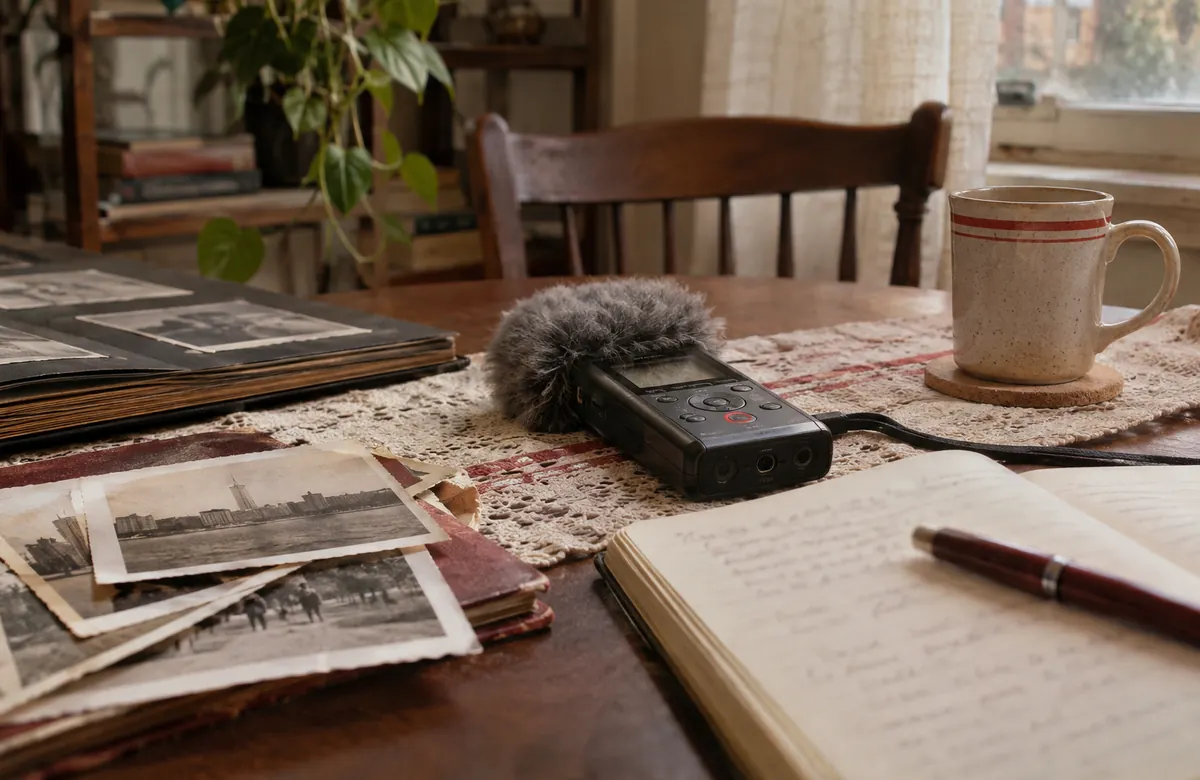
Look for maps, photographs, directories, and other records related to the narrator's experience. A map of a neighborhood as it appeared during the narrator's childhood might help locate a school or shop that no longer exists. Bring a limited number of relevant materials to the conversation. Their value is not in testing whether someone's memory matches a document, but in making details easier to discuss. Sometimes the person will identify an incorrect caption or explain why a building was used differently from the function shown on a map. Write down these differences. Check the material independently afterward. Do not let the preparation turn the interviewer into the chief speaker. It is far more useful to hear how a person remembers a particular walk through the neighborhood than to spend half an hour explaining to them what a historical book says about that area.
Make time for ordinary subjects
Descriptions of everyday routines can contain surprisingly valuable information. Ask where a person got groceries, how clothing was repaired, what happened when a child became ill, or how workers traveled to their jobs. The questions should be relevant to their experience and sensitive to their comfort. Avoid assuming that everybody participated in the same customs or had access to the same resources. A question about a favorite restaurant may produce little useful information from someone whose family rarely ate outside their home. A question about a typical meal and who prepared it offers more room to tell their own story. Money, disability, work, immigration, and family relationships may enter the discussion on the narrator's terms. The interviewer can follow these topics where appropriate without treating an ordinary day merely as a route toward a more dramatic story.
Encourage specificity through concrete prompts. If a person says the block felt friendly when they were young, ask what they remember people doing together. If they mention riding a particular bus, ask where they got on and what they could see during the journey. Often a person can remember an image or sound without knowing how to summarize its importance. Avoid asking them to adopt a modern interpretation of the past. Someone who worked in a factory during a period of economic change might remember the schedule, pay, and social relations more clearly than the broad economic arguments later applied to those years. Both kinds of account have value, but they are different forms of knowledge. The interview preserves an individual's perspective rather than requiring them to speak for an entire generation or community.
Respect the rhythm of memory
A conversation about the past rarely follows a perfect chronology. A story about one relative reminds a person of a visit that happened much later, and that visit in turn leads to memories of a former home. Let these connections occur when the person wants to pursue them. The index or transcript can help a future reader locate the separate periods. Near the end of a session, return to details that would clarify the chronology without treating the discussion as a test. There may be places where a date remains uncertain. Make note of that uncertainty rather than silently supplying a date from your own research. A narrator's account of the emotional atmosphere during an event can be significant even when the exact year is unclear. Researchers need to distinguish what the narrator remembers from what an interviewer has subsequently established.
Preserve the voice and the conditions of recording
Use a reliable recording arrangement, with permission, and choose a room where people can converse comfortably. Record a brief identification of the session, including the participants and the date when that is suitable for the project. Notes should identify a second person who joined the conversation and distinguish interruptions from the ordinary flow of speech. If the recording takes place over several visits, keep each session separately identified and arrange them in order. Retain the full original recordings, subject to any applicable restrictions, when preparing an excerpt. The way somebody changes their pace or language during an explanation may carry meaning that cannot survive in a written summary. A well-produced excerpt has a place in a public presentation, but it does not have the same evidentiary value as a complete session with reliable descriptions of its circumstances.
Prepare a useful transcription
The purpose of a transcript is to help someone access and search the recording. Establish conventions for speakers, timestamps, unclear speech, and significant nonverbal information. Choose a consistent approach to dialect without turning a person's language into caricature. A transcript should not give a speaker an artificial literary voice, and it should not make reading unnecessarily difficult through a complete inventory of incidental noises. Where the recording is unclear, identify the gap rather than guessing at a name. A supplied identification can be marked as an editorial addition if the project permits it. Keep appropriate privacy restrictions on transcript files as well as recordings. A transcript can be copied and searched much more rapidly than recorded speech, so it may expose information in ways the participant did not anticipate.
Describe the collection for someone who comes later
Record what has been collected, which version of each item is preserved, and any conditions attached to access. Ensure that a future user can identify a specific interview without relying on the memory of a volunteer who managed the project. The description should include the narrator's preferred identifying information where authorized, the subject of the discussion, the session date, and any important restrictions. Establish how sensitive material is reviewed, whether portions are closed for a period, and who can authorize changes to access. A collection also needs a practical storage arrangement: more than one preserved copy, suitable file formats, and a documented process for keeping the files available. Long-term preservation is a continuing task rather than a single act of putting everything on a storage drive.
Some pieces of a life will remain outside the record. An interviewer should accept that a person may choose not to answer a question or may remember an event differently from someone else. An oral history collection can make those differences visible while respecting the people who participated in it. Its usefulness comes from the particularity of the accounts, the integrity of the recording, and the care with which the collection is described. Leave the future reader or listener enough information to understand whose account they are encountering and how it came to be preserved.